TR8 Last of the line
You’d think the TR8, being the final and most advanced car in the TR line, would have been fitted with the newest and most up-to-date engine. But here’s the irony: the V8 powering the TR8 was actually designed by Buick way back in 1956. So, despite being the last of the TRs, its engine is older than those fitted to the TR5, TR6 and TR7. At first glance, hardly the cutting-edge finale you’d expect from a car intended to bring the TR name into the modern era. But there’s another twist to the story. That same V8 went on to be extensively developed, with outputs eventually well beyond 500bhp. It became the ultimate evolution of the TR engine, powering a wide variety of cars and commercial vehicles right through to around 2004 when Lany Rover last used it. And remarkably, the story doesn’t end there. Even today, it’s still possible to buy a brand-new version of this venerable V8 from a few small specialist manufacturers who still cast the parts, more than 60 years after the original engine was first designed.
TR8/Rover V8 engine numbers
The engines numbers used by TR8’s are as follows. Please note this is also a useful way to identify if the TR8 is genuine or not. If it doesn’t have one of the engine numbers below or an EXP number, then it almost certainly isn’t a genuine TR8!
10E = Federal model (also used on 2 x known early RHD UK spec cars as well as a few test cars)
11E = Federal model auto transmission
12E = Californian model
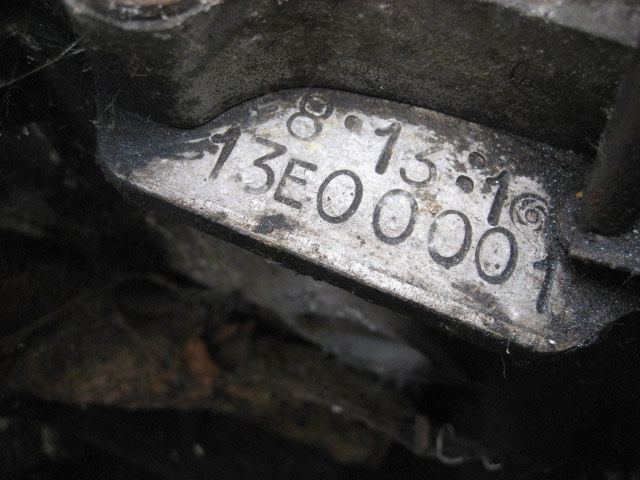
13E = Californian model with auto transmission (also used on a number of known EXP, development and test cars in both manual and automatic forms)
This very early test/development car has 13E00001
14E = Efi model
15E = Efi model with auto transmission
20E = UK spec model
21E = UK spec model auto transmission
TR8’s were fitted with either twin Stomberg carb setups or Lucas/Bosch EFi only as shown below. Anything else is not original or correct!
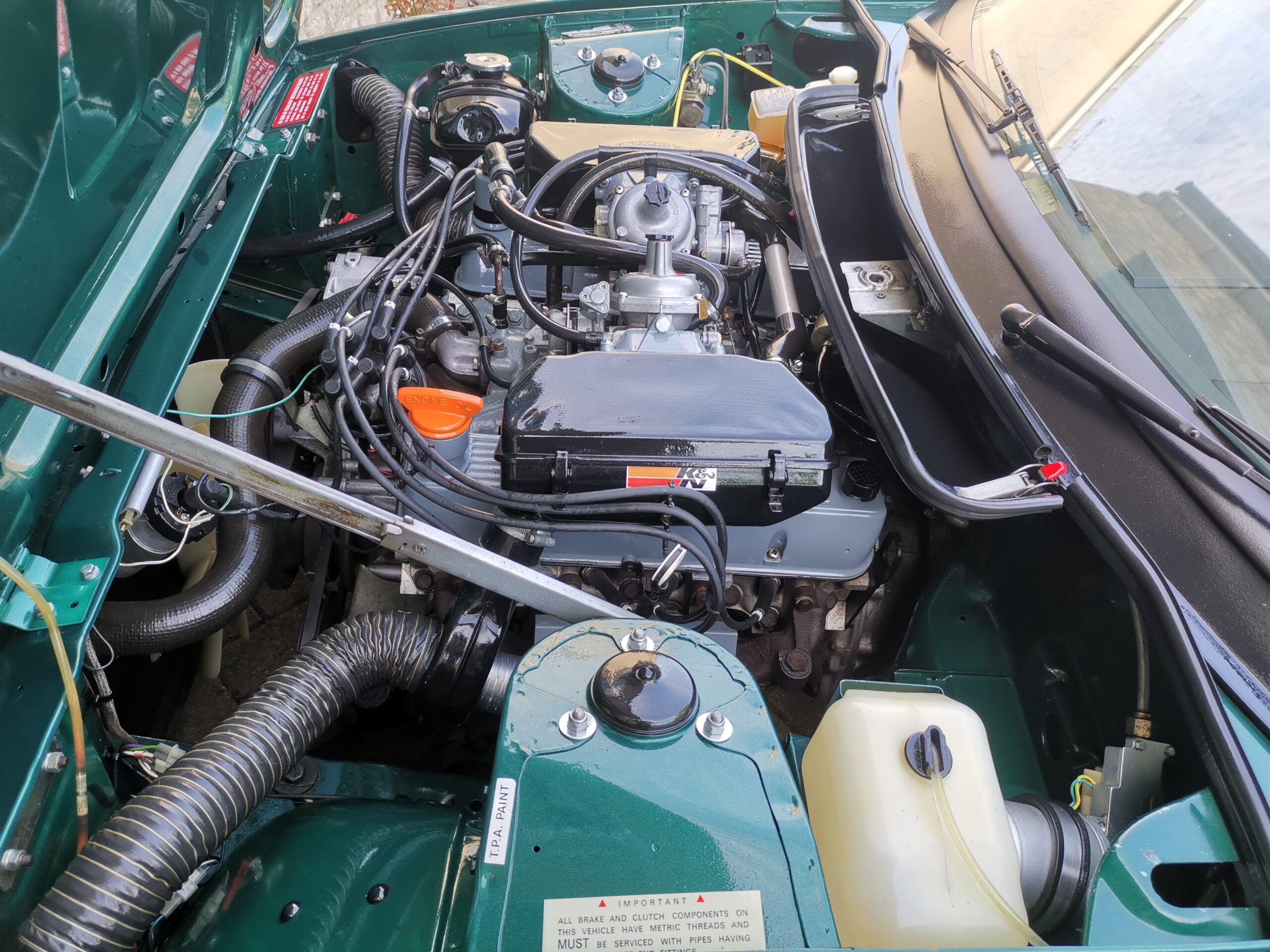
10E Stromberg UK spec TR8, USA TR8’s will have additional canisters and emissions equipment fitted
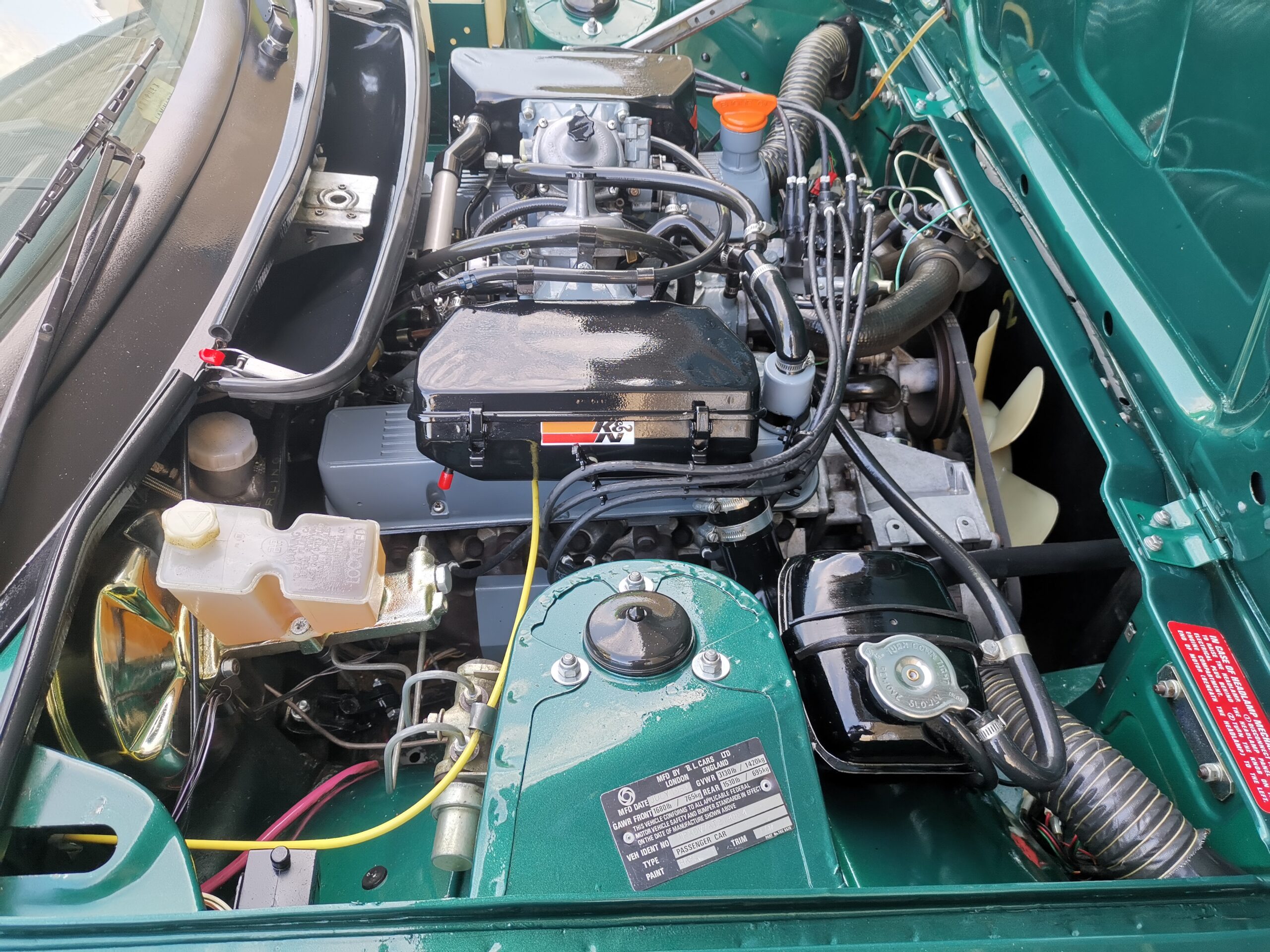
10E Stromberg UK spec TR8, USA TR8’s will have additional canisters and emissions equipment fitted

14E LUCAS/Bosch EFI system used on early Californian TR8’s and all 1981/82 TR8’s. This is a late car with the coil on the wing most have the coil located above the radiator.
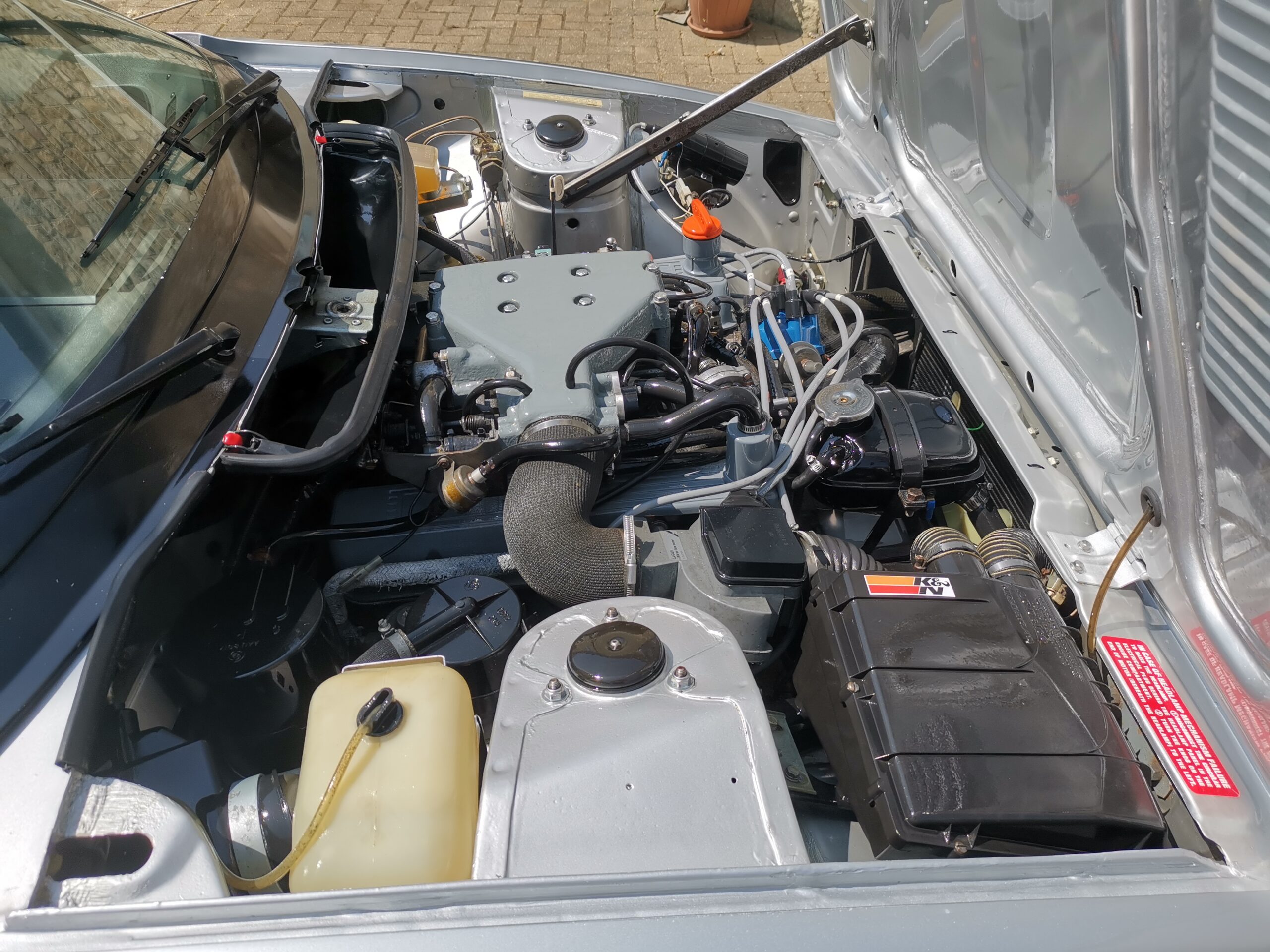
14E LUCAS/Bosch EFI system used on early Californian TR8’s and all 1981/82 TR8’s This is a late car with the coil on the wing most have the coil located above the radiator.
Buick 215/Rover V8 The Lightweight V8 That Refused to Die
In 1963, General Motors quietly discontinued one of the most innovative engines it had ever built—the all-aluminium Buick 215 V8. At the time, few could have predicted that this compact powerplant would go on to become one of the most influential V8 engines in automotive history. Just two years later, Rover acquired the rights to the design, transforming it into an engine that would power everything from luxury saloons and sports cars to Land Rovers and Formula One champions. More than four decades after GM abandoned it, the engine was still in production for the Range Rover, a remarkable legacy for an engine that had originally survived only three model years in America.
Born Ahead of Its Time
Development of the Buick 215 began in 1956 when General Motors tasked Buick with designing a lightweight V8 for its new generation of compact cars. The project was led by chief engineer Joe Turlay, best known for the celebrated Nailhead V8. Originally conceived as a 180-cubic-inch engine, the design eventually grew to 215 cubic inches (3.5 litres) to better suit GM’s new Y-body platform.
The finished engine displaced 215.5 cubic inches (3.5 litres), with a 3.50-inch bore and 2.80-inch stroke, giving it a distinctly oversquare configuration. Constructed almost entirely from aluminium using GM’s high-silicon alloy, it featured cast-in iron cylinder liners and was manufactured using an advanced semi-permanent mould casting process.
Although physically similar in size to Chevrolet’s small-block V8, the Buick engine weighed just 318 pounds (144 kg) dry—lighter than Chevrolet’s cast-iron four-cylinder engine while producing considerably more power. It was, at the time, the world’s lightest mass-produced V8.
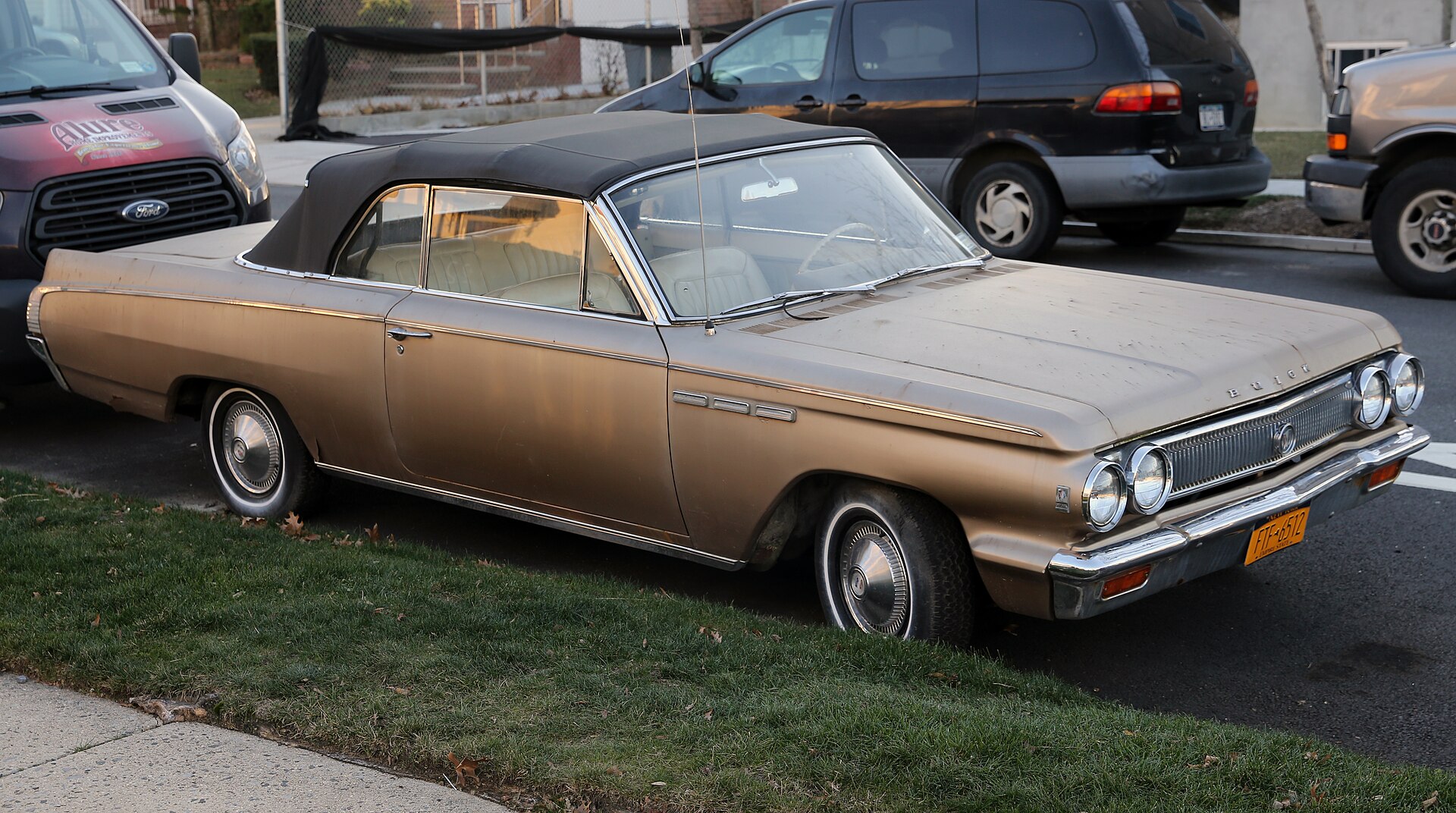
1963-Buick-Skylark.
Impressive Performance
In Buick trim, output ranged from 155 horsepower with a two-barrel Rochester carburettor in the Buick Special to 200 horsepower in the Skylark equipped with a four-barrel carburettor.
Oldsmobile produced its own version, known as the Rockette V8. While sharing the same basic architecture, it featured wedge-shaped combustion chambers, angled valve covers and six head bolts per cylinder rather than Buick’s five.
Oldsmobile pushed the design even further in 1962 with the Jetfire, the world’s first turbocharged production passenger car. Equipped with a Garrett AiResearch T5 turbocharger and an innovative alcohol-and-water injection system to suppress detonation, the turbocharged 215 developed 215 horsepower and 300 lb-ft of torque—becoming one of the first production engines to achieve the coveted benchmark of one horsepower per cubic inch.
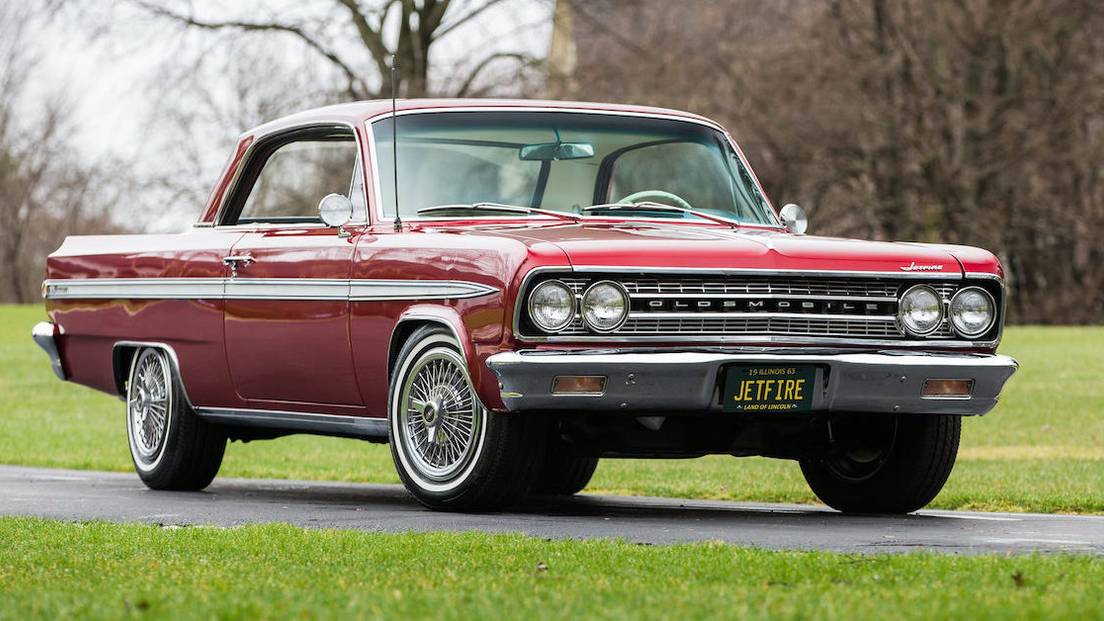
1963-Oldsmobile-Jetfire.
Proving Itself on the Track
The lightweight V8 quickly demonstrated its competition potential.
In the 1962 Indianapolis 500, legendary racer Mickey Thompson entered a stock-block Buick 215-powered car driven by Dan Gurney. It qualified eighth in a field dominated by Offenhauser engines before retiring after 92 laps due to transmission failure. Although it failed to finish, it became the first stock-block engine to start the Indianapolis 500 since 1946, highlighting the impressive performance potential of Buick’s compact aluminium V8.
Why GM Walked Away
Despite its technical brilliance, the aluminium V8 proved expensive to manufacture. Production costs were significantly higher than conventional cast-iron engines, and early examples suffered from oil and coolant sealing issues. In addition, many owners unknowingly used antifreeze formulations unsuitable for aluminium engines, leading to corrosion and radiator blockages.
Although the engine sold well—Buick alone produced nearly 377,000 examples between 1960 and 1963, with substantial additional production by Oldsmobile and Pontiac—the manufacturing costs ultimately outweighed its commercial success.
General Motors discontinued the all-aluminium V8 after the 1963 model year, replacing it with more conventional cast-iron designs. Ironically, Buick’s V6 derivative of the same engine architecture would remain in production until 2008.
Rover Sees the Opportunity
What General Motors considered an expensive experiment, Rover recognised as an engineering opportunity.
In January 1964, Rover’s Head of American Operations, J. Bruce McWilliams, received permission to investigate sourcing an American V8 for future Rover models. While visiting Mercury Marine, he encountered the lightweight Buick engine and immediately recognised its potential for British vehicles, where low weight and compact dimensions were particularly valuable.
McWilliams, together with William Martin-Hurst, successfully persuaded General Motors to sell the manufacturing rights and tooling. The agreement was completed in January 1965, and Buick’s chief engineer, Joe Turlay, travelled to Britain as a consultant to assist Rover with adapting the design for British production.
The Birth of the Rover V8
Rover began manufacturing its version of the engine in 1967. Although initially almost identical to the Buick original, Rover engineers steadily strengthened and refined the design to improve durability and suit European manufacturing methods.
Over the following decades, displacement increased from 3.5 litres to 3.9, 4.0, 4.2, 4.6 and even 5.0 litres in specialist applications. The engine became a defining feature of numerous British vehicles, including the Rover P5B, P6B, SD1, Triumph TR8, MG RV8, TVR sports cars, Morgan Plus 8, Land Rover Defender, Discovery, and generations of the Range Rover.
Its compact size, low weight and strong torque also made it a favourite for specialist manufacturers and kit-car builders around the world.
Formula One Glory
Perhaps the most remarkable chapter in the engine’s history came in Formula One.
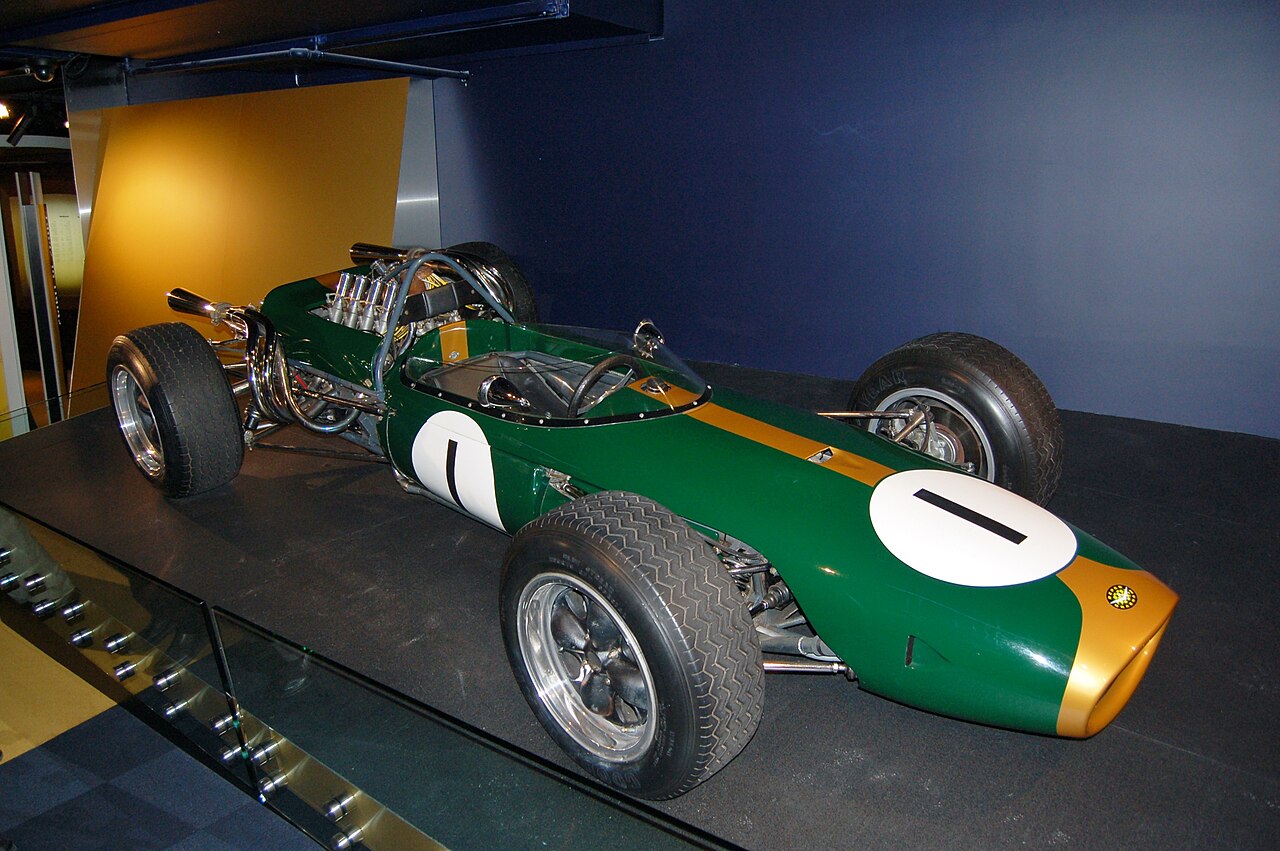
A racing derivative of the Rover V8, developed by Repco using Rover cylinder heads, powered Jack Brabham to the 1966 Formula One World Championship. The Repco-Brabham combination also secured the Constructors’ Championship, proving that an engine originally designed for American compact family cars could succeed at the highest level of international motorsport.
An Extraordinary Legacy
High-volume production of the Rover V8 finally came to an end in the mid-2000s, with the final mainstream applications appearing in the Land Rover Discovery and Range Rover. Nevertheless, specialist engineering firms continue to cast and assemble replacement engines and components for restorations and historic racing.
Few engines have enjoyed such an extraordinary second life. Conceived in America as a lightweight compact-car V8, discarded after only three years, then reborn in Britain to power luxury saloons, off-road vehicles, sports cars and even Formula One World Champions, the Buick 215 became one of the most enduring and adaptable V8 designs ever produced.
Far from being a commercial failure, the Buick 215 proved to be one of the automotive industry’s greatest engineering survivors—an engine whose influence continued for more than half a century after its original manufacturer had given up on it.
And the bonus? Nothing else sounds quite like it, especially in a TR8 with that exhaust system. The sound is absolutely unforgettable!