TR8 Press Cars (UK)
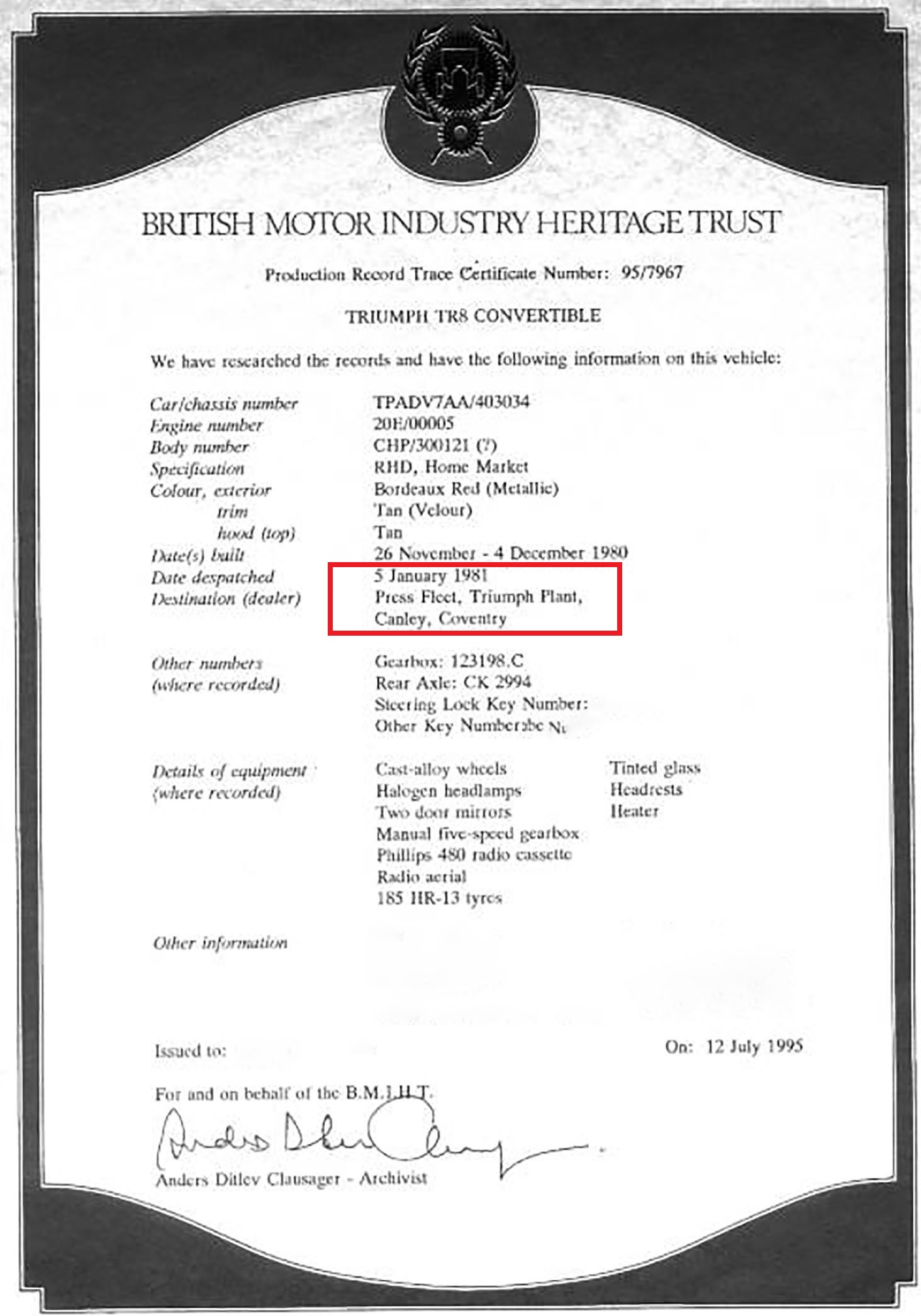
Despite a significant number of UK-based TR8 owners claiming their cars are former press or demonstrator vehicles, there is no evidence that any TR8 press cars were ever actually based/used in the UK. Martin Cox Press Department stated when I asked him about TR8 press cars in the UK
“To the best of my knowledge we were never involved in the preparation of a TR8 for the press”
To understand why, it’s important to consider the intended market for the Triumph TR8. The car was primarily developed for the United States, and as such, any official press and demonstrator vehicles were located there, not in the UK. In fact, the TR8 was never released domestically in right-hand-drive form, which further explains the absence of UK-based press/demonstrator cars.
The first batch of nine right-hand-drive Triumph TR8s were originally intended to serve as press vehicles, as indicated on their Heritage Certificates. However, they were never prepared by the press department nor allocated to journalists for testing. This was due to the cancellation of the TR8 programme on 14 May 1981. So no actual UK based UK or USA spec TR8 press cars as such.
Most of these cars were subsequently sold at the Measham Auction in August and September 1981, with the majority remaining unregistered and effectively sold as new vehicles.
Press Department
The Triumph engineering division was based in fletch north alongside the A45 the Coventry bypass, This was part of the Canley site, the sales division was based at fletch south also alongside the A45.
Connecting roads from these two sites went to Canley one known as the Burma road and the other past the engine build and tool room.
Press cars were originally prepared in the engineering division at fletch north A stand alone press department was set up at Allesley service division when the Dolomite sprint and all subsequent models were prepared by the press outfit. The department eventually moved to Templar avenue after joining with Rover, then returning to Canley before a final move to Gaydon.
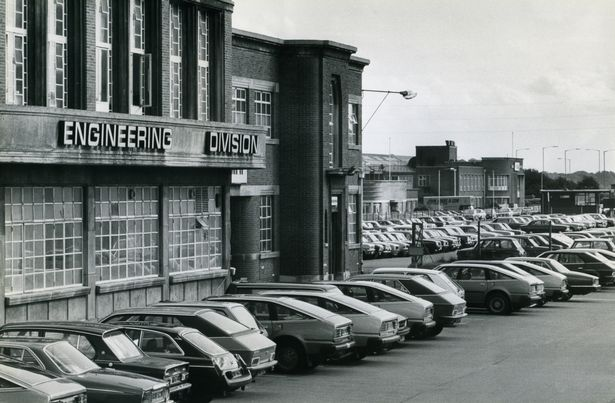
fletch NORTH alongside the A45 the Coventry bypass
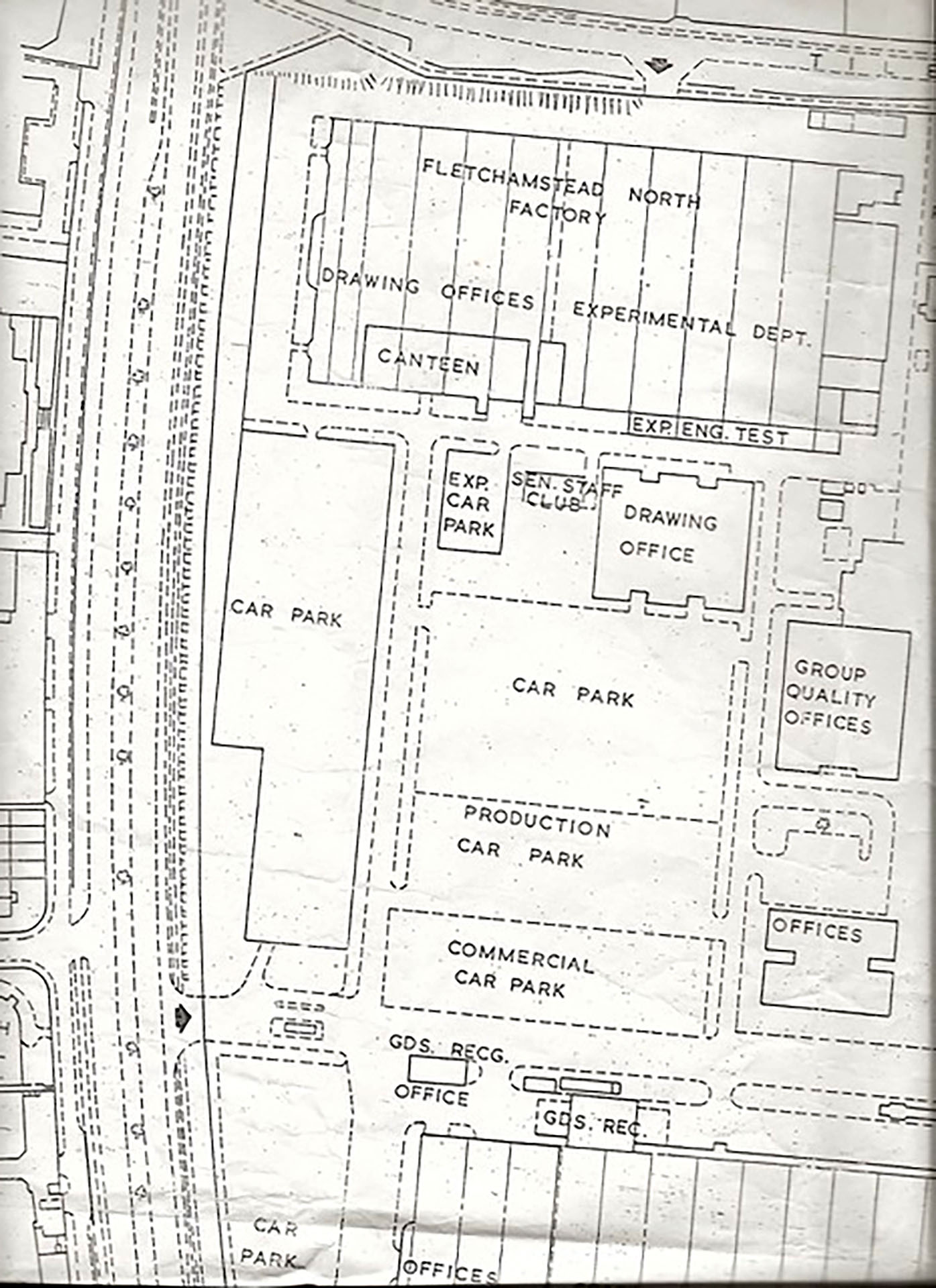
Map of various DEPARTMENTS fletch NORTH
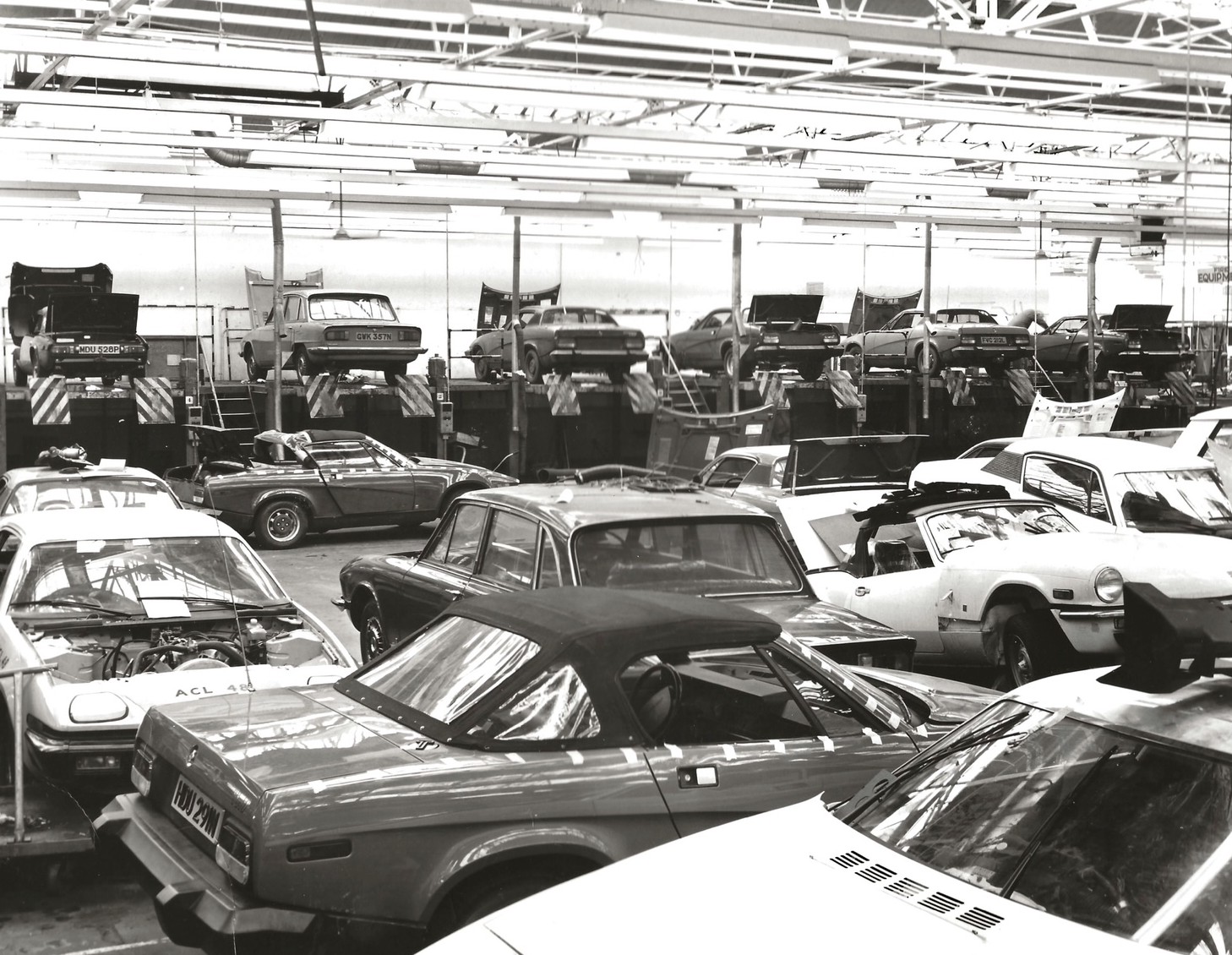
fletch NORTH WORKSHOP
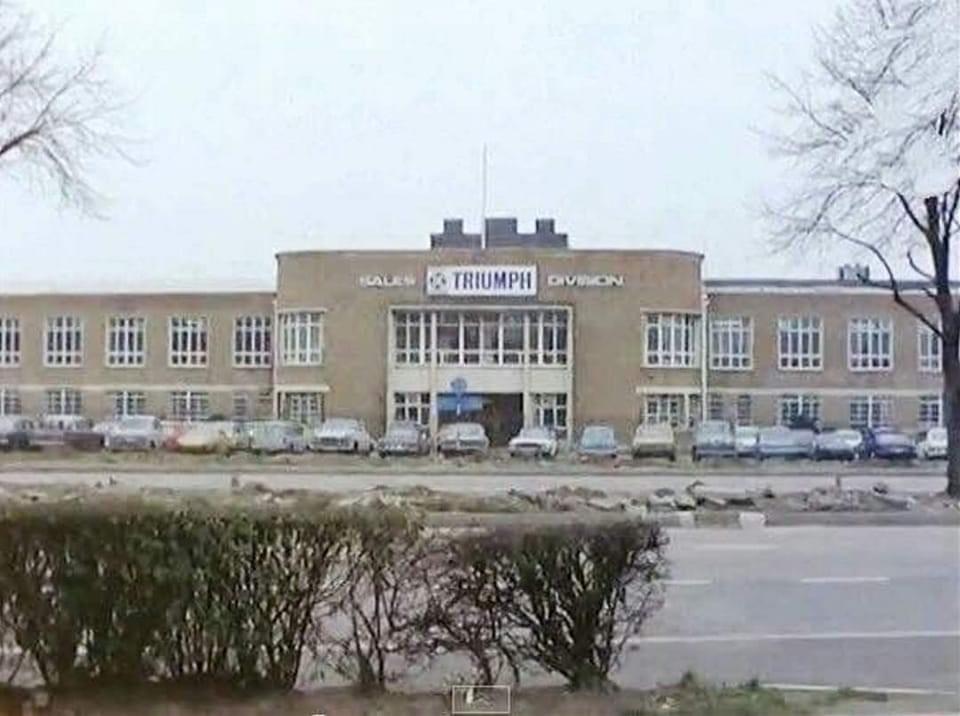
fletch SOUTH
What is a Press Car / Demonstrator?
A press car is a vehicle provided by a manufacturer such as Triumph Motor Company to journalists, reviewers, and media outlets for evaluation and publicity.
In simple terms, it is a loaned vehicle used for reviews and promotion.
Key characteristics:
-
Supplied to media outlets for short-term use (typically days or weeks)
-
Used by organisations such as Top Gear or Car and Driver
-
Featured in:
-
Road tests
-
Video reviews
-
Magazine articles
-
-
Often high-specification models, equipped with a full range of options
Purpose:
Manufacturers provide press cars to:
-
Generate publicity and awareness
-
Influence potential buyers
-
Highlight performance, features, and new technology
Additional considerations:
-
Press cars may be pre-production or specially prepared examples
-
They are typically maintained to a very high standard
-
Some critics argue they may not fully represent the average ownership experience
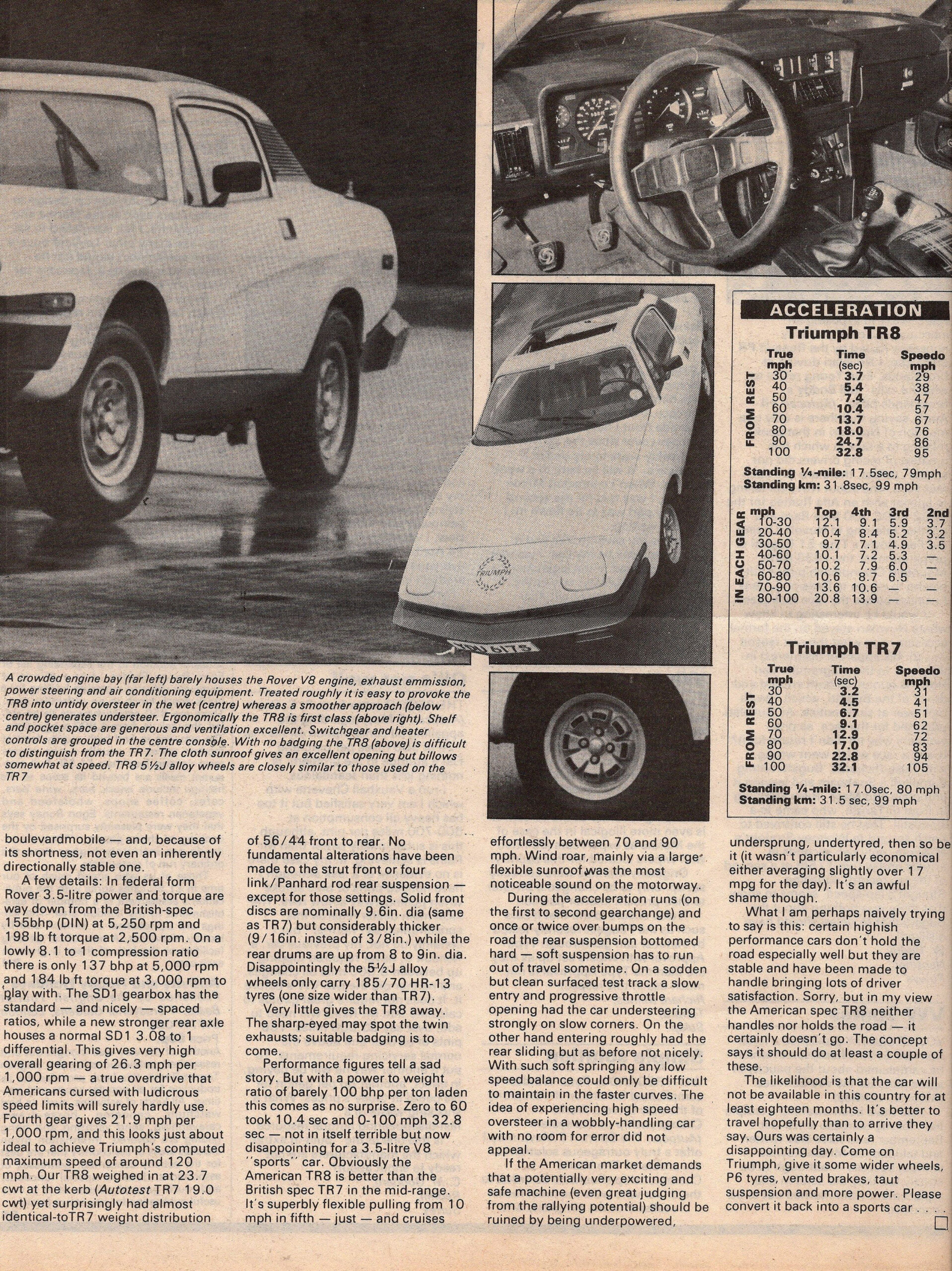
Autocar May 1979.
There is one sort of exception to no actual Press cars in the UK and that is a White LHD FHC TR8 YDU617S that was used by John Miles in an article for Autocar May 1979.
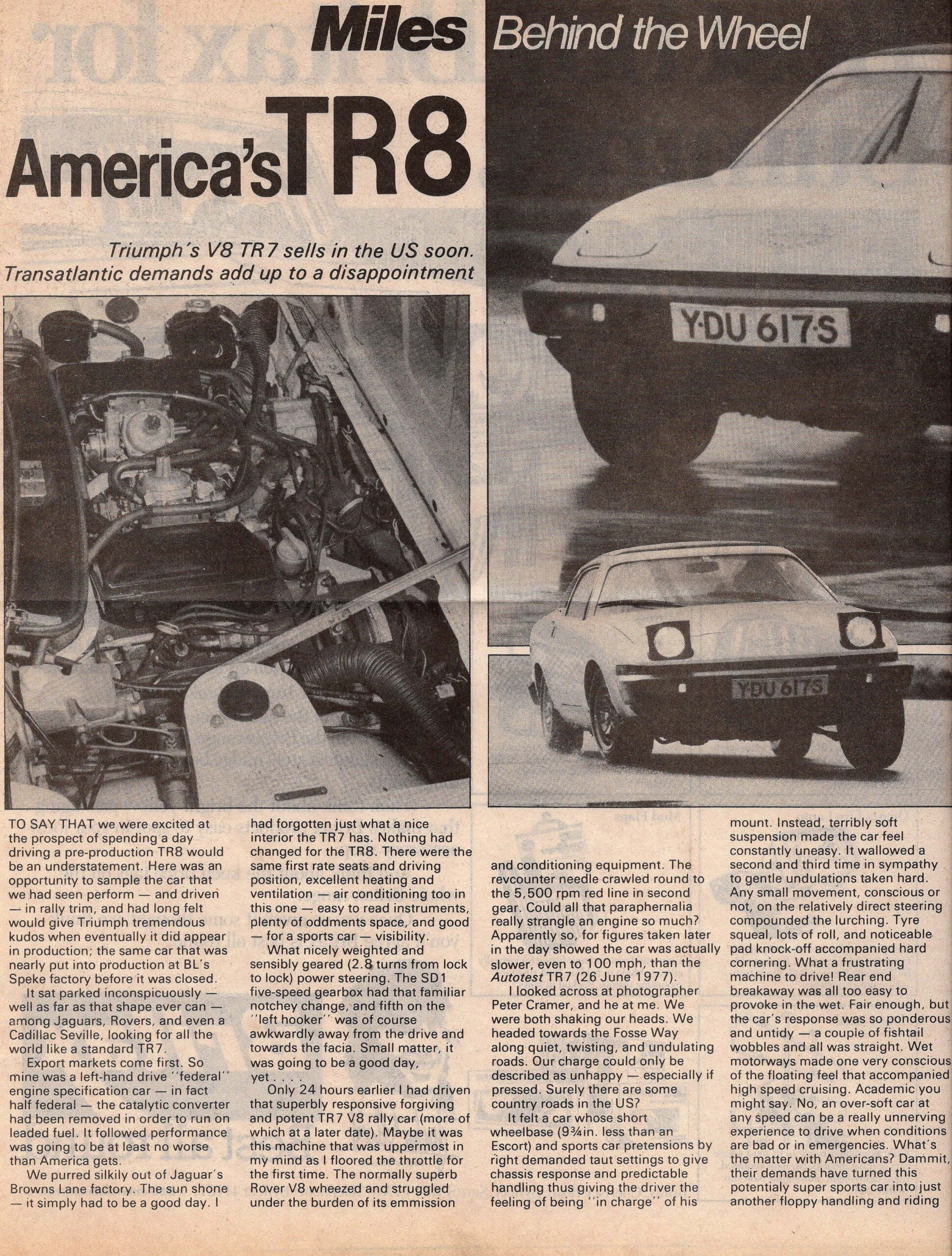
When asked about this car, Martin Cox Press Department at the time stated:
“To my knowledge, Autocar never tested a press-prepared TR8.”
“It certainly wasn’t prepared by the press department.”
The report was considered a disastrous report, and it is noted that YDU617S had not been signed off at the press garage by Martin Cox providing this account.
Records indicate that the vehicle was collected from Browns Lane, the Jaguar factory. At that time, the PR department and press office were based there under the leadership of David Boules.
It is believed that Autocar contacted the PR department to request a TR8 for driving impressions. David Boole would likely have coordinated with the engineering team to arrange the loan of a suitable vehicle. Engineering subsequently supplied the vehicle for this purpose. However, Miles is understood to have conducted a full performance test using a fifth wheel, which resulted in very poor performance figures and a notably disastrously negative report.
It was also identified that the catalyst had been removed, an action most likely carried out at Fletch North. The vehicle, registered in Coventry (YDU), was consistent with others known to be operated within the Fletch North fleet.
It is considered probable that, following the catalyst removal, the vehicle’s performance was not re-evaluated. Furthermore, it almost certainly did not undergo a formal sign-off process prior to being released.
Conclusion
The circumstances outlined above account for the notably poor performance and handling reported for this particular vehicle. It appears that the car had not been properly tuned or prepared prior to being supplied for evaluation. Instead, it was most likely an engineering test vehicle, hastily assembled to provide a journalist with an early look at a US-specification Triumph TR8. This resulted in a substandard vehicle being used for the article.
Evidence suggests that YDU617S was the only Triumph TR8 in the UK to have any form of press or demonstrator use. Consequently, claims by owners that other UK-based TR8’s, UK or USA spec, were genuine press or demonstrator TR8s, are almost certainly incorrect.
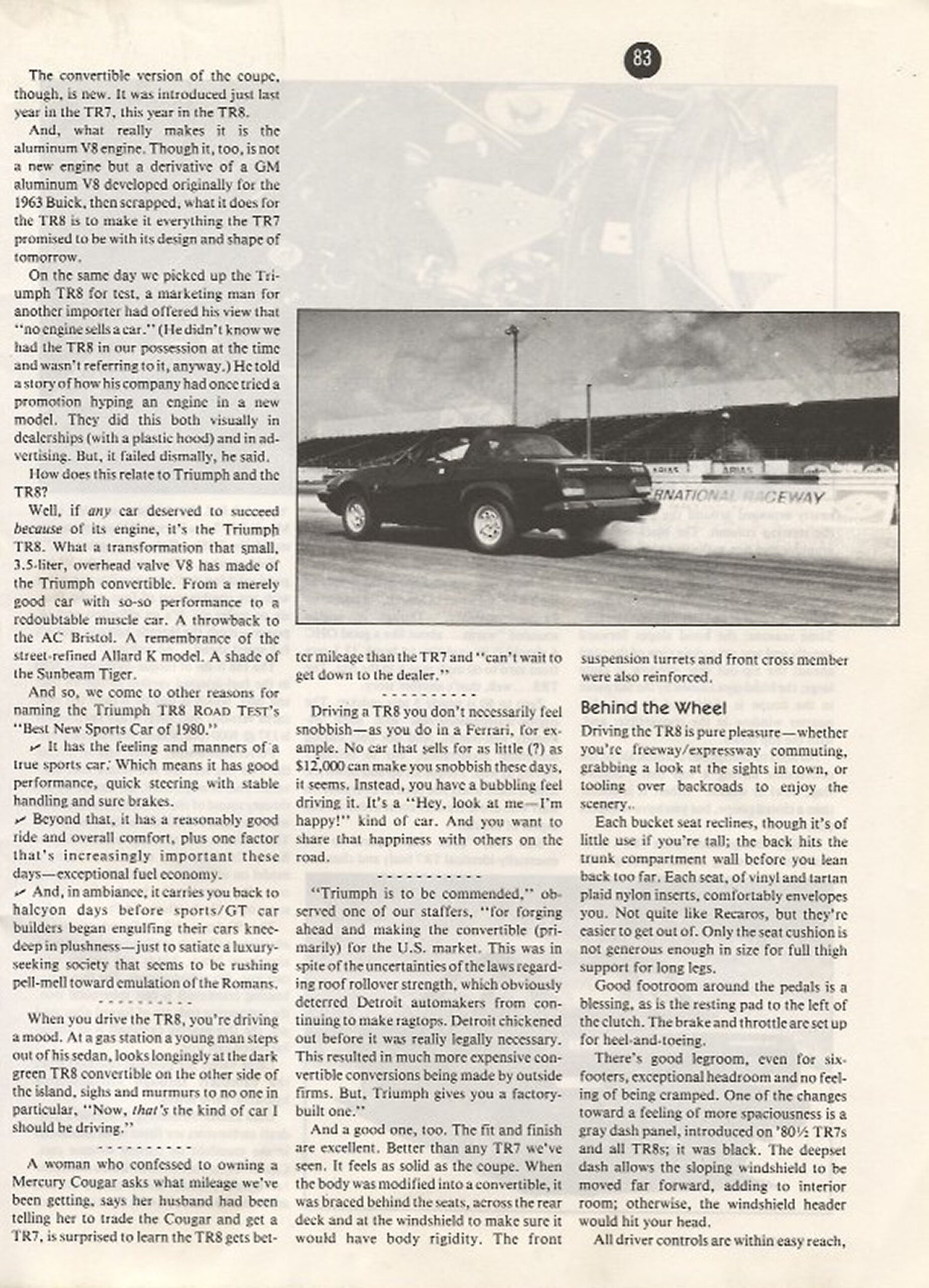
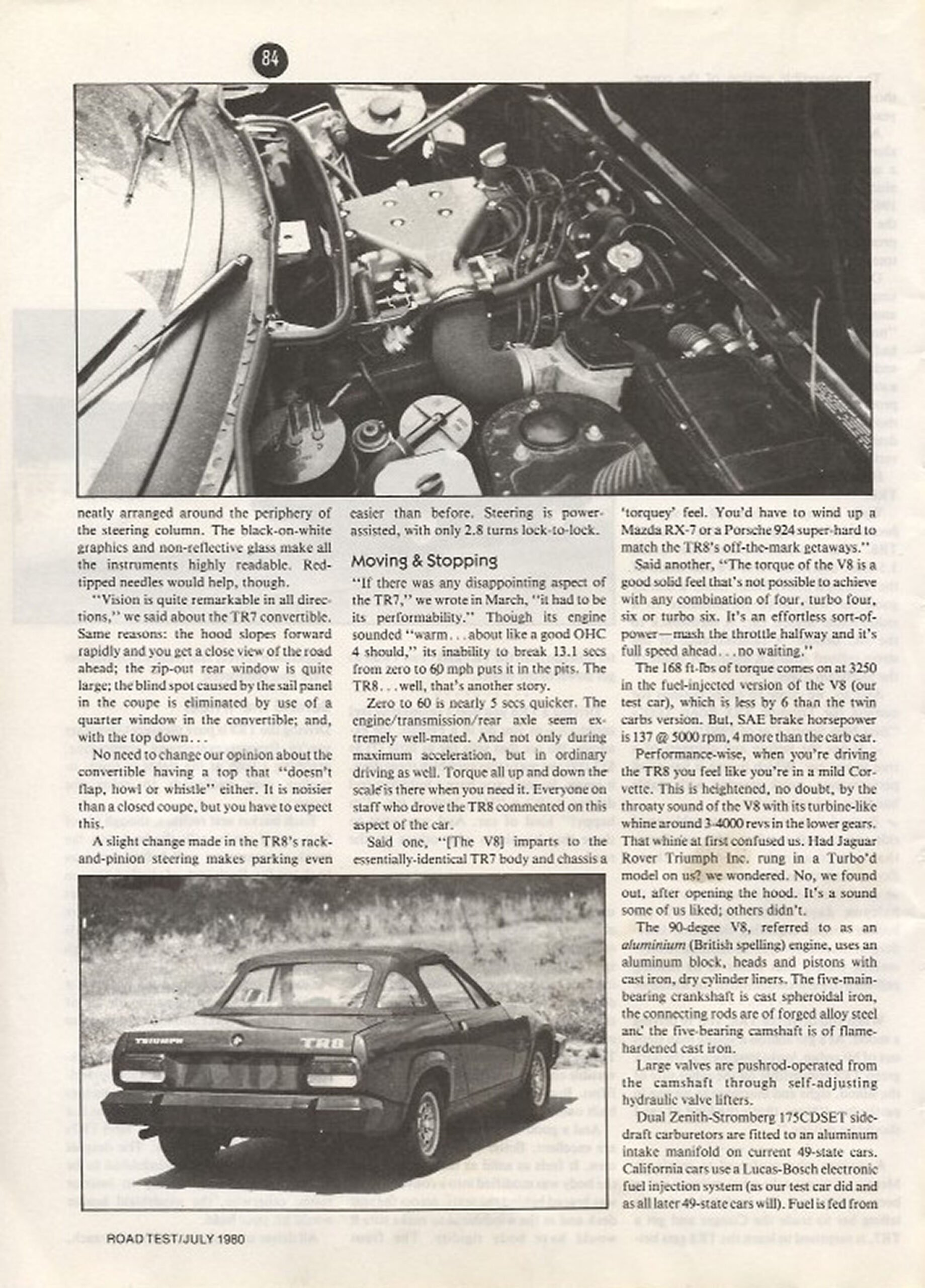
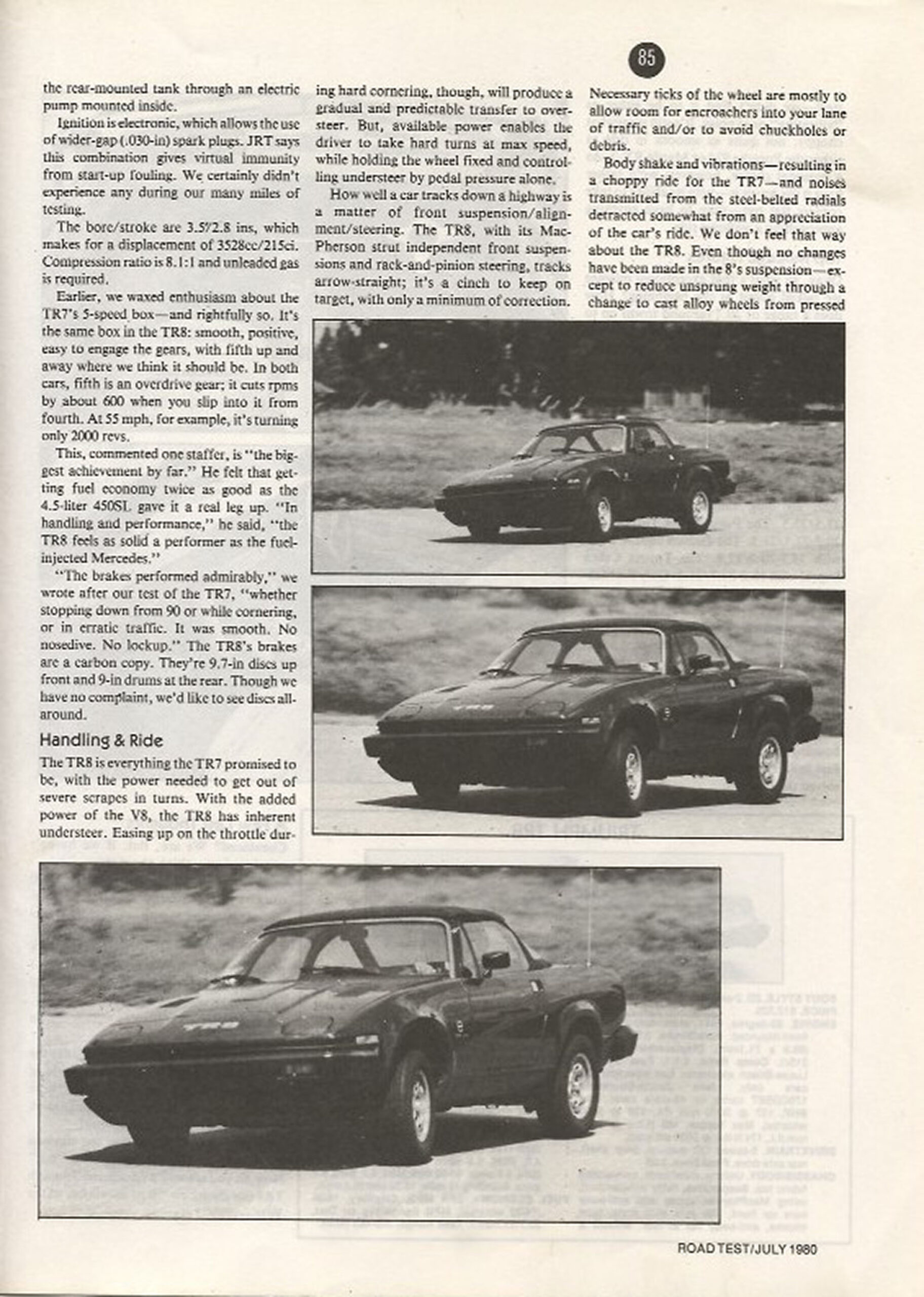
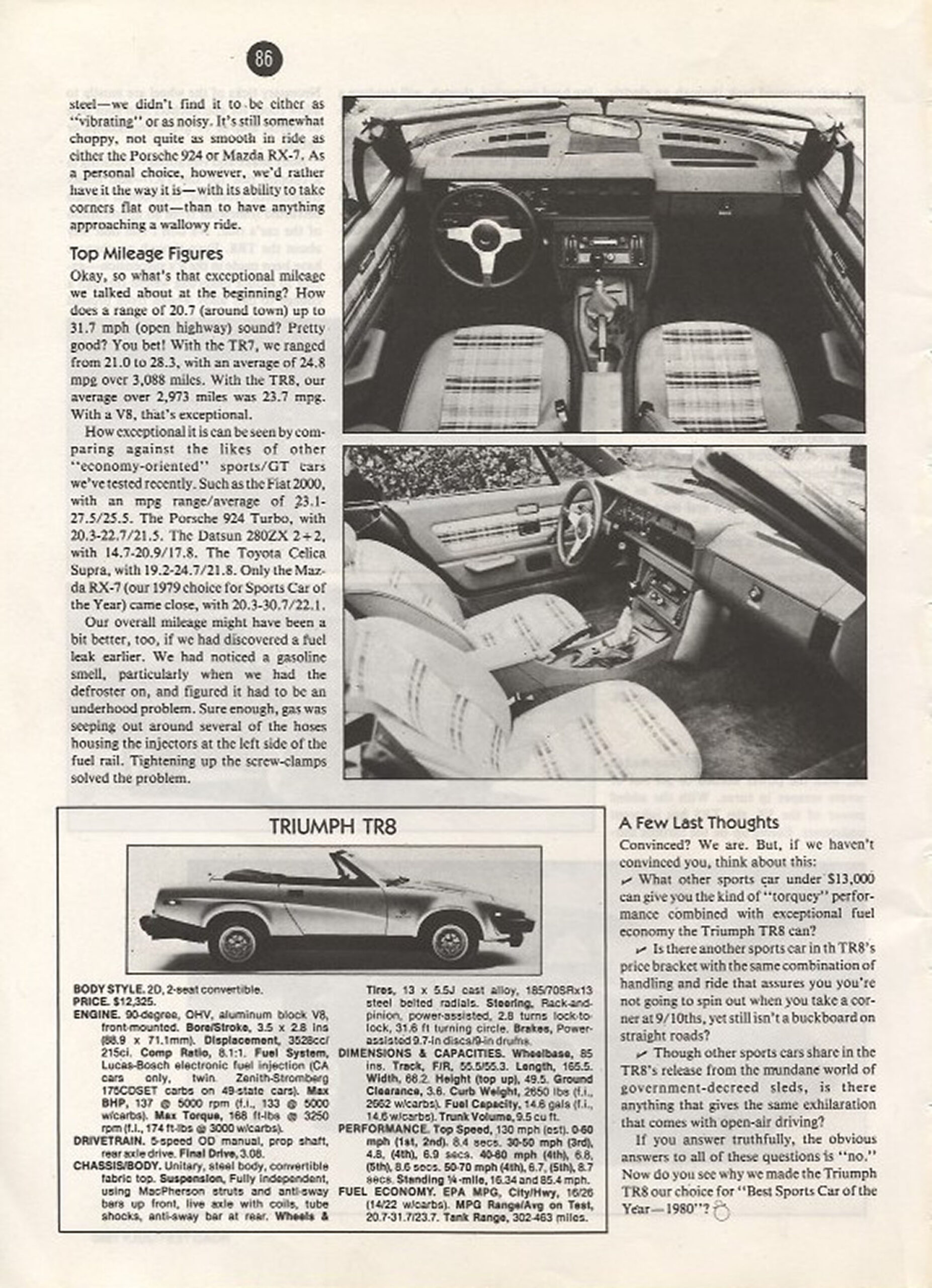
When this article is compared with the initial reports published by Road & Track in the United States on the TR8, “Best New Sports Car of 1980” the disparity is striking, further reinforcing the conclusion that YDU617S was not representative of the model’s true performance or capability.

Best NEW Sports car of 1980