Right-Hand Drive TR8 – Home Market (UK) – A total of 22 right-hand drive TR8s were officially designated as “Right-Hand Drive TR8 – Home Market”, along with three right-hand drive TR8 experimental (EXP) cars.
All of these vehicles are, by definition, pre-production. No right-hand drive TR8 was ever built as a full production model. As a result, each of the 22 Home Market cars exhibits individual anomalies or non-standard features, reflecting both their developmental role and the fact that they were never intended for sale to the general public.
Under normal circumstances—and had Triumph not been experiencing severe financial difficulties at the time—these vehicles would almost certainly have been destroyed once their development work was completed, in line with standard industry practice for pre-production cars.
RHD TR8 Project Production Planning

The RHD TR8 project ran for just less than a year April 1980 to March 1981 these are all the TR8’s involved in that project
Dennis Chick, who was responsible for product planning for the TR7/8 programme and delivered the Product Planning Information (PPI) announcement on 14 May 1981 confirming the end of the TR7/8 programme, has recently confirmed to that approval for the Right-Hand Drive (RHD) TR8 project was granted at the first quarterly Product Planning meeting of 1980, held at the end of March. Product Planning Information (PPI) documentation written by Denis at the time supports this conclusion.
I have been seeking confirmation of the timing of this approval for some time, as it provides definitive evidence that challenges longstanding claims regarding vehicles built prior to April 1980. This information now confirms that cars built earlier than April 1980 were never part of, nor intended to form part of, the RHD development programme, press fleet, or any of the other explanations put forward by owners of vehicles built before April 1980.
This finding, together with documentary evidence uncovered last year proving that the factory never converted US-specification left-hand drive (LHD) cars to RHD, see HERE, definitively disproves claims by owners asserting various links between such vehicles and the RHD TR8 project.
The RHD TR8 project received approval to commence at the first quarterly Product Planning meeting in late March 1980. What may be less widely understood, is that the RHD project itself was effectively cancelled before the Product Planning Information announcement of 14 May 1981, which formally confirmed the end of the TR7/8 programme.
The final RHD TR8 was completed on 31 March 1981, and while that last vehicle was being built, the decision was taken at the first quarterly Product Planning meeting of 1981 to terminate the RHD TR8 project. The reasoning was straightforward: there was little justification for launching the RHD TR8 in the UK when it had become highly likely that overall TR7/8 production would soon cease.
As Denis explained:
“We didn’t want a RHD V8 in the market while there was significant doubt about the whole project surviving. You don’t want to start the parts and service machine with all the costs involved.”
In practical terms, this now establishes beyond doubt with supporting documentation, that any TR8 built before April 1980 or after March 1981 was never part of the RHD Home Market TR8 project.
Source and Reliability of Information
The information presented here is derived from multiple primary and authoritative sources, including:
-
Surviving right-hand drive TR8 Home Market vehicles.
-
Factory-issued build records, and Heritage officially certified chassis numbers.
-
First-hand testimony from individuals directly involved in the programme, notably Garry Owen, who led the RHD TR8 project at Canley and Solihull.
Taken together, these sources provide a strong evidential foundation. As a result, the factual reliability of this information is considered to be very high, notwithstanding the passage of more than 45 years since these vehicles were built.
Canley/Solihull 1980/1 RHD TR8’s
From here on in all TR7’s and TR8’s share the same series of numbers, individual letters are now the only way to differentiate between a TR7 or TR8 – Different world market cars – Manual or Automatic – FHC or DHC.
RED designates UK TR8 chassis identifier and RHD. Chassis number doesn’t lie, owners may, beware!
| Chassis | |
|---|---|
| 1: Make of car | T = Triumph |
| 2: Model range: | P = TR7/8 |
| 3. Specification: | A = UK or Europe |
| K = Australia | |
| V = U.S.A., Federal (49 states) | |
| Z = U.S.A., California | |
| L = Canada | |
| J = Japan | |
| 4. Type of body: | E = Coupe |
| D = Convertible | |
| 5. Type of engine: | J = 2 litre (TR7) |
| V = 3.5 litre V8 (TR8) | |
| 6. Steering, Gear box: | 3 = Right hand drive. Automatic |
| 4 = LHD, Automatic | |
| 7 = Right hand drive, Manual | |
| 8 = LHD, Manual | |
| 7. Model year change: | A = 1980 Model Year |
| 8. Assembly plant: | T = Canley A = Solihull |
| 9. | Number 6 digits |
Authentication, Chassis Numbers, and Production Totals
All 22 right-hand drive TR8 Home Market UK cars carry British Motor Heritage certificates confirming them as genuine, factory-approved “Home Market” RHD TR8s. Each also carries a full and complete UK right-hand drive chassis number.
Chassis Number Anomaly – Sales and Marketing Batch
Important clarification:
The second batch of nine cars built for Sales and Marketing purposes all carry incorrect chassis numbers due to the transposition of the letters “V” and “A.” The correct format should be:
TRADV7AA
However, the original build records for each of these cars also show the same incorrect chassis number. While a small number of build records have since been amended to reflect the correct format, the majority have not. As a result, nearly all of these cars technically display an incorrect chassis number on their chassis plates.
This error is sometimes mistakenly interpreted as the use of a TR7 chassis number. That interpretation is incorrect: had the cars been assigned TR7 chassis numbers, the prefix would contain a “J,” not a “V.”
Fake and Misidentified Cars
Many non-genuine cars carry incomplete chassis numbers and/or TR7 chassis numbers. There is only one confirmed instance of a genuine RHD TR8 being accidentally issued with a TR7 chassis number. That unique case is documented in detail elsewhere below.
There are no other genuine examples. No matter how convincing the story, additional claims are incorrect.
How Many Were Built? — Explaining the Confusion
The total number of right-hand drive TR8s has been debated for many years, largely due to three commonly cited but conflicting figures:
14
This figure refers specifically to the 14 unregistered (new) RHD TR8s sold at the Measham auction, which is the origin of this number. However, it excludes other genuine RHD TR8s present at the auction.
In reality:
-
Three cars were already registered — NWK 988W, MHP 404V, and RDU 35W — and were also sold at the auction so brings the real total sold at auction to actually 17.
-
Five additional unregistered cars were sold privately by British Leyland to preferred dealers.
This brings the total number of RHD TR8s disposed of via these routes to 22, even though only 14 were unregistered auction cars.
18
This figure derives from counting:
-
The batch of nine press cars built in November/December 1980.
-
The batch of nine Sales and Marketing cars built in March 1981.
What this total omits are:
-
The two methods-build cars, and
-
The two pre-production quality and development RHD TR8s.
22 — the Correct Figure
The correct and complete total is 22 right-hand drive TR8 Home Market UK specification cars.
-
1 × Pre-Production Quality Build RHD TR8
(Registration: MHP 404V)
1980 model year; round door locks, twist boot lock, cable-reset dashboard. -
1 × Pre-Production Development RHD TR8
(Registration: NWK 988W)
1981 model year; square door locks, push boot lock, cable-reset dashboard. -
1 × Methods-Build Manual RHD TR8
(Registration: D79 OGJ)
Late 1981 / 1982 model year; square door locks, push boot lock, push-button dashboard. -
1 × Methods-Build Automatic RHD TR8
(Registration CFM452W)
Late 1981 / 1982 model year; square door locks, push boot lock, push-button dashboard. -
9 × Press RHD Pilot-Production TR8s
1981 model year; square door locks, push boot lock, cable-reset dashboards. -
9 × Sales and Marketing RHD Pilot-Production TR8s
Late 1981 / 1982 model year; square door locks, push boot lock, push-button dashboards.
Type Approval for RHD TR8 HOME MARKET UK
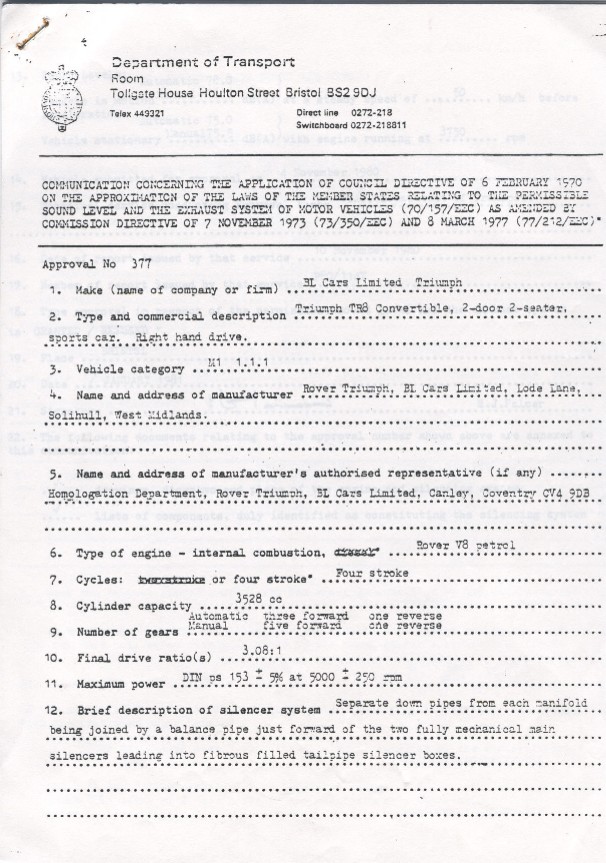


INITIAL PRE PRODUCTION Canley built RHD TR8 HOME MARKET (1980)
PRE PRODUCTION – “Preliminary work on or trial production, industrial prototype, etc.”. Collins English Dictionary.
The First Two Right-Hand Drive “Home Market” TR8s
The first two right-hand drive Home Market TR8s—one Silver and one Green—were constructed using right-hand drive shells, bespoke UK RHD TR8 components, and a number of parts adapted from U.S.-market TR8 specification. A small number of U.S.-market components, such as the impact sensor, were not merely developmental expedients but were ultimately fitted to all 22 RHD UK TR8s.
Because of the period in which they were conceived and built, both of these initial cars were fitted with the standard TR8 10E engine, as the 20E engine was not yet available at that time.
Both cars were fitted with standard USA TR8 chassis plates mounted in the UK position on the suspension turret, as dedicated UK RHD plates were not yet available. Notably, the mounting differs between the two:
-
On the Silver car, the chassis plate is bent over the turret angle line;
-
On the Green car, the plate is mounted in line with the angle of the turret.
Body Number Designations
The Silver car carries only a BBP-series body number, as do the three RHD TR8 experimental (EXP) cars built at approximately the same time. The BBP body-number prefix denotes a right-hand drive shell; by contrast, BAP designates a left-hand drive shell.
The Green car uniquely carries a CHP 300xxx-series body number, which denotes a dedicated RHD UK TR8 shell. This same CHP 300xxx series was used for all of the remaining 20 RHD TR8s, with one minor exception involving a single-letter mis-stamp on one vehicle.

CHP 300005 (Earliest known number)
Clarification Regarding a Methods-Build Body Number Anomaly
There has been some confusion surrounding one of the Methods-Build cars that carries a CJP-series body number. However, the available evidence strongly suggests that this car was intended to carry a CHP 300xxx-series body number.
If the single incorrect letter is disregarded, the numerical portion of the body number is correct and falls in the proper sequential order relative to the other RHD TR8 Home Market cars. This strongly indicates that the anomaly is the result of a simple human error during stamping, rather than a deliberate or meaningful change in body-number designation.
This type of mistake is consistent with other known anomalies within the programme, such as the isolated instance of a genuine RHD TR8 being accidentally issued with a TR7 chassis number, which is discussed in detail elsewhere. Both cases are best understood as administrative or production errors rather than evidence of additional variants or undocumented cars.
The first two Right hand drive TR8 Home Market UK car’s (Silver and Green – MHP404V and NWK988W) were used on the Club Triumph “Round Britain Rally” see email excerpt below from one of the team on this venture.

“At the time we did it, there was no decision to not launch the car in the UK it was still an active project. The tour was through the triumph club in London and it was setting off on a Friday night up to John a groats then lands end and back to London on the Sunday night. We did it with the intension of getting some publicity and for club members to see the cars. Nothing serious. (Garry Owen)”
For the first two RHD UK spec TR8’s built they have the US style TR8 plate P/N TKC5574 (correct weights 1420kg) but in the correct UK position and with the correct UK TR8 chassis number stamped.
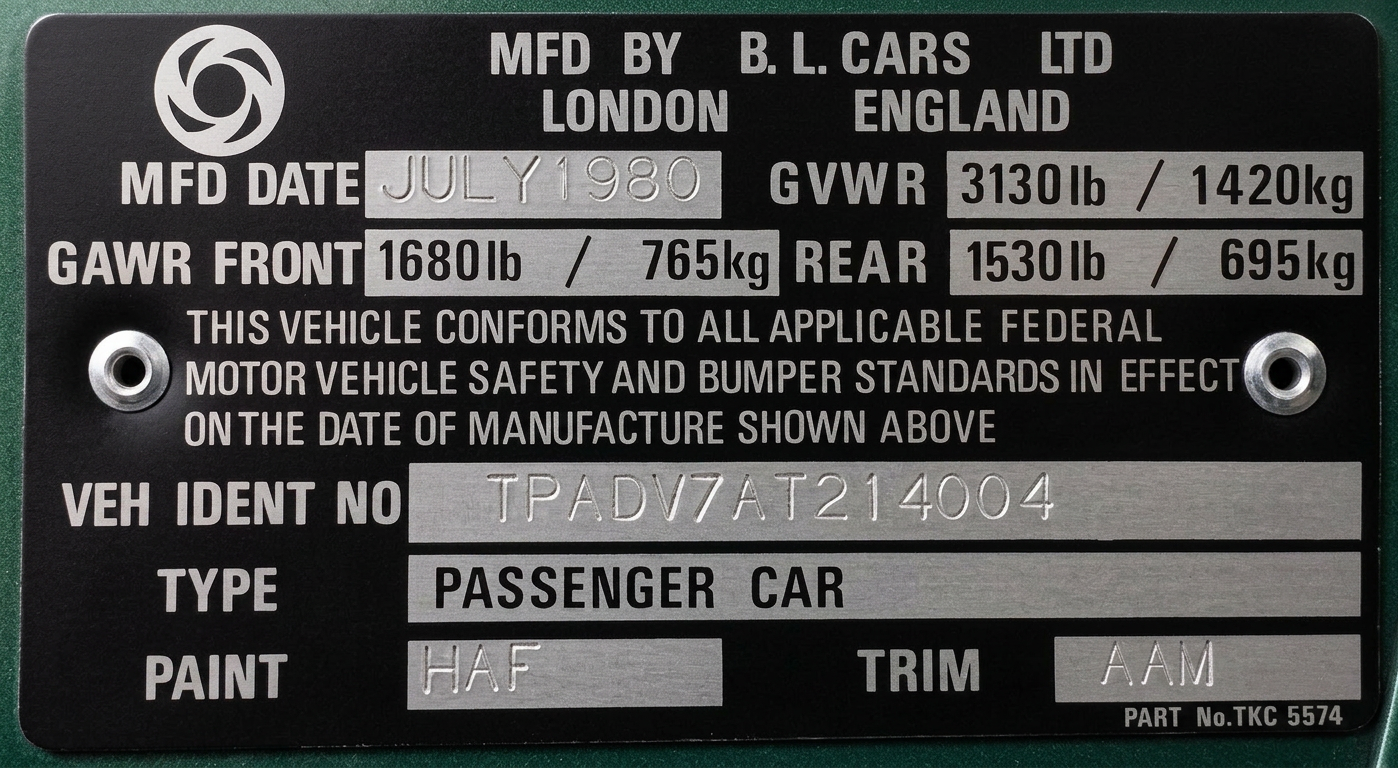
TR8 TKC5574
1 – TPADV7AT 212246 ARGENT SILVER – MHP404V – Engine 10E00609 – MAN – Body number BBP202271 (1980 SPEC – Grey Stripe Velour Trim – ala Spider special edition) Designated Quality Build TR8.
Engine Specification Clarification
An earlier and commonly held assumption was that, because a standard Federal-specification TR8 engine (the only version available at the time) was used as the initial basis, the car would have been fitted with low-compression 8.13:1 pistons.
However, having personally ridden in the car in July 2023, I can attest that its performance characteristics are far more consistent with 9.35:1 compression pistons. This is exactly what would be expected for a UK-specification TR8, even when derived from an early Federal engine base.
This strongly suggests that, despite the use of a Federal-spec engine as a starting point, the compression specification was uprated to suit intended UK performance requirements rather than remaining at Federal emissions levels.


The ONLY BBP body number all the rest have CHP300xxx series


This car is now in Derbyshire
2 – TPADV7AT 214004 POSEIDON GREEN – NWK988W – Engine 10E00655 – MAN – Body number CHP300005
Future Development RHD TR8 – Final Factory Evolution
This car was the first RHD TR8 to carry the CHP 300xxx body-number series and was initially fitted with a 9.35:1 compression engine, later becoming the only RHD TR8 equipped with a 9.75:1 compression engine. It was built to 1980/81 specification, finished with tan velour trim, and officially designated as the “Future Development” manual TR8.
After spending nearly 40 years in a private collection on the Isle of Man, during which time it was largely unseen, the car resurfaced unexpectedly at a farm auction in a small rural location in Northern Ireland. It was subsequently purchased and returned to the mainland. The car is now located in North Yorkshire.
Full story of this car is HERE


Restoration and Development History
Between July 2022 and 2025, the car underwent a rolling restoration to return it to full mechanical health after more than 40 years of minimal use. Prolonged storage in a private collection, age-related deterioration, poor or absent maintenance, and a number of unhelpful period modifications had inevitably taken their toll. The restoration has now returned the car to fully operational condition and as close as practicable to its original factory-built and factory-developed specification.
This TR8 is unique in that it was the most extensively modified road going TR8 ever developed by the factory. During testing in early 1981, it was reportedly clocked at 150 mph, underlining the advanced state of its engine and chassis development.
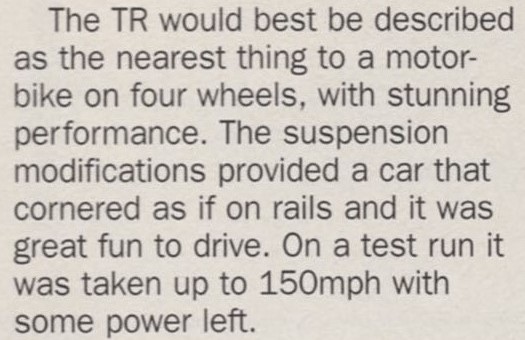
Piece written by Garry Owen RHD TR8 Manager on the car in Practical Classics 1997
NWK 988W—was used as the UK RHD TR8 Development vehicle, tasked with evaluating alternative engine and chassis specifications for the future UK and European sports car markets. This work was carried out by Tony Pond’s 1980 Works TR7V8 rally team at BL Motorsport, Abingdon, with:
-
Cliff Humphreys responsible for engine development, and
-
Richard Hurdwell responsible for suspension development.
By its final factory configuration, the car had become effectively a hybrid road/rally TR8. Former BL engineering consultant Peter Wilson later observed that “if they had known what was going on, it would never have been built,” a remark that likely explains why the car was transferred to Abingdon and developed largely outside mainstream BL Engineering oversight.
The goal of this development was to evolve the vehicle toward what would likely have become a 1982-model-year RHD TR8 production specification. Work on the car continued for several months beyond the completion of the final batch of nine Sales and Marketing cars, making it representative of the very last and most advanced factory-developed RHD TR8 specification.
Contemporary BL Motorsport Abingdon memoranda survive that document the initial phase of modifications. Further development changes were made during 1981; while copies of the later documentation have not yet been located, the physical evidence of those modifications remains present on the car today.


Engine Development and Performance
Over its life, this car effectively underwent two distinct factory engine builds.
The first build was to a specification that would later become known as the 20E engine.
The second build evolved the car to what was essentially a Triumph Vitesse–based engine specification, incorporating a WL9 camshaft. This configuration represents what would almost certainly have been fitted to production RHD TR8s, had they reached full production—likely under a new engine designation (often speculated as “30E”).
A performance run carried out in September 2023 recorded in excess of 270 bhp at the wheels at approximately 5,800 rpm, at which point the available test road was exhausted. This output is consistent with estimates of the car’s performance during its factory development period.
In context, this figure places the car at approximately 70 bhp below the contemporary Works TR7V8 rally cars, yet considerably more powerful than a standard road-going RHD TR8 would have been.
Former BL engineer John Davenport, who remembers the car from its time at Abingdon, has recently described it as a “hybrid”, intended to demonstrate the upper limits of what could be achieved within a road-based TR8 platform.
This car is now in North Yorkshire

LHS as the car arrived 2022 – RHS as it is now 2025 interior cleaned up with new seat foam
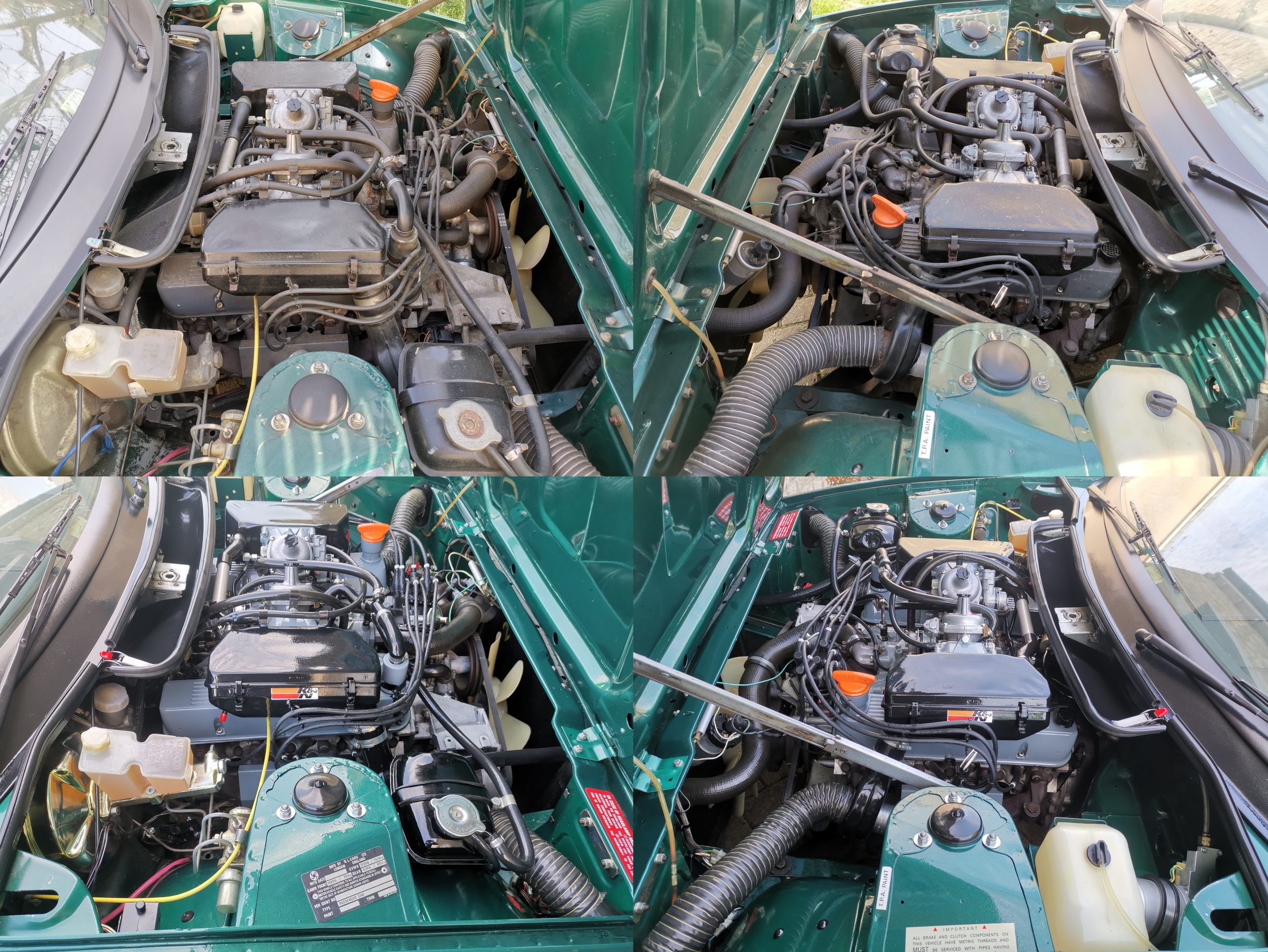
Above as the car arrived 2022 – Below as it is now 2025 cleaned up with new powder coating on components

As the car is Summer 2025
Methods Build Department PILOT PRODUCTION RHD TR8 home market 1980
PILOT PRODUCTION – “a manufacturing or engineering production line set up during development, to test new methods, processes, and systems”. Collins English Dictionary.
Only 2 x RHD home market TR8’s were built by the methods department off track in 1980 1 x Auto and 1 x Man.
1 – TPADV7AA 402289 PENDELICAN WHITE – D70 OGJ – Engine 20E00001 – MAN – Body number CHP300009
NO BUILD SHEET – This car was the first of two pilot production RHD TR8s, assembled off the main production line by the Methods Build Department. A few minor human errors appear to have occurred during the construction of these two vehicles.
Specifically, this car’s body number was initially recorded as CJP300009, later corrected on the Heritage Certificate to CJF300009. However, all RHD TR8s carry CHP300XXX-series body numbers, and given that the numerical sequence aligns correctly with its sister automatic car (CHP300010), the most likely and correct body number for this vehicle is CHP300009.
Chassis Plate and Weight Verification
This car carries the correct TR8 chassis plate: TKC6764, reflecting the proper RHD TR8 specifications. Key distinguishing features include:
-
The weights (1420 kg) are correctly positioned on the RHS of the plate, unlike TR7 plates, which place weights on the LHS.
-
The plate’s design details: on the TR8 plate TKC6764, the first zero in the serial number aligns with the gap under BL on the left-hand side. In contrast, the TR7 plate TKC4542 has the zero more central.
These features, combined with the correct weight specification, confirm that this is a genuine RHD TR8 chassis, as opposed to a TR7 or other misidentified vehicle.


This RHD TR8 now resides in a private collection in the UK.

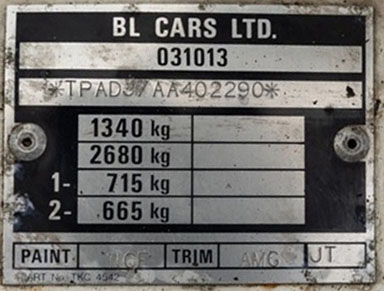
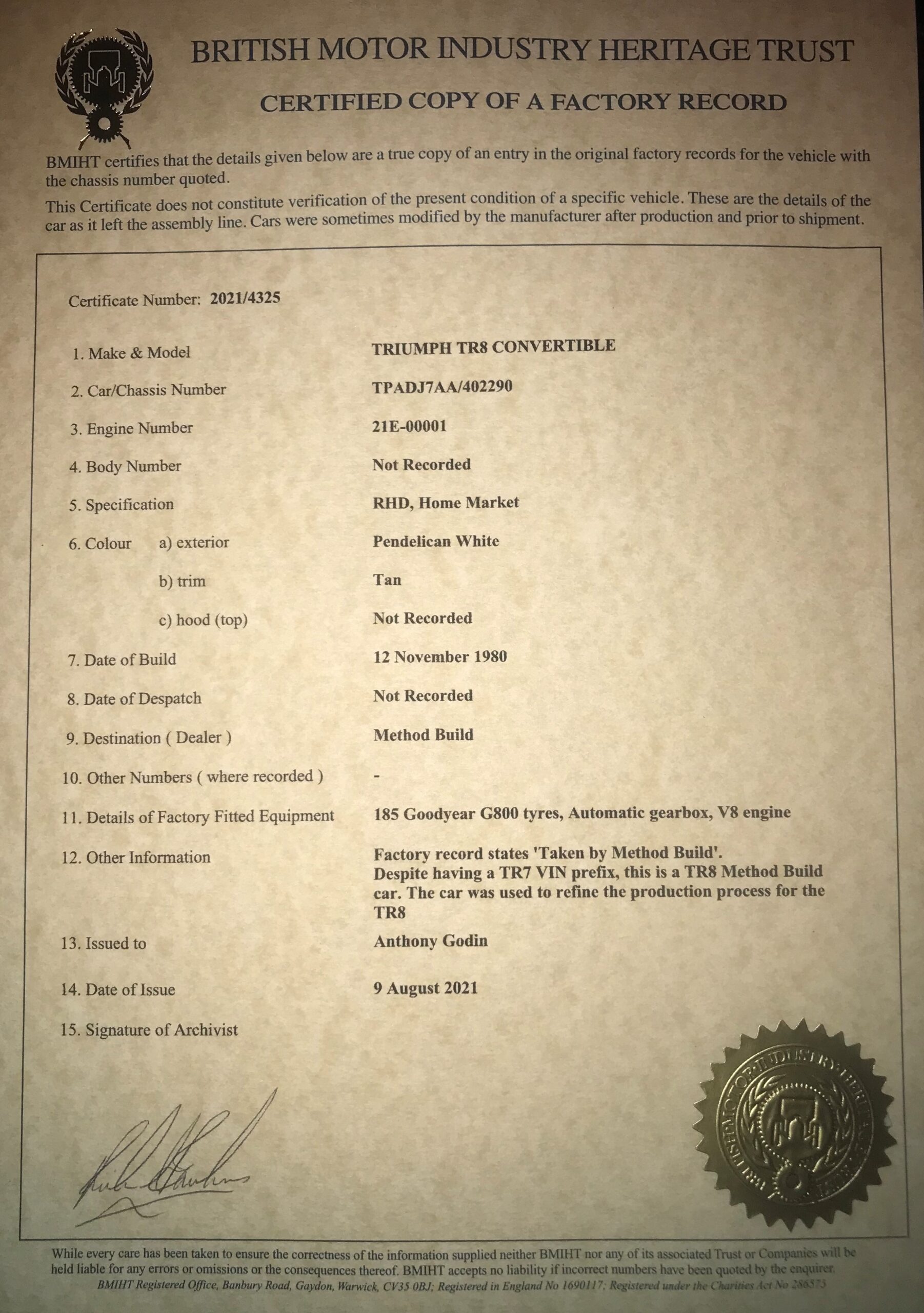
2 – TPADV3AA 402290 PENDELICAN WHITE – CFM 452W – Engine 21E00001 – AUTOMATIC — Body number CHP300010
NO BUILD SHEET – This car was the second of two pilot Methods-Build RHD TR8s, assembled off the main production line by the Methods Build Department. As with its sister manual car, a few human errors appear to have occurred during its construction.
Chassis Number Anomaly
The car’s chassis number should read:
TPADV3AA402290
However, the chassis plate on the vehicle shows:
TPADJ7AA402290
This means that, on the plate, it is incorrectly identified as a TR7 and a manual, despite the car being a TR8 automatic.
When this car first reappeared, some speculated that a TR7 had been taken from the production line and converted to RHD TR8 specification. However, this theory can be dismissed:
-
The car carries body number CHP300010, part of the CHP300XXX series used exclusively for RHD TR8s. No TR7 ever carried a CHP body number.
-
The vehicle has the correct automatic TR8 engine number (21E).
-
Its chassis number is in exact sequence with the manual pilot car, where the manual is 402289 and the automatic is 402290.
Consequently, this vehicle was built individually, in the same manner as all other RHD TR8s, rather than being a converted TR7.
Unique Status
This is the only instance of a TR7 chassis number being fitted to a genuine RHD TR8. No other cars exhibit this anomaly. Former Triumph manager Garry Owen, who oversaw the RHD TR8 project, confirmed on multiple occasions that the factory built only 22 RHD TR8s.
The car also carries the original TR7 chassis plate (P/N TKC4542) with incorrect weights of 1340 kg, further marking it as unique. Despite these anomalies, the vehicle is verified by British Motor Heritage as a genuine RHD TR8.
This car represents a 0.01% rarity within the TR8 programme, making it both historically and technically unique.
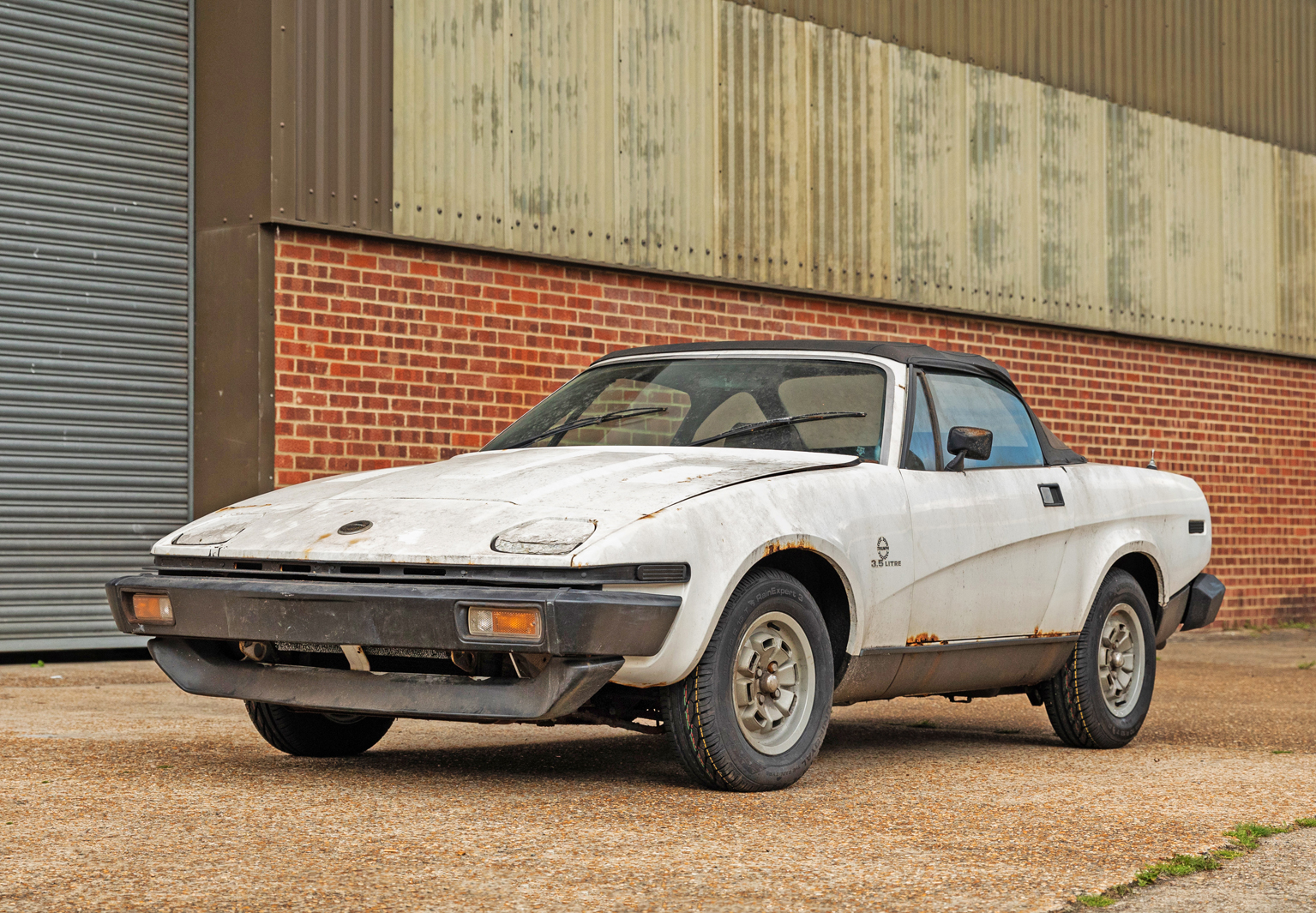
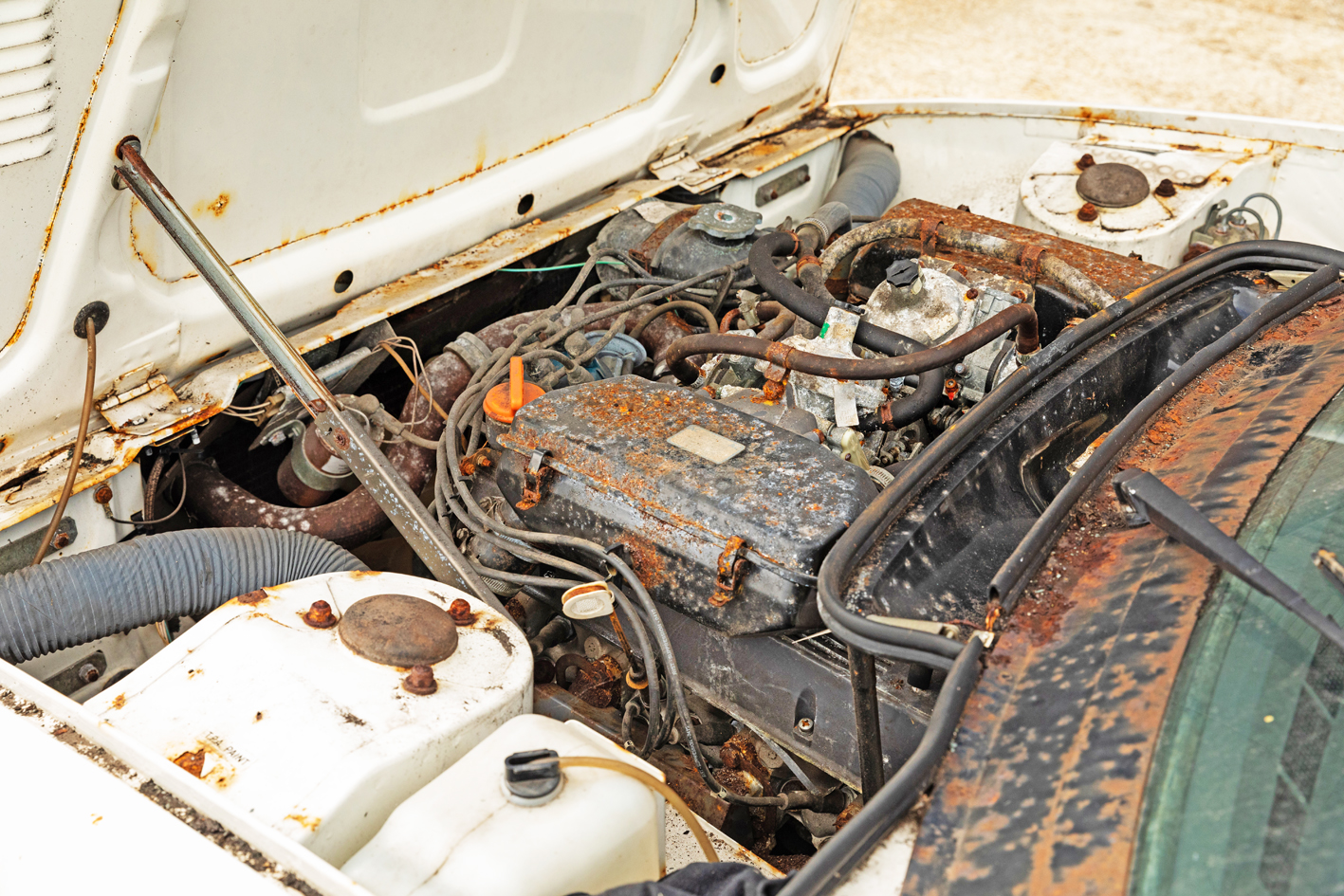
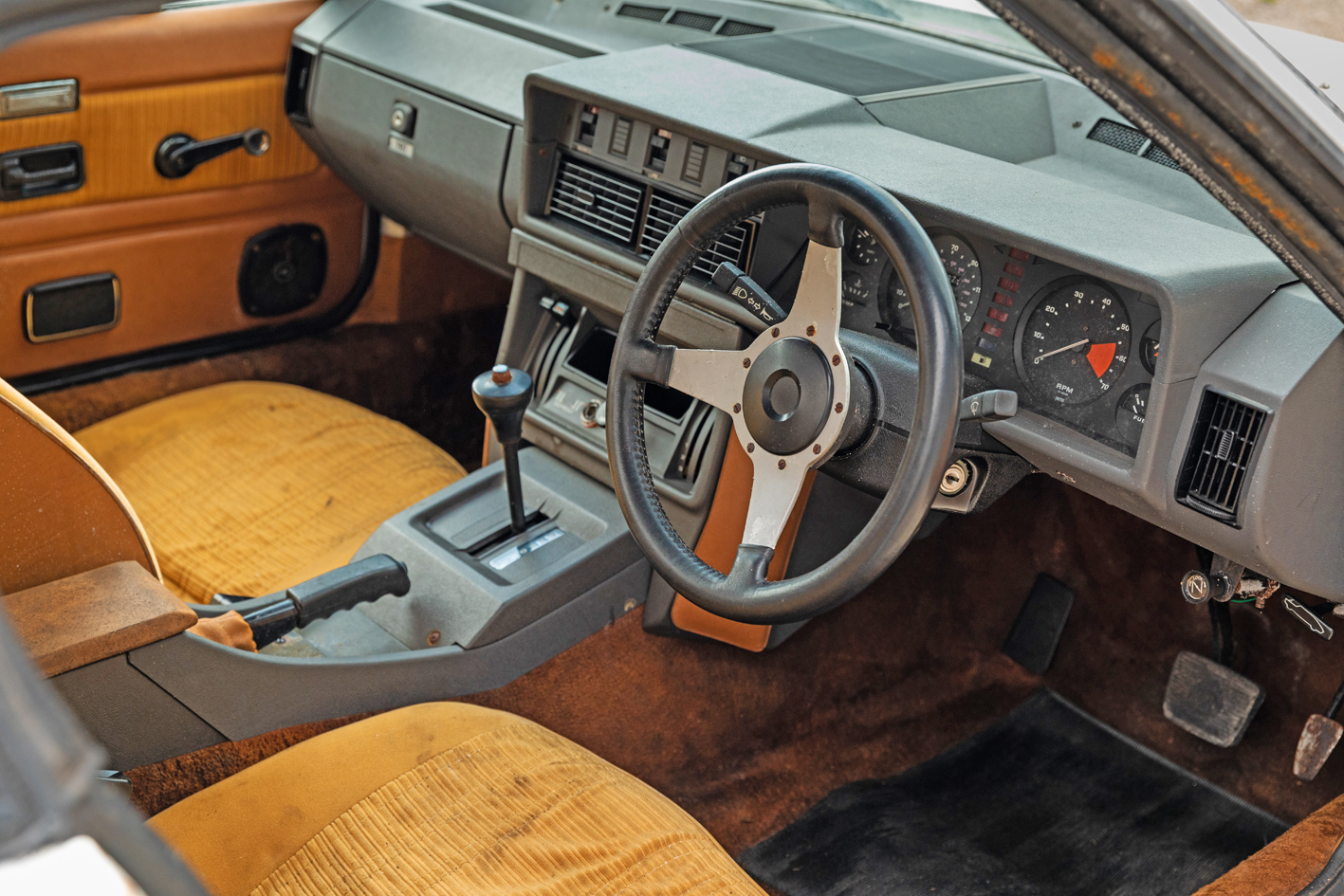
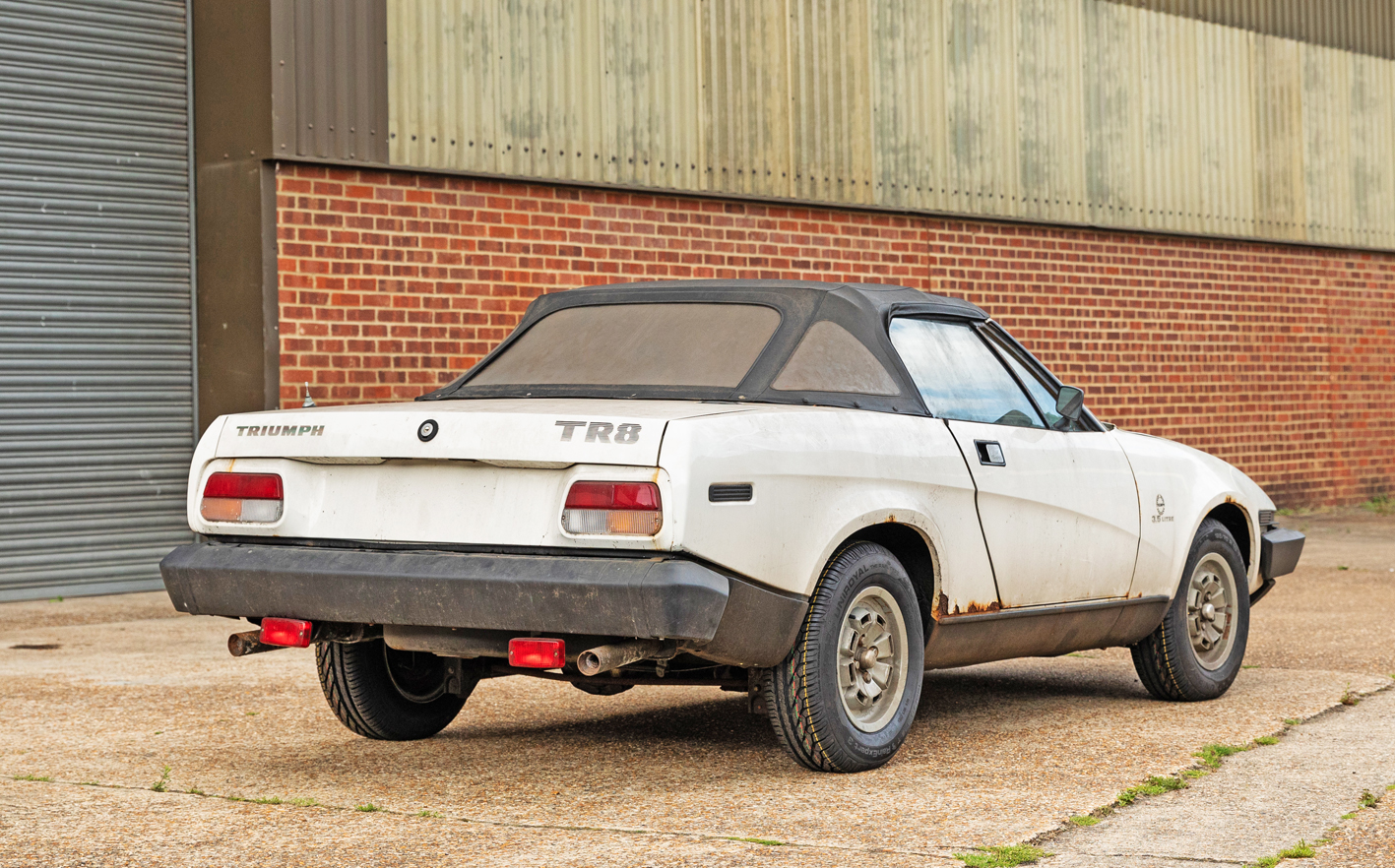
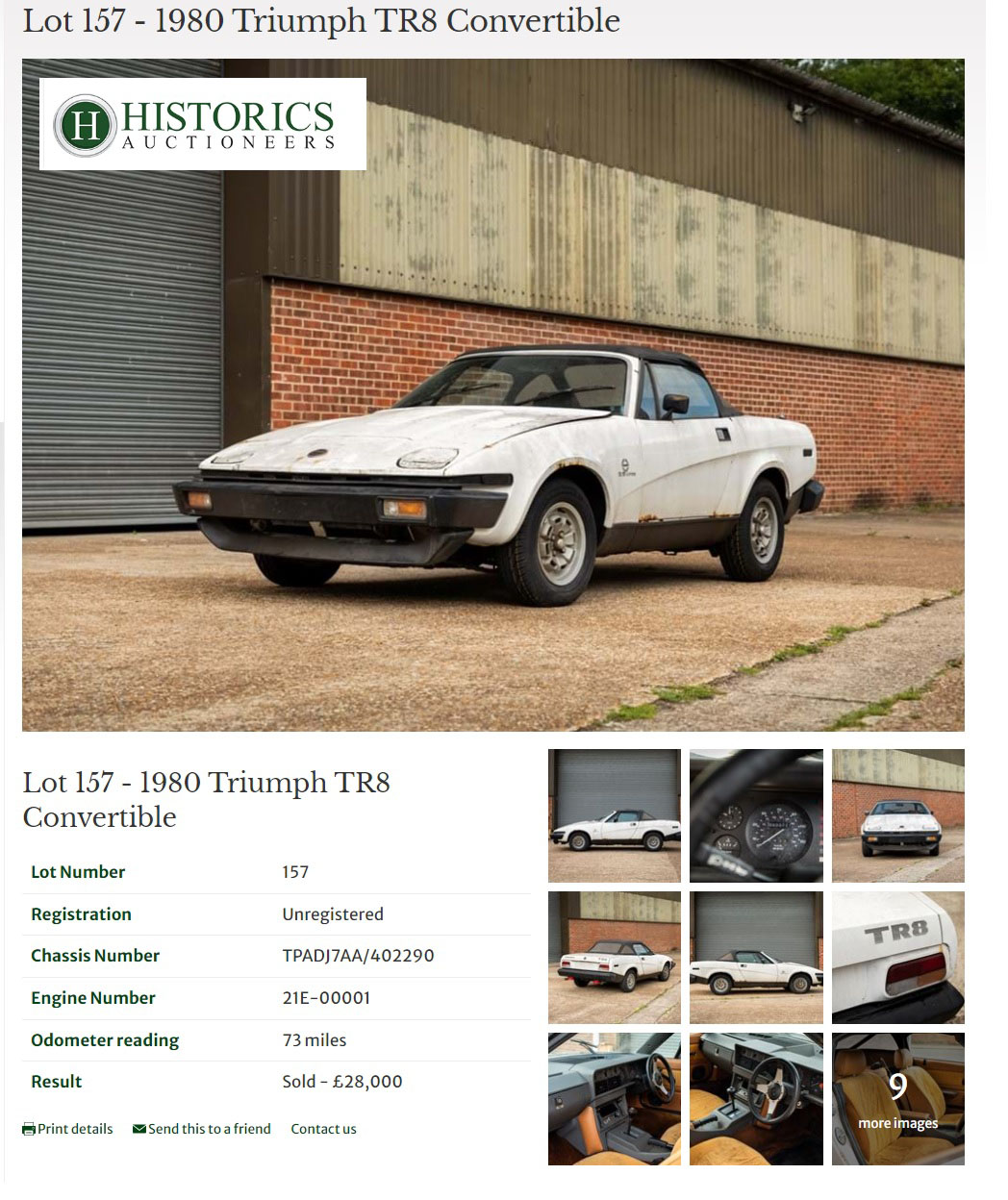
Sold at Auction September 2021 – 28K

Fully striped to a shell ground up restoration in May 2022


After being hidden away in a leaking lockup in London for 40 years unregistered, the car has now undergone a full back to bare shell nut and bolt restoration as well as being registered for the road. This car is now in Kent.
RHD TR8 x 9 home market PILOT PRODUCTION for PRESS/LAUNCH 1980/81 Canley/Solihull TR8’s built on track – build cards attached.
PILOT PRODUCTION – “a manufacturing or engineering production line set up during development, to test new methods, processes, and systems”. Collins English Dictionary.
Following the two Methods-Build pilot cars, a further 18 RHD Home Market TR8s were constructed at Canley/Solihull. It is important to note that no full-production RHD TR8s were ever built; all of these vehicles were pre-production or pilot-production examples.
First Batch of 9 – Late 1980
The first batch of nine cars was put through the manufacturing process in late 1980, though they were not officially released from manufacturing until after the Christmas holidays. Consequently, the build records show a final build date of 5 January 1981, despite the actual assembly taking place from November to December 1980. Evidence from chassis plates suggests these cars were almost certainly built at Canley, not Solihull.
Originally, there was a plan to implement further modifications developed on NWK 988W, the pre-production Green TR8, into the full production RHD TR8s. After a January 1981 review with BL Motorsport Abingdon, it was demonstrated that these improvements could be added at no extra production cost. The intention was to incorporate them into the second batch of nine cars, but no firm decision was made in time. As a result, these second-batch cars were built to the latest approved Methods-Build TR8 specification, featuring the later push-button dashboard, identical to the pilot build cars.
The first batch of nine retained an interior specification identical to NWK 988W, with a 1980-style dashboard but 1981-style seats and door trim. Had full production RHD TR8s been realized, they would likely have been even closer to the final 1981 engine and suspension specification of NWK 988W than the pilot-production cars actually produced.
For reference, NWK 988W, the pre-production Green TR8, achieved:
-
0–60 mph in ~5.6 seconds
-
Top speed of 150 mph
-
Exceptional handling, described as “running on rails”
Although NWK 988W was the only car built to the final RHD TR8 specification, it represents the ultimate benchmark of what a production RHD TR8 might have been—a fitting note to conclude the pre-production story.
Chassis Plate Anomalies
All nine cars in this first batch carry the TR7 chassis plate TKC4542, including incorrect weight information (1340 kg, LHS), yet they have the correct TR8 chassis numbers stamped. This represents yet another manufacturing anomaly among UK-spec RHD TR8s, of which there are several.

1st batch of 9 Despatched Jan 5th, 1981, to Press Fleet Canley.
1 – TPADV7AA 402960 PENDELICAN WHITE – RDU35W – Engine 20E00004 – Body number CHP300437
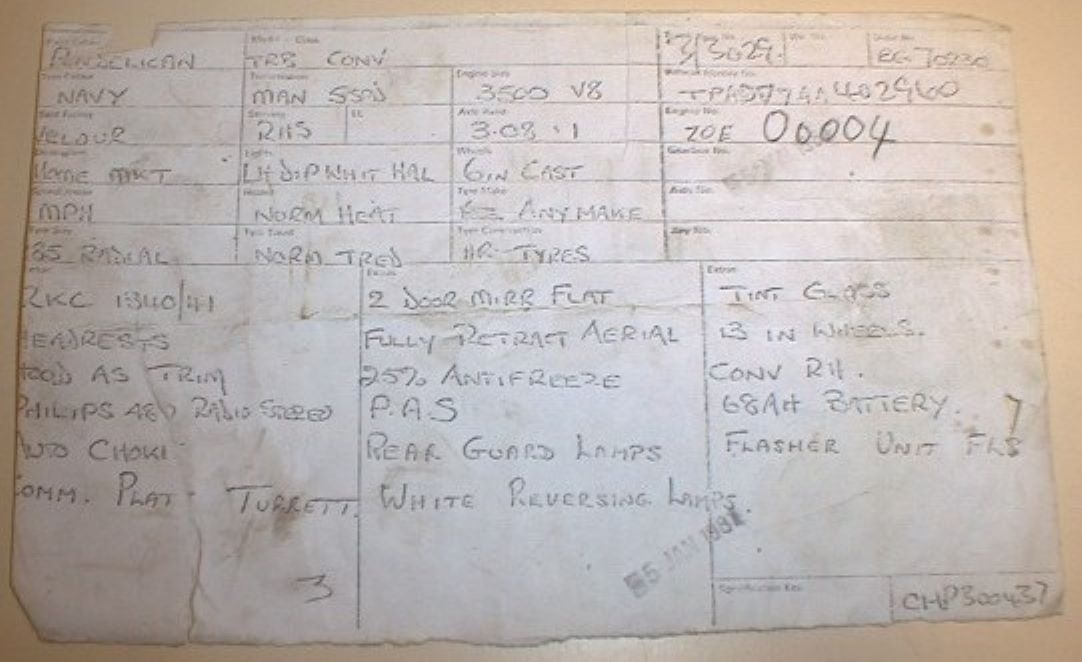
Photo of build record from British Motor Museum at Gaydon. Do not copy or replicate

2 – TPADV7AA 403014 PENDELICAN WHITE – PVC574W – Engine 20E00008 – Body number CHP300429
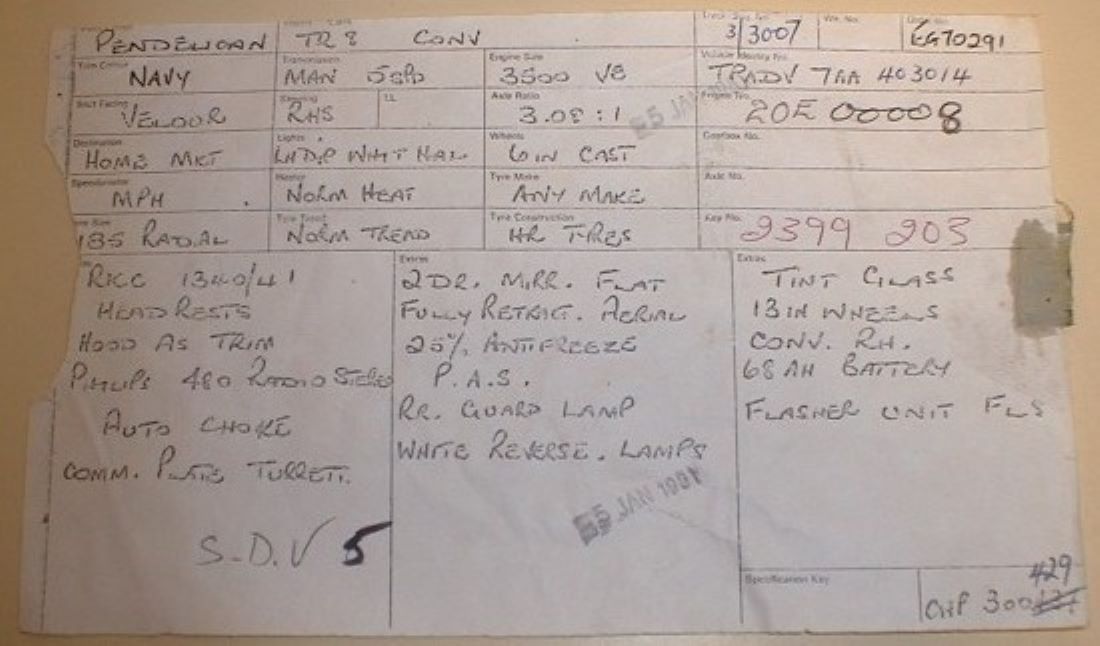
Photo of build record from British Motor Museum at Gaydon. Do not copy or replicate
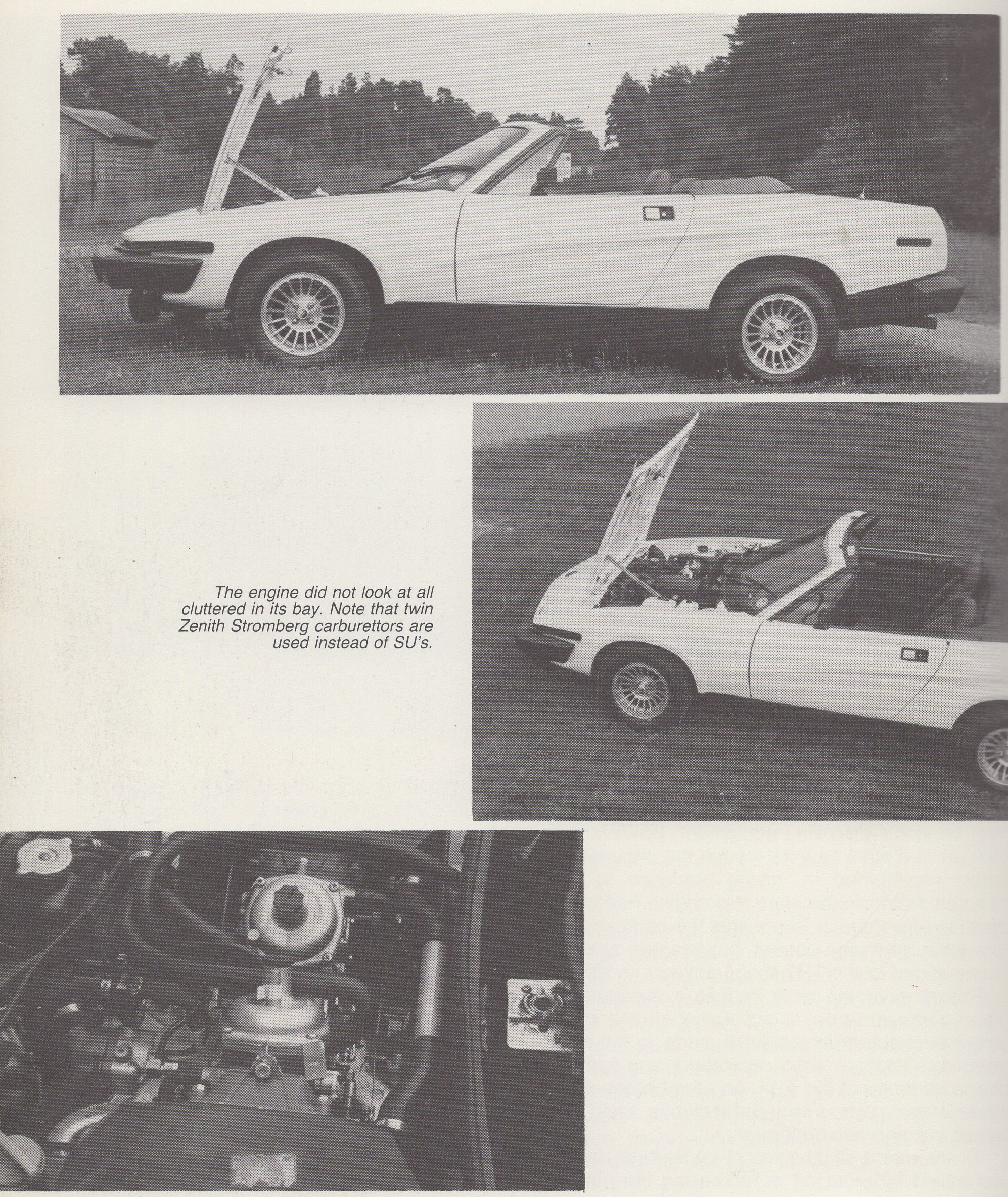
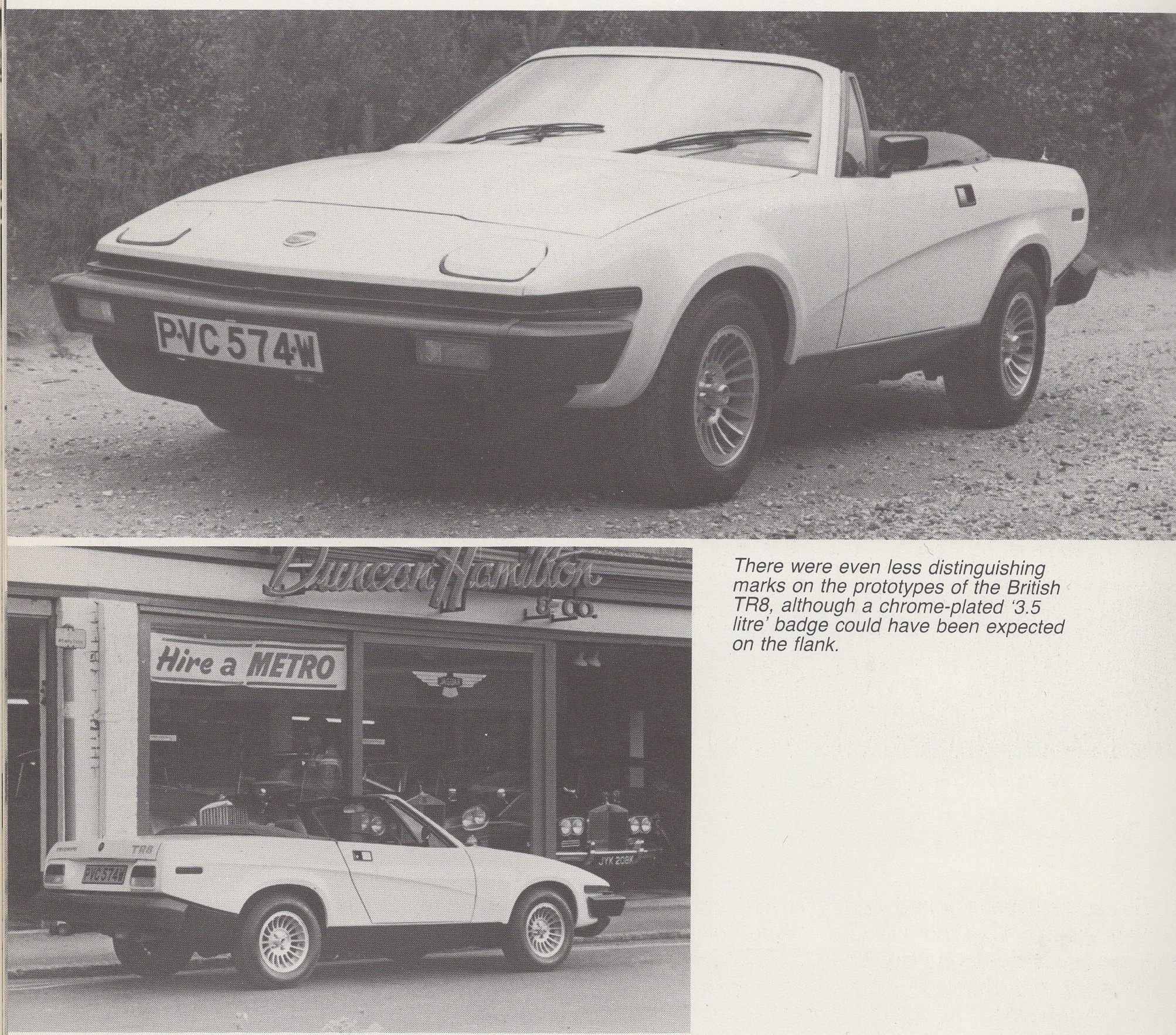
As the car is July 2024 in pictures below.


3 – TPADV7AA 403024 PENDELICAN WHITE – 2498TR – Engine 20E00009 – Body number? The build card for this car unusually states AXLE WHITE & STRUT RED. It has no body number either listed.

Photo of build record from British Motor Museum at Gaydon. Do not copy or replicate
4 – TPADV7AA 403034 BORDEAUX RED – URU287X – TRA8OK – ZV-11581 – Engine 20E00005 – Body number CHP300424 (This car no longer has its original engine and has been substantially modified – be concerned if you see this engine number on another car)
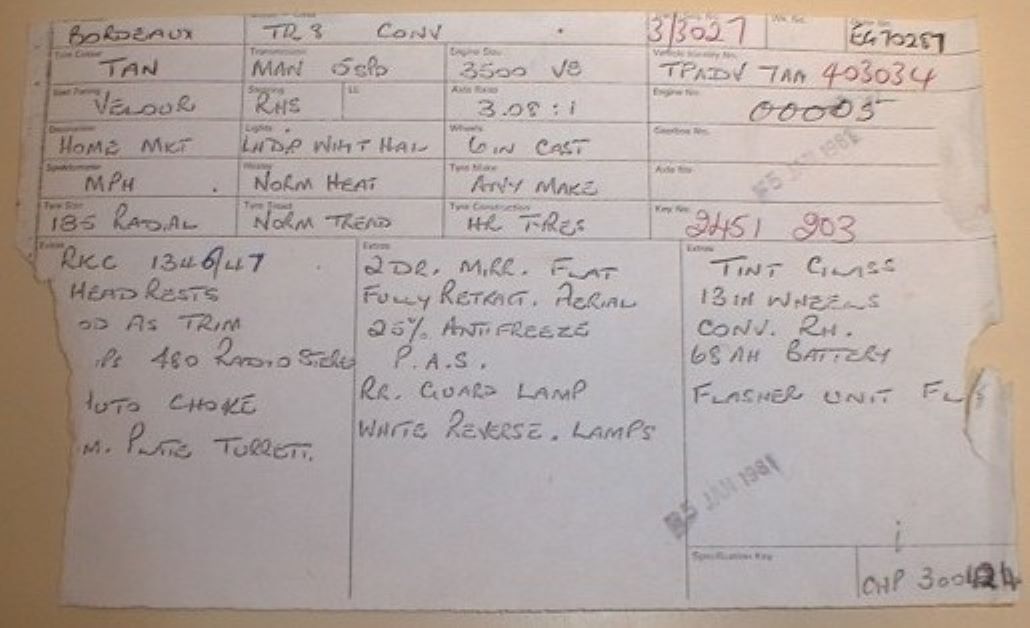
Photo of build record from British Motor Museum at Gaydon. Do not copy or replicate


5 – TPADV7AA 403044 BORDEAUX RED – WPU281W – (One of the two cars used by BSM) – Engine 20E00003 – Body number CHP300505
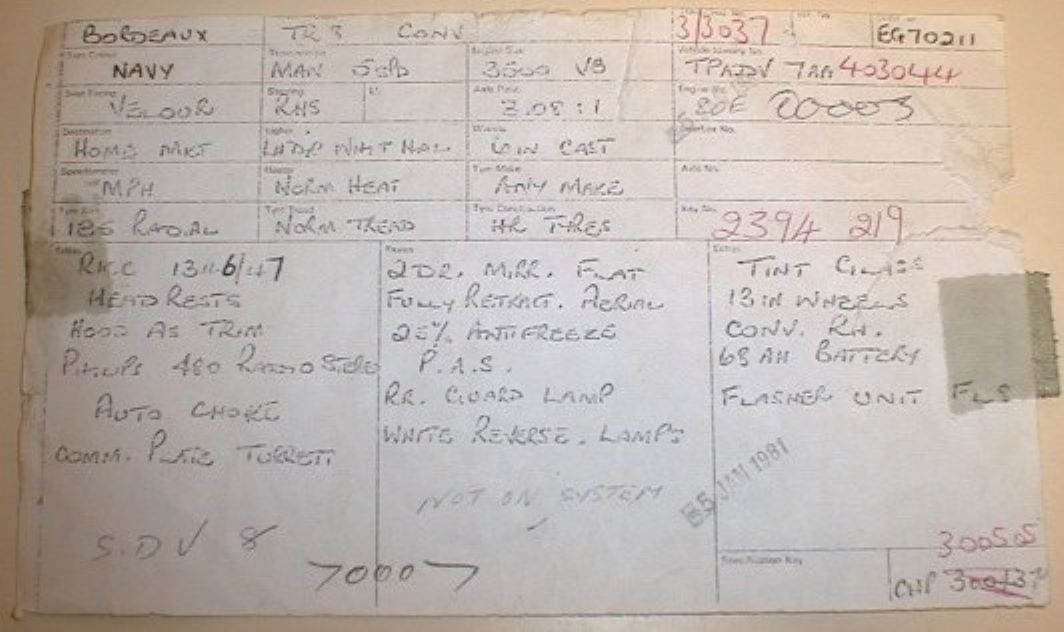
Photo of build record from British Motor Museum at Gaydon. Do not copy or replicate


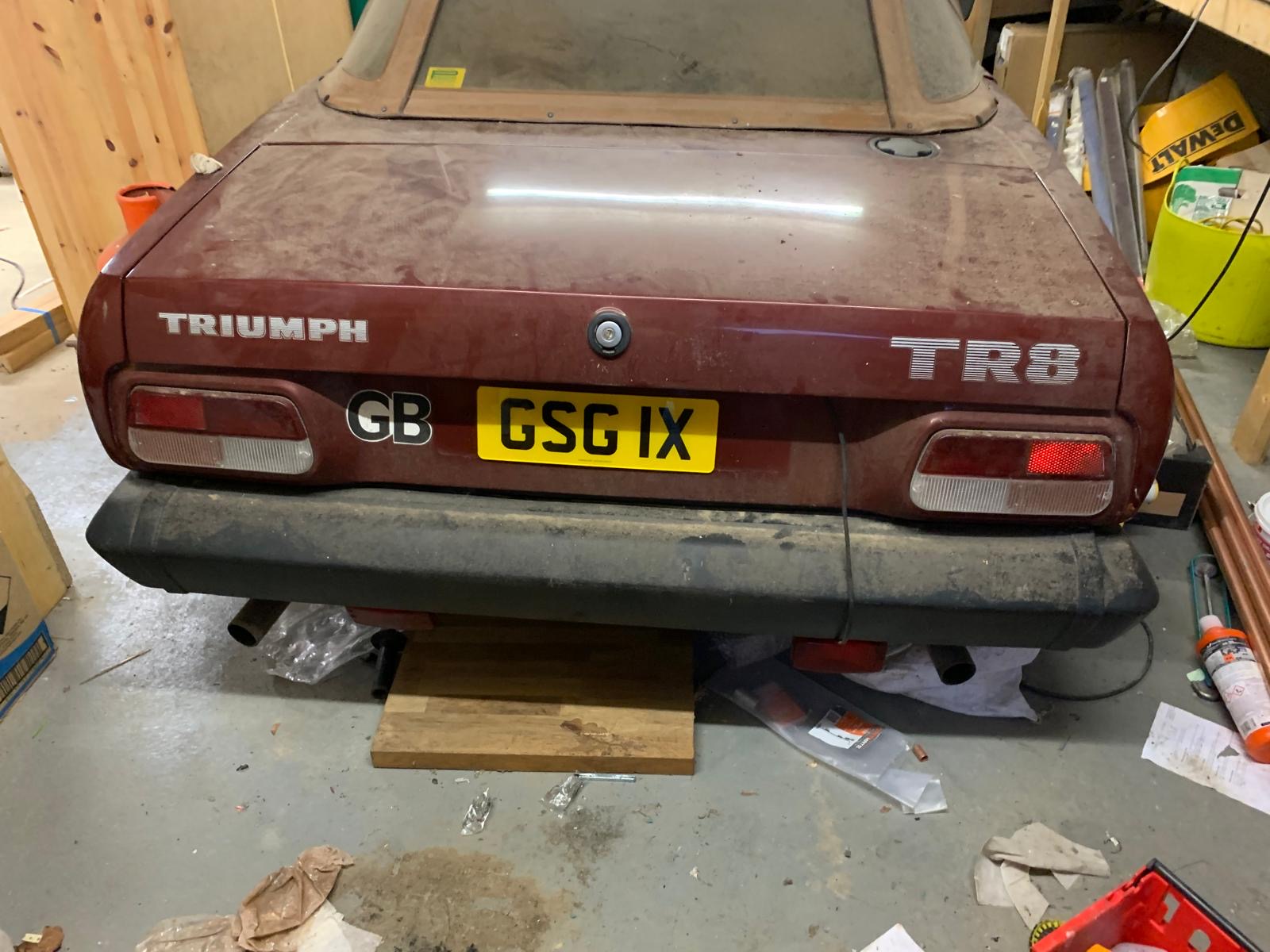
6 – TPADV7AA 403054 BORDEAUX RED – GSG1X – Engine 20E00002 – Body number CHP300596 (TBC)
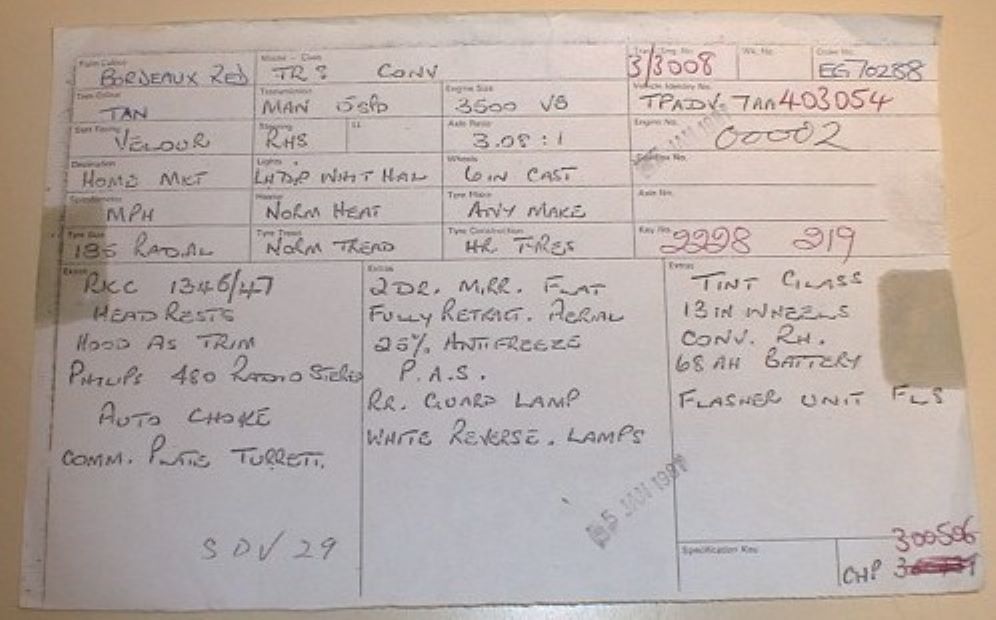
Photo of build record from British Motor Museum at Gaydon. Do not copy or replicate


7 – TPADV7AA 403062 PENDELICAN WHITE – WEL480X – Engine 20E00006 – Body number CHP300527
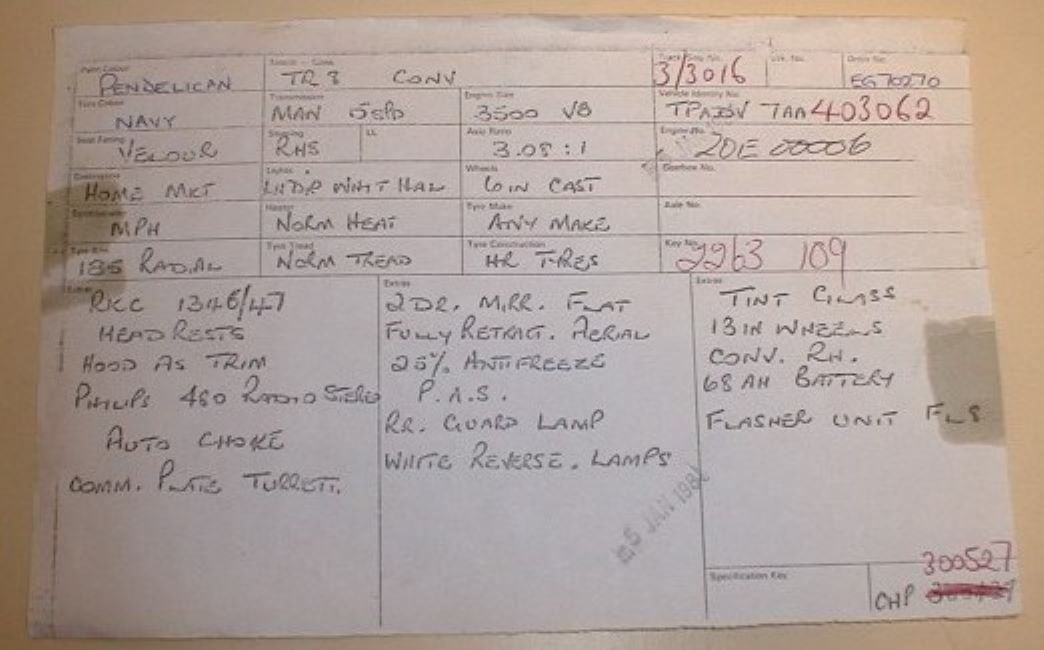
Photo of build record from British Motor Museum at Gaydon. Do not copy or replicate


8 – TPADV7AA 403072 PERSIAN AQUA – A8TRR – Engine 20E00007 – Body number CHP300493
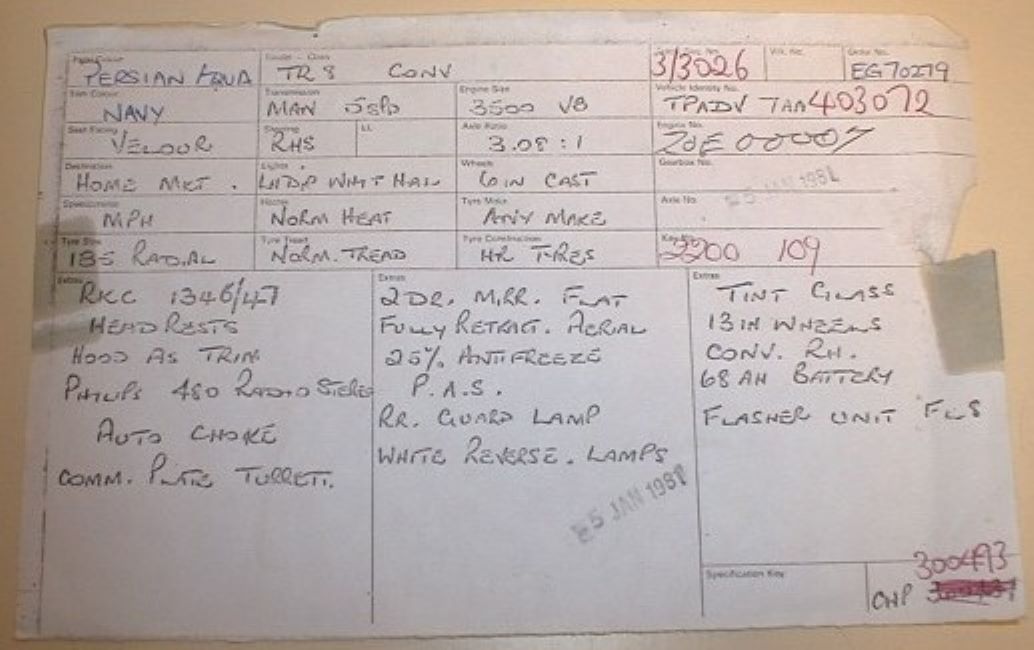
Photo of build record from British Motor Museum at Gaydon. Do not copy or replicate
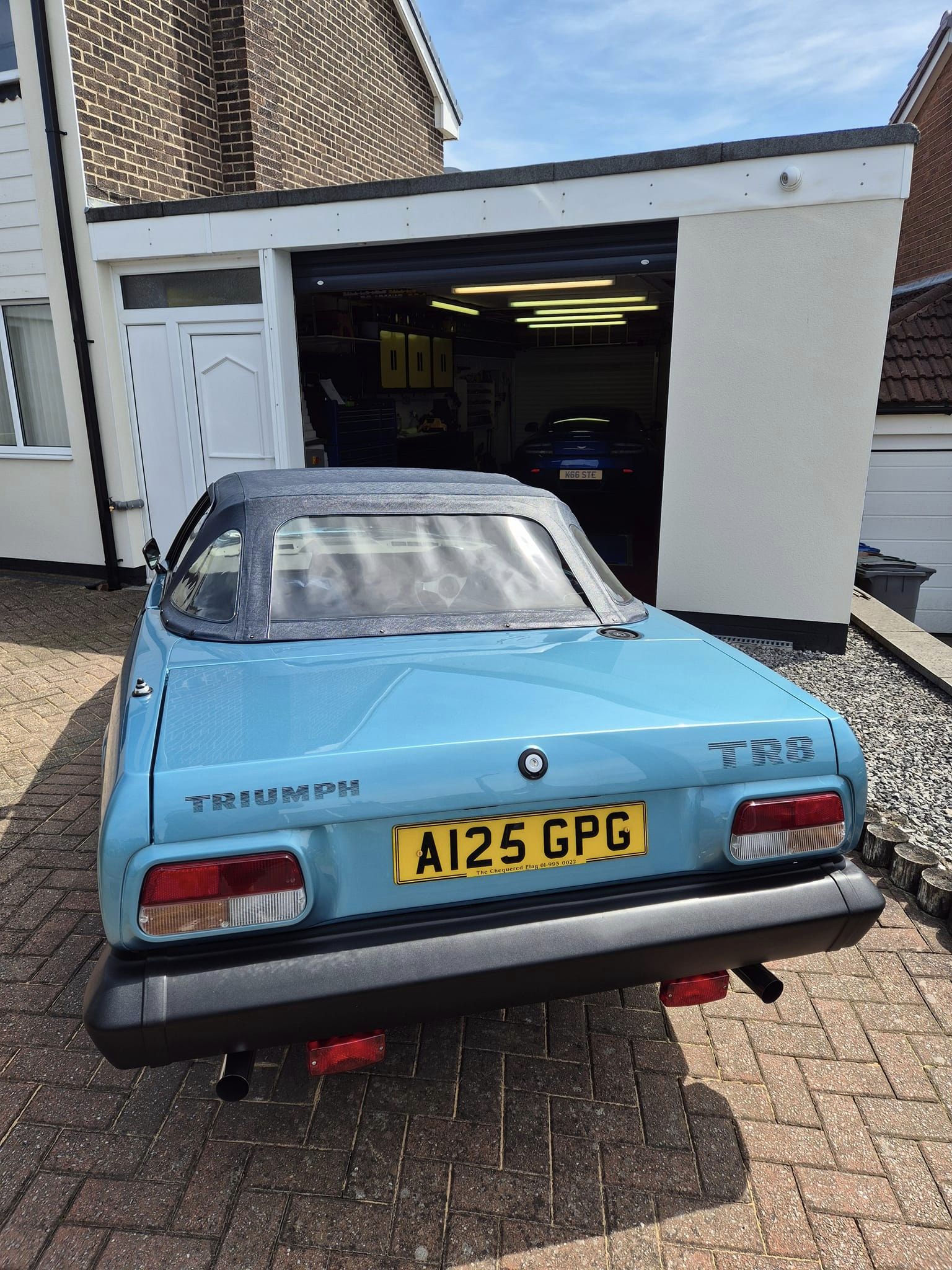
9 – TPADV7AA 403082 PERSIAN AQUA – A125GPG (ATR835L now on the car) – Engine 20E00010 – Body number CHP300492
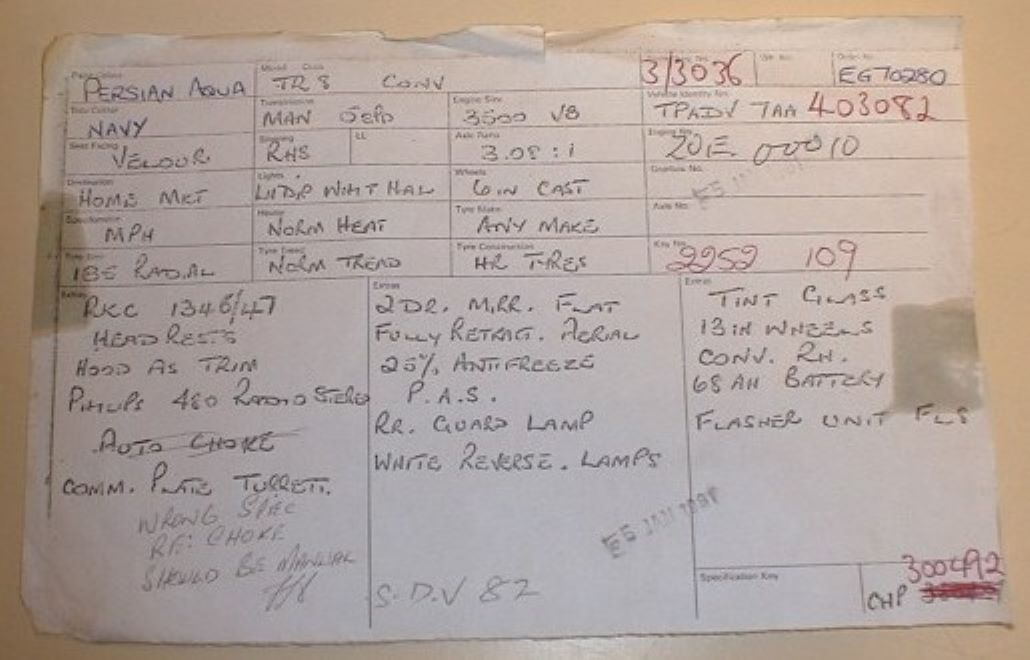
Photo of build record from British Motor Museum at Gaydon. Do not copy or replicate


Fully restored to concours winning condition and as it is July 2024 in the pictures below.


RHD TR8 x 9 home market PILOT PRODUCTION for Sales and Marketing Longbridge 1981 Solihull TR8’s built on track – build cards attached.
PILOT PRODUCTION – “a manufacturing or engineering production line set up during development, to test new methods, processes, and systems”. Collins English Dictionary.
The second batch of nine RHD TR8s was built between January and February 1981 and officially released in March 1981, just before production of the TR8 was cancelled on 14 May 1981.
Chassis Number Anomalies
All nine cars in this batch exhibit incorrect chassis numbers, due to the transposition of the letters “V” and “A”. The build records for each vehicle also display the same error. The correct chassis prefix for these cars should have been:
TPADV7AA
While some records have subsequently been corrected, most still reflect the incorrect chassis number, including the chassis plates themselves. This anomaly provides a reliable method of identifying the second batch of RHD TR8s.
Some of the original build cards have had the letter transposition manually corrected over time, but the error is present on all nine cars in this batch, as well as on the automatic Methods-Build TR8 described earlier.
For consistency with the intended chassis sequence, and to clearly show how these vehicles were meant to align with the TR8 layout, the corrected chassis numbers are presented here, rather than the technically incorrect numbers on the plates.
TR8 Chassis Plates
The last batch of nine cars (March 1981) were fitted with the correct TR8 chassis plate: TKC6764, featuring:
-
Correct weight specification: 1420 kg, RHS
-
Plate design details distinguishable at a distance: on TKC6764, the first zero in the serial number lines up with the gap under BL to the left, whereas the TR7 plate (TKC4542) has it more central
-
Weights positioned on the RHS, as opposed to the LHS placement on TR7 plates
These features, combined with correct chassis numbering, clearly differentiate the March 1981 batch from the earlier Methods-Build and late 1980 pilot-production cars, which all carry anomalies.
1- TPADV7AA 403592 ARAN BEIGE – 56GJH – Engine 20E00021 – Body number CHP300525
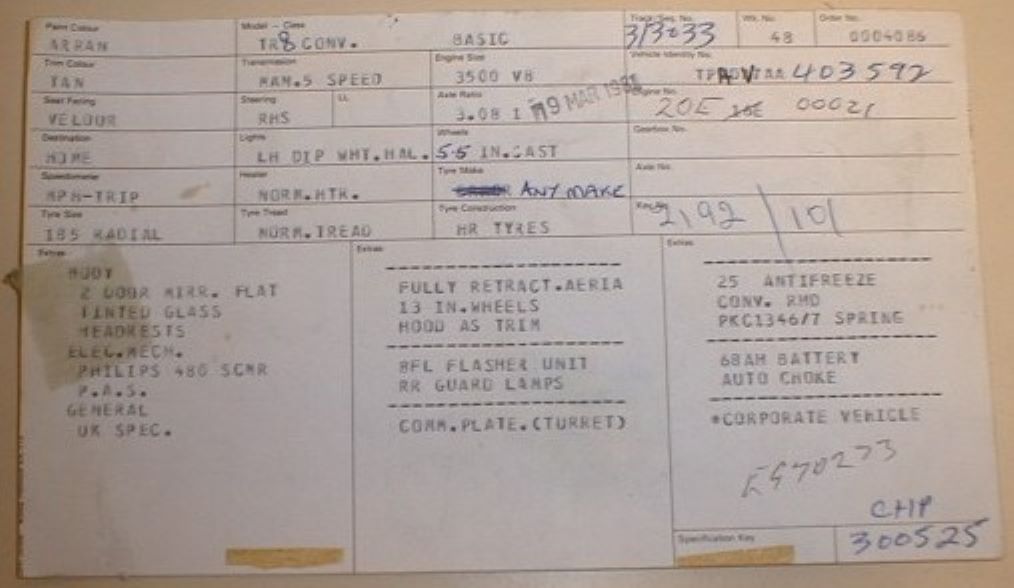
Photo of build record from British Motor Museum at Gaydon. Do not copy or replicate

2 – TPADV7AA 403731 PHARAOH GOLD – MFS302X – Engine 20E00016 – Body number CHP300708
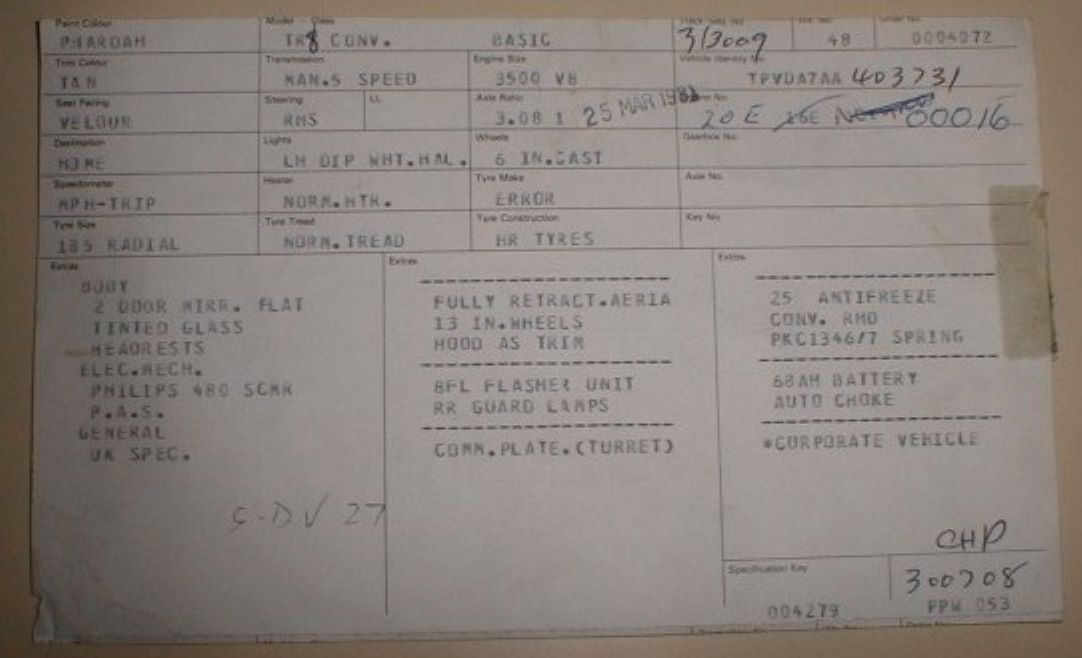
Photo of build record from British Motor Museum at Gaydon. Do not copy or replicate


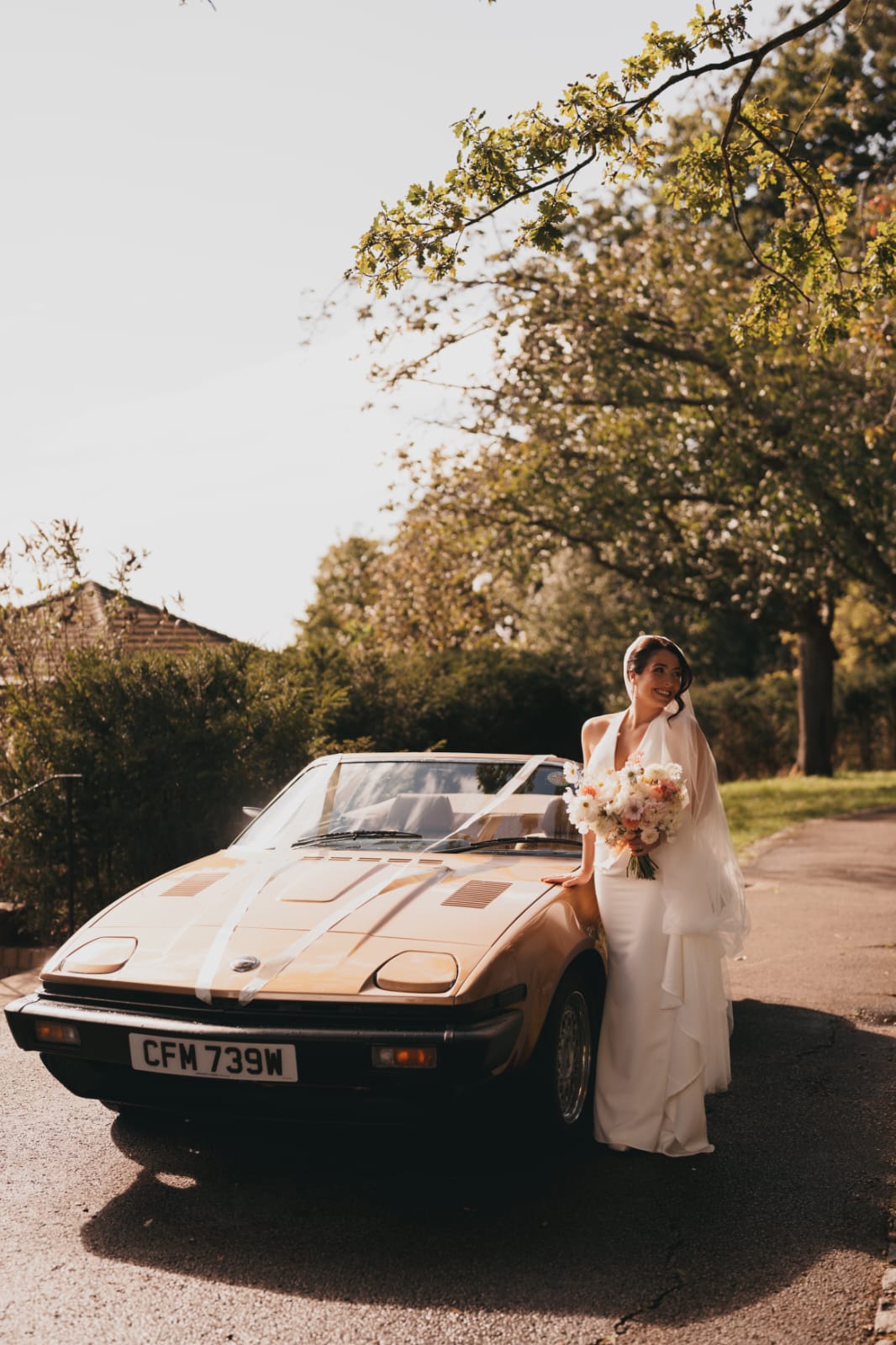
3 – TPADV7AA 403736 PHARAOH GOLD – CFM739W – Engine 20E00013 – Body number CHP300704
Owner open to the “RIGHT” OFFER only 450 miles from new!
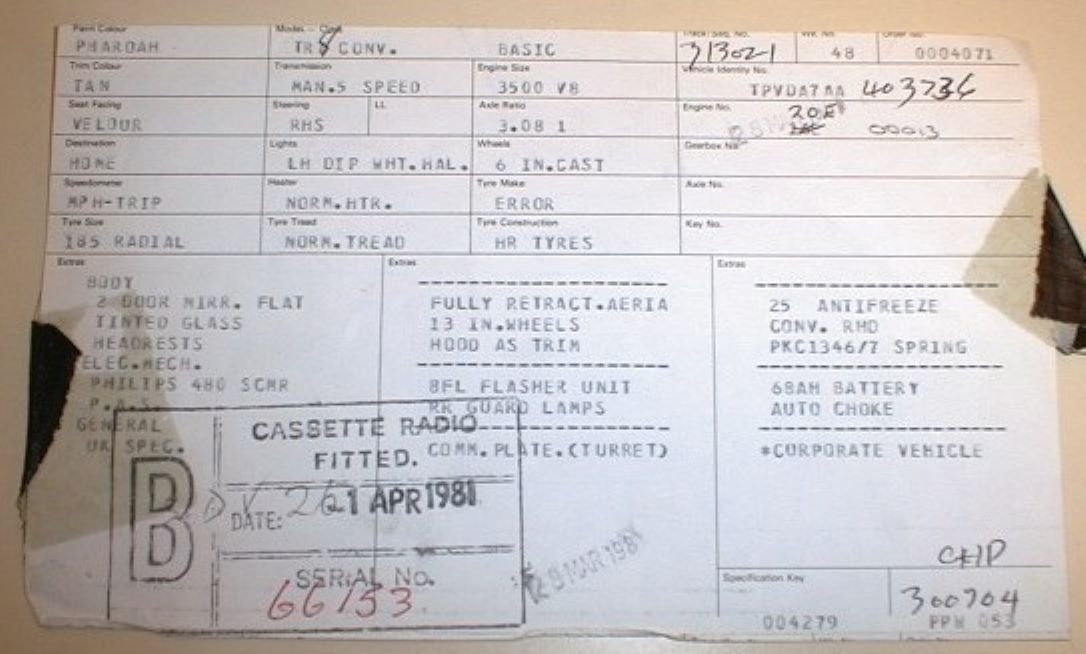
Photo of build record from British Motor Museum at Gaydon. Do not copy or replicate
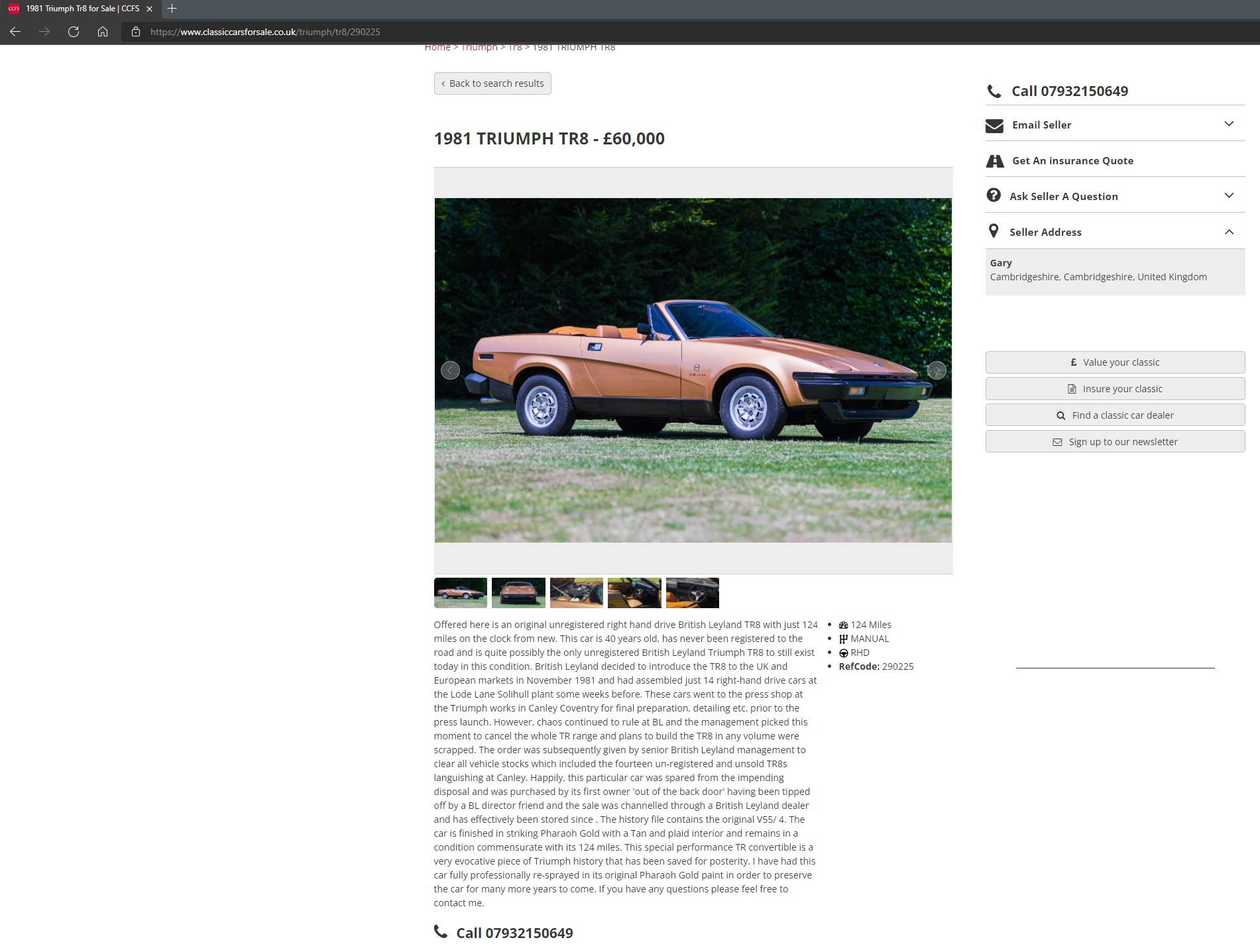

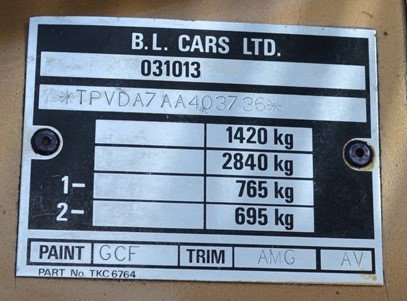
Interestingly the V and A have been transposed. The build record above also shows the same incorrect chassis number. Should be TRADV7AA
As the car is in June 2024 in the pictures below


The cars new owner finally registered the car for the road CFM739W in 2025 along with a suspension rebuild, seats refoamed and trimmed and a new hood fitted of a slightly different shade/colour to original tan one due to a tear in the original


4- TPADV7AA 403741 PHARAOH GOLD – OOV315X – Engine 20E00025 – Body number CHP300710
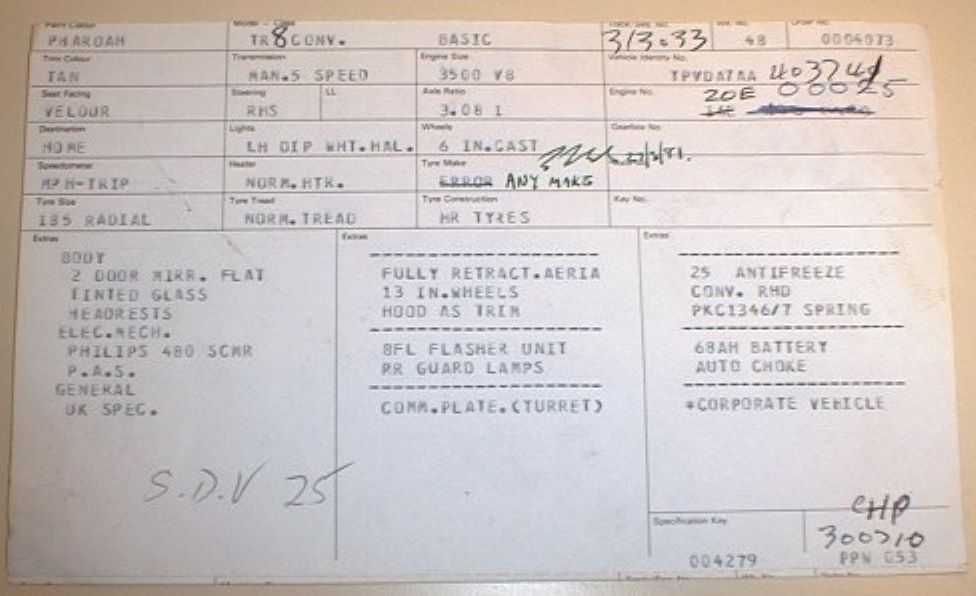
Photo of build record from British Motor Museum at Gaydon. Do not copy or replicate
5 – TPADV7AA 403746 TRITON GREEN – Engine 20E00024 – Body number CHP300713
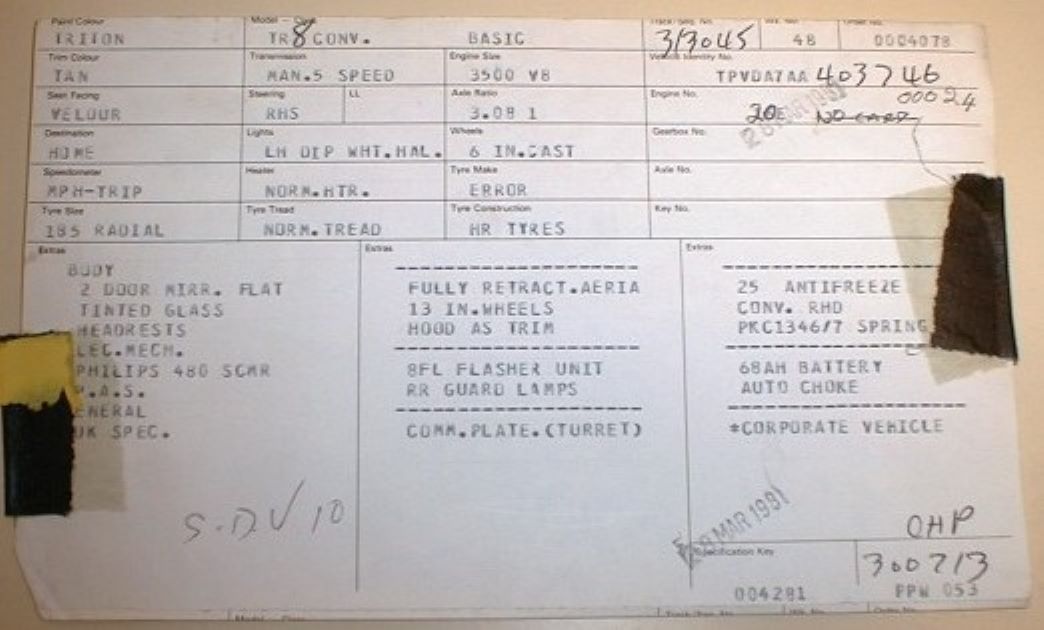
Photo of build record from British Motor Museum at Gaydon. Do not copy or replicate
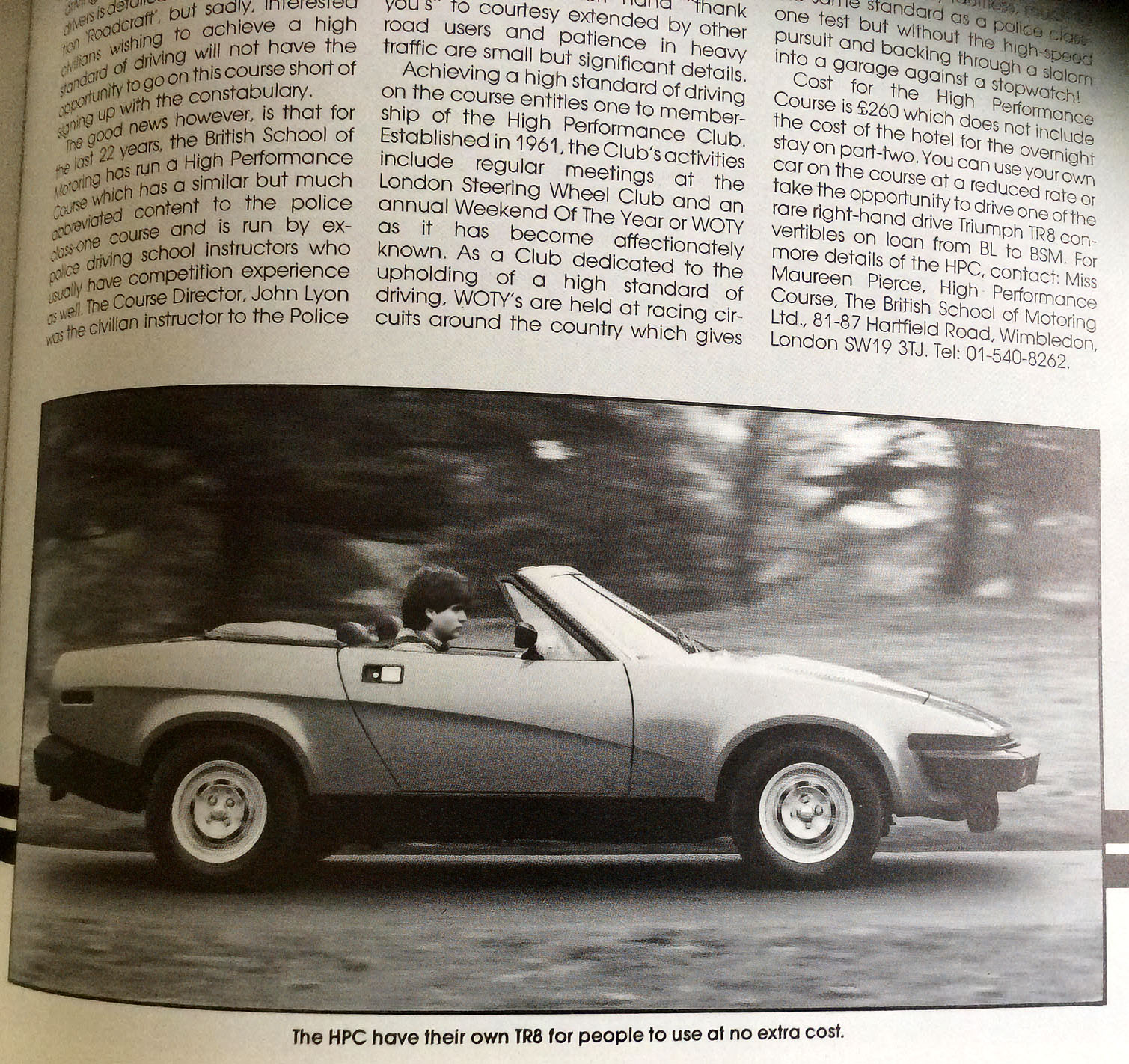
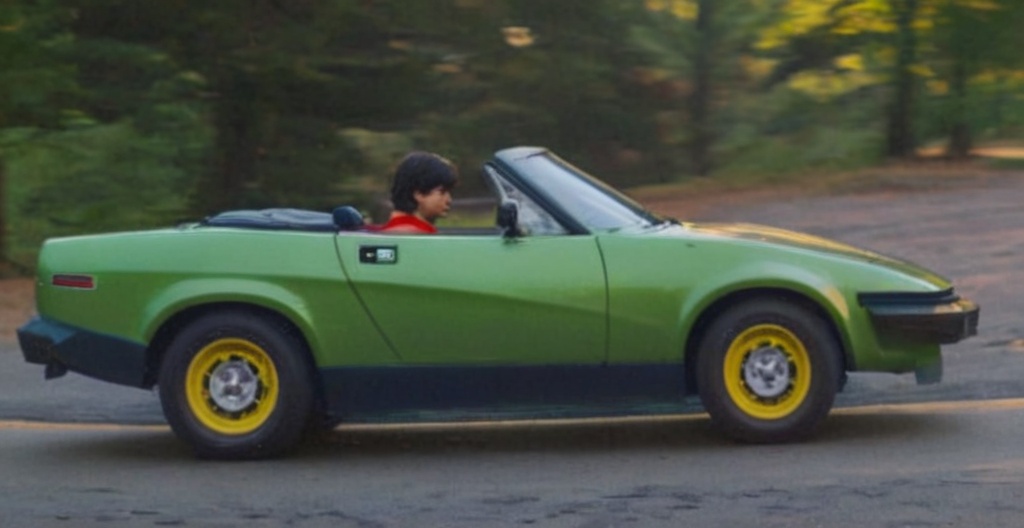
This car was used by BSM on their advanced driving course and was written off in an accident. Details of the HPC course is in the picture above. A number of RHD TR8’s were used by BSM.
6- TPADV7AA 403751 TRITON GREEN – WNW2X – Engine 20E00023 – Body number CHP300711
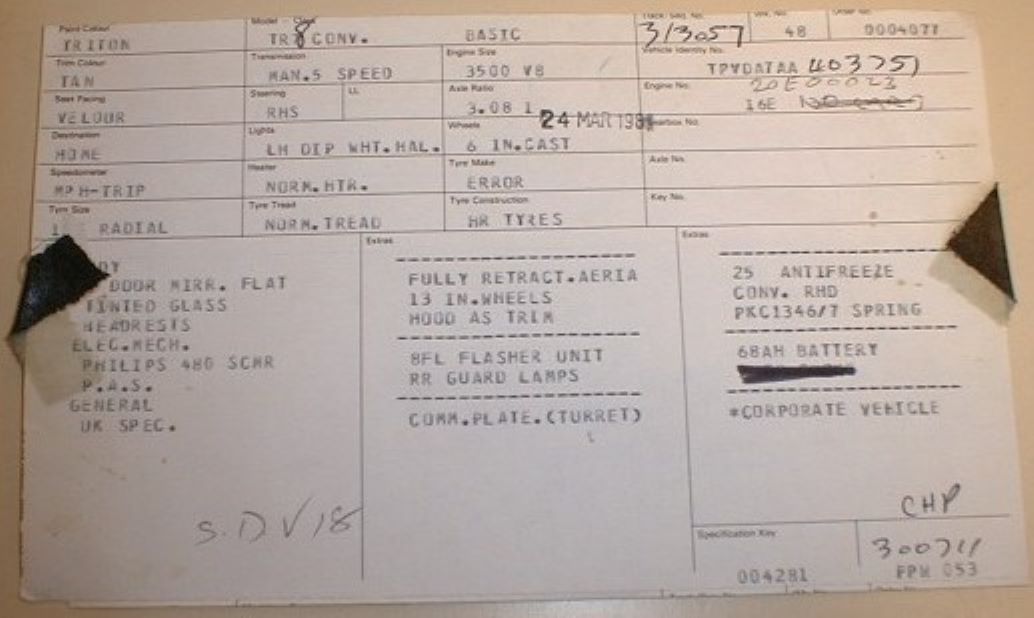
Photo of build record from British Motor Museum at Gaydon. Do not copy or replicate
First owned by SAATCHI & CO LTD in London
As the car is June 2022 in pictures below


7 – TPADV7AA 403761 CAVALRY BLUE – D63OGJ – Engine 20E00022 – Body number CHP300727

Photo of build record from British Motor Museum at Gaydon. Do not copy or replicate


Interestingly the V and A have been transposed. The build record above also shows the same incorrect chassis number. Should be TRADV7AA
As the car is August 2023 in pictures below


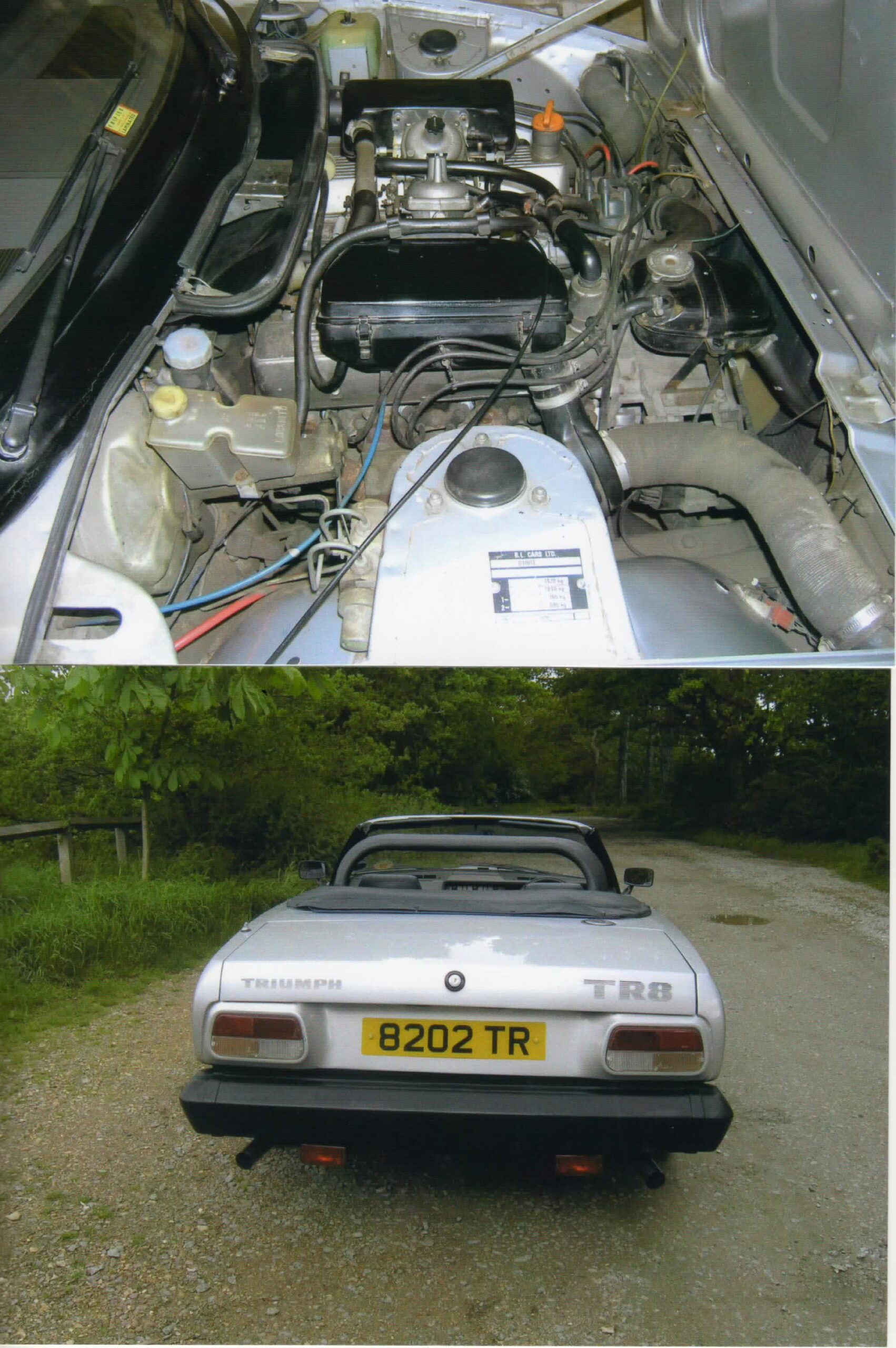
8 – TPADV7AA 403764 ARGENT SILVER – 8202TR – Engine 20E00015 – Body number CHP300498
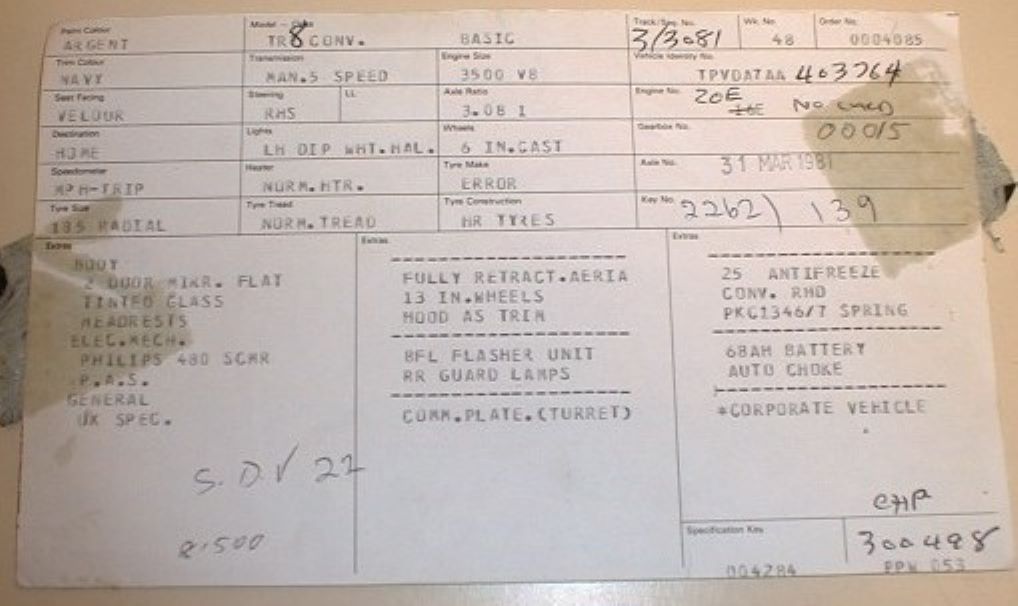
Photo of build record from British Motor Museum at Gaydon. Do not copy or replicate


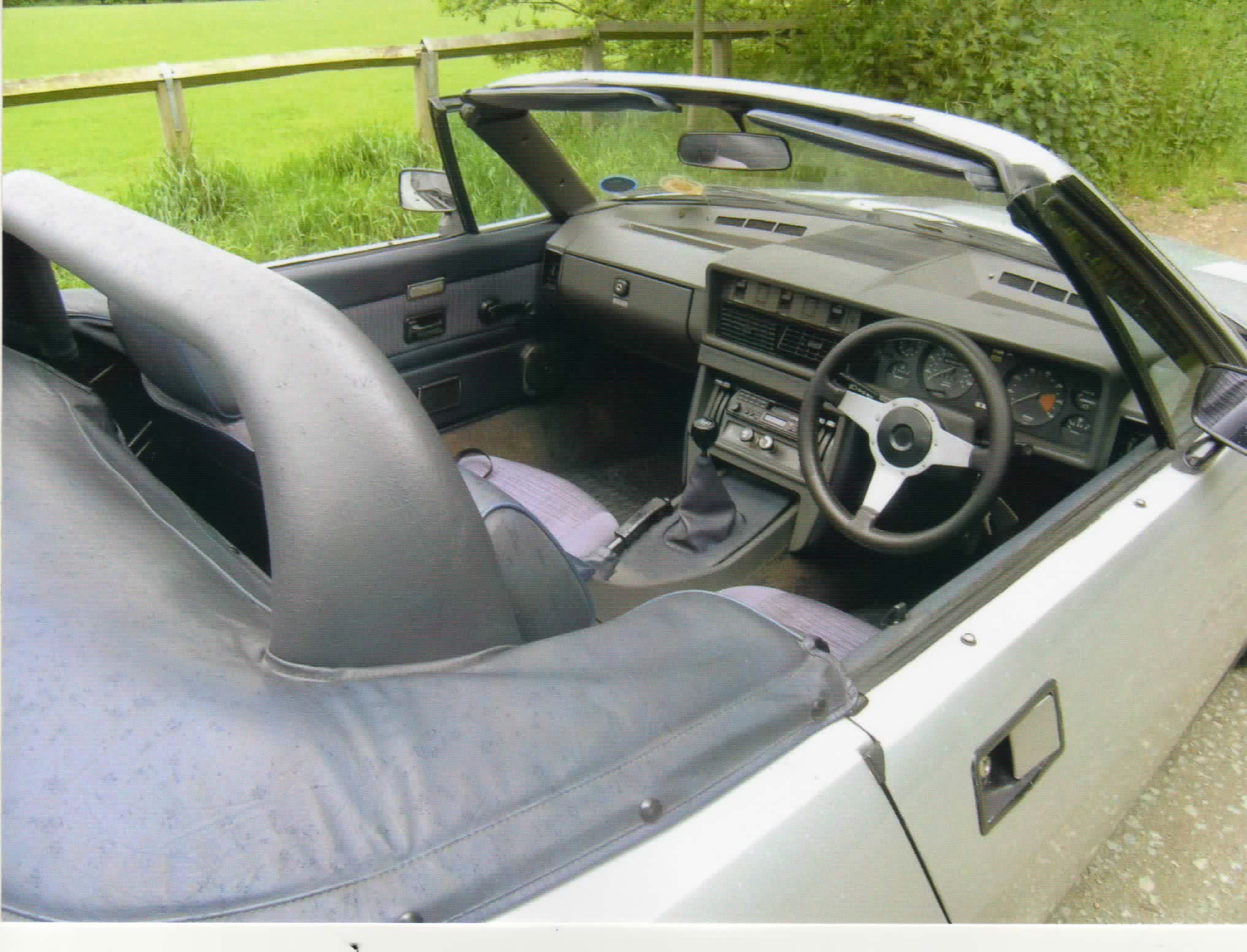
9- TPADV7AA 403767 PERSIAN AQUA – OON223X – Engine 20E00029 Body number CHP300556
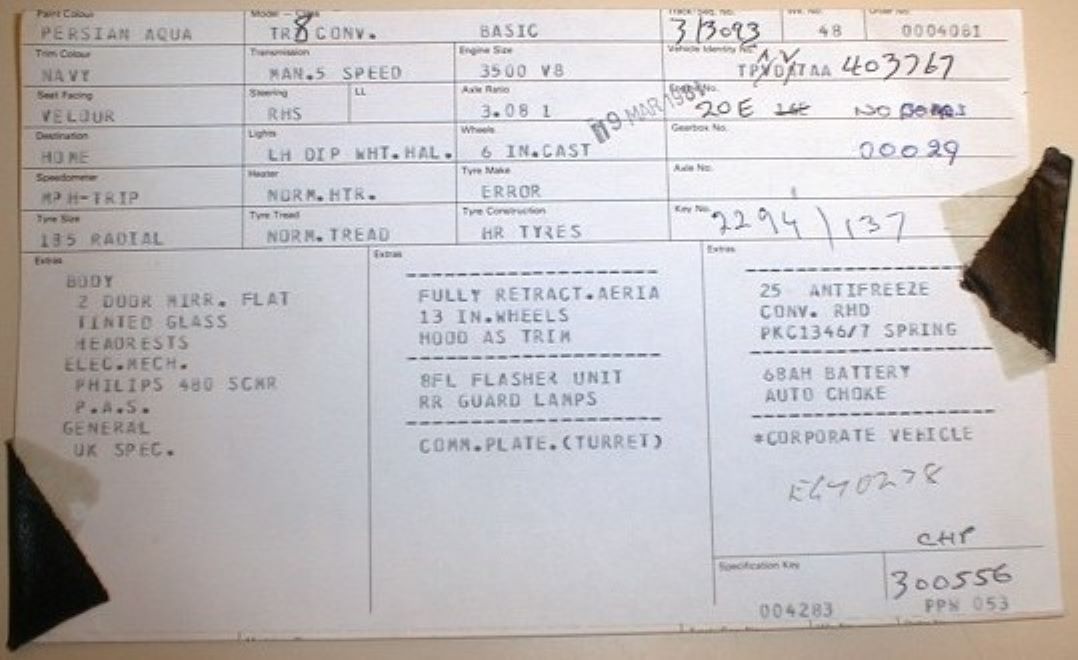
Photo of build record from British Motor Museum at Gaydon. Do not copy or replicate
RHD Experimental TR8s
In addition to the 22 RHD TR8 Home Market cars, the factory also constructed three right-hand drive experimental (EXP) cars. These vehicles carried EXP numbers 921, 923, and 925.
While these cars were not technically designated as Home Market RHD TR8s, they were functionally equivalent in terms of specification and purpose, and they were fully RHD. As such, they are considered an integral part of the RHD TR8 development programme.
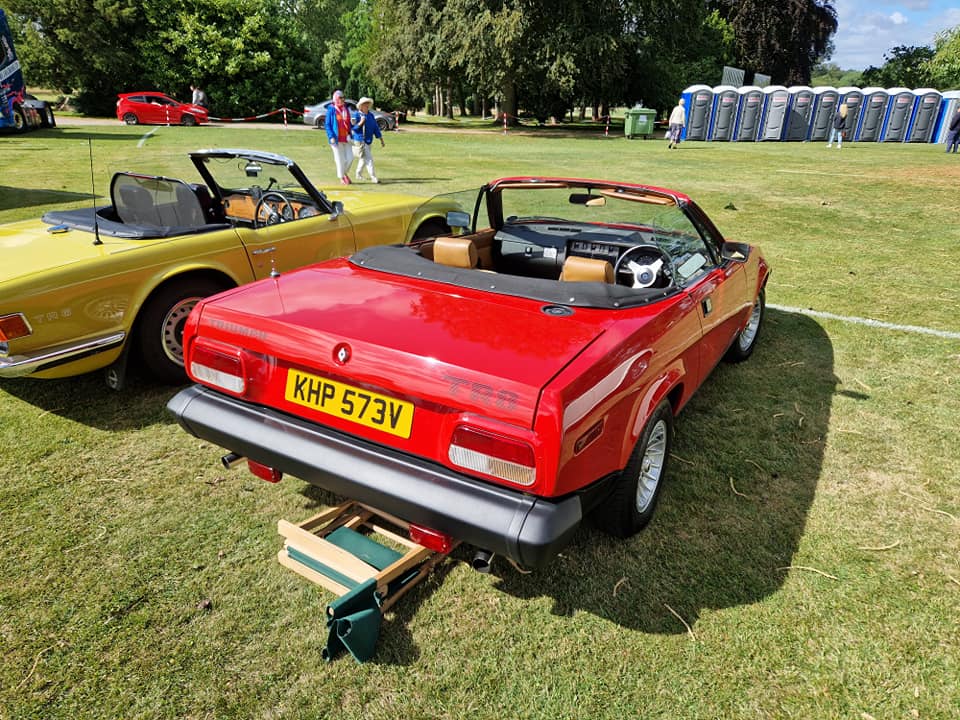
EXP TR8 – X921 CARNELIAN RED – KHP573V RHD – AUTOMATIC – Temperature testing
Certain RHD TR8 development and experimental vehicles were subjected to temperature and climate testing to evaluate engine performance, cooling, and overall durability under extreme heat and cold conditions. These tests ensured that the cars would meet UK and European operating requirements and helped refine components such as the cooling system, engine tuning, and interior materials.
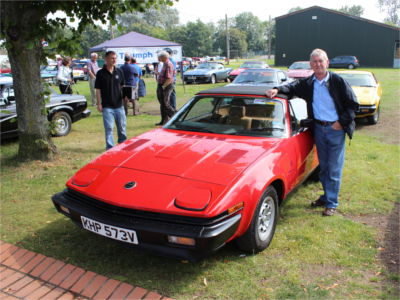
KHP573V
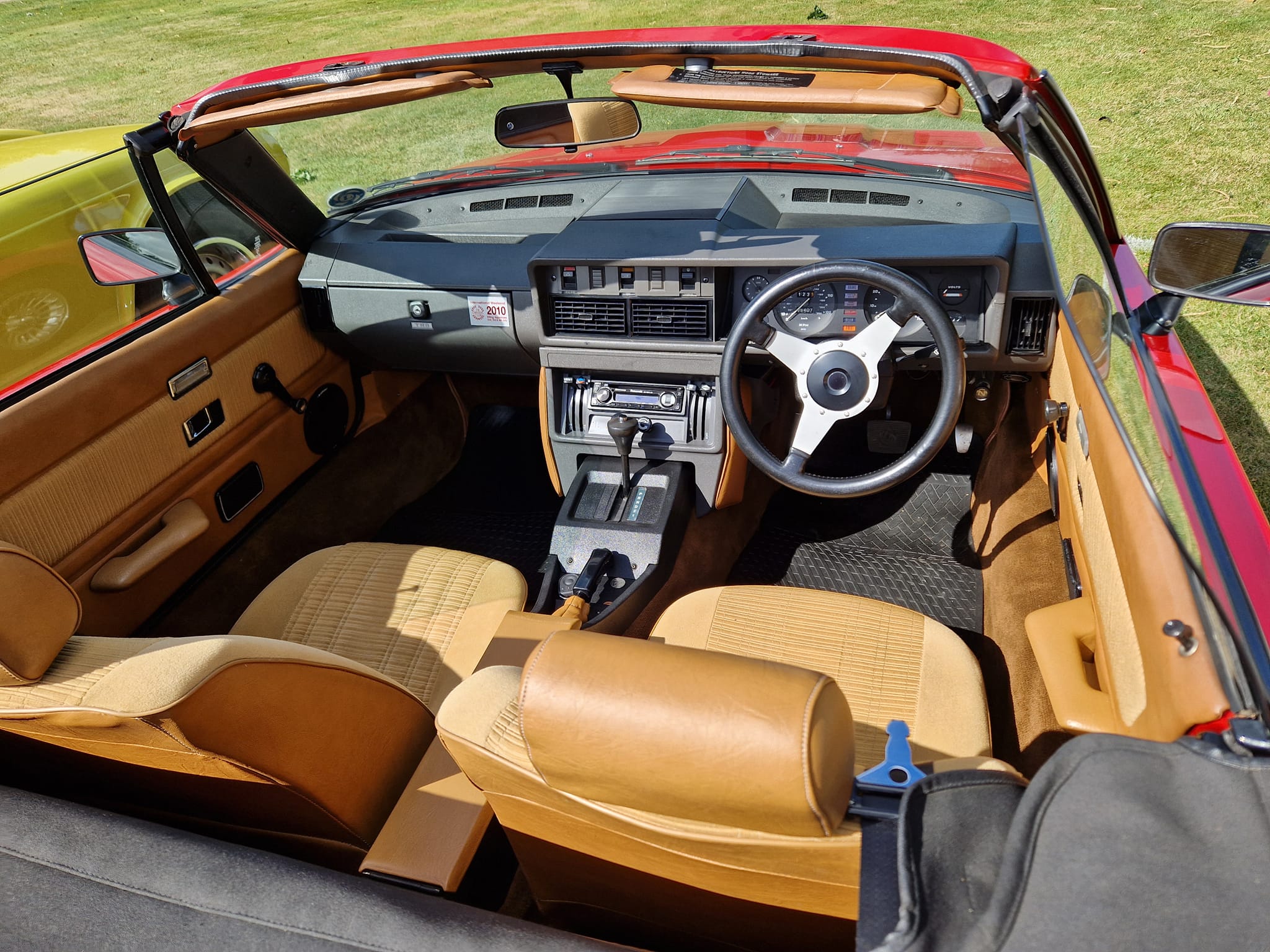
KHP573V
KHP573V
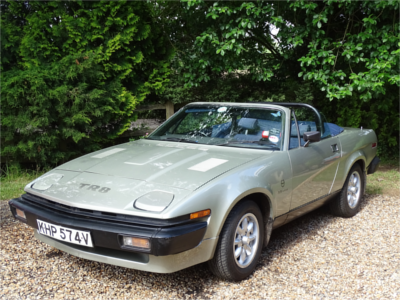
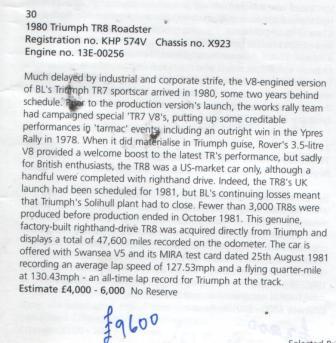
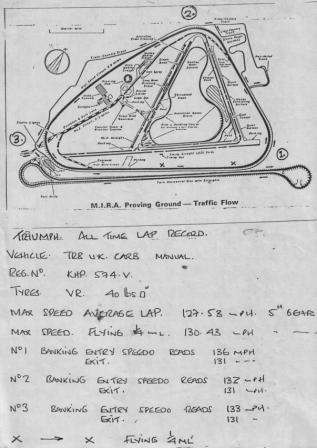
EXP TR8 – X923 PLATINUM SILVER – KHP574V – RHD – Mira test car
One of the RHD TR8 experimental cars, used as a Mira test car, was recorded achieving 130.43 mph over a flying quarter mile.
This vehicle was later sold at Heritage Auction on 3 June 2003 for £9,600.
KHP574V
EXP TR8 – X925 SILVER LEAF – PVC568W – RHD – Trim and Styling
One of the RHD TR8s served as a trim and styling evaluation car, exploring design features that may have influenced what would have become the 1982 specification look. This vehicle functioned as a development reference for interior and exterior styling, helping determine trim, dashboard layout, seating, and other aesthetic details for potential future UK RHD TR8s.

PVC568W
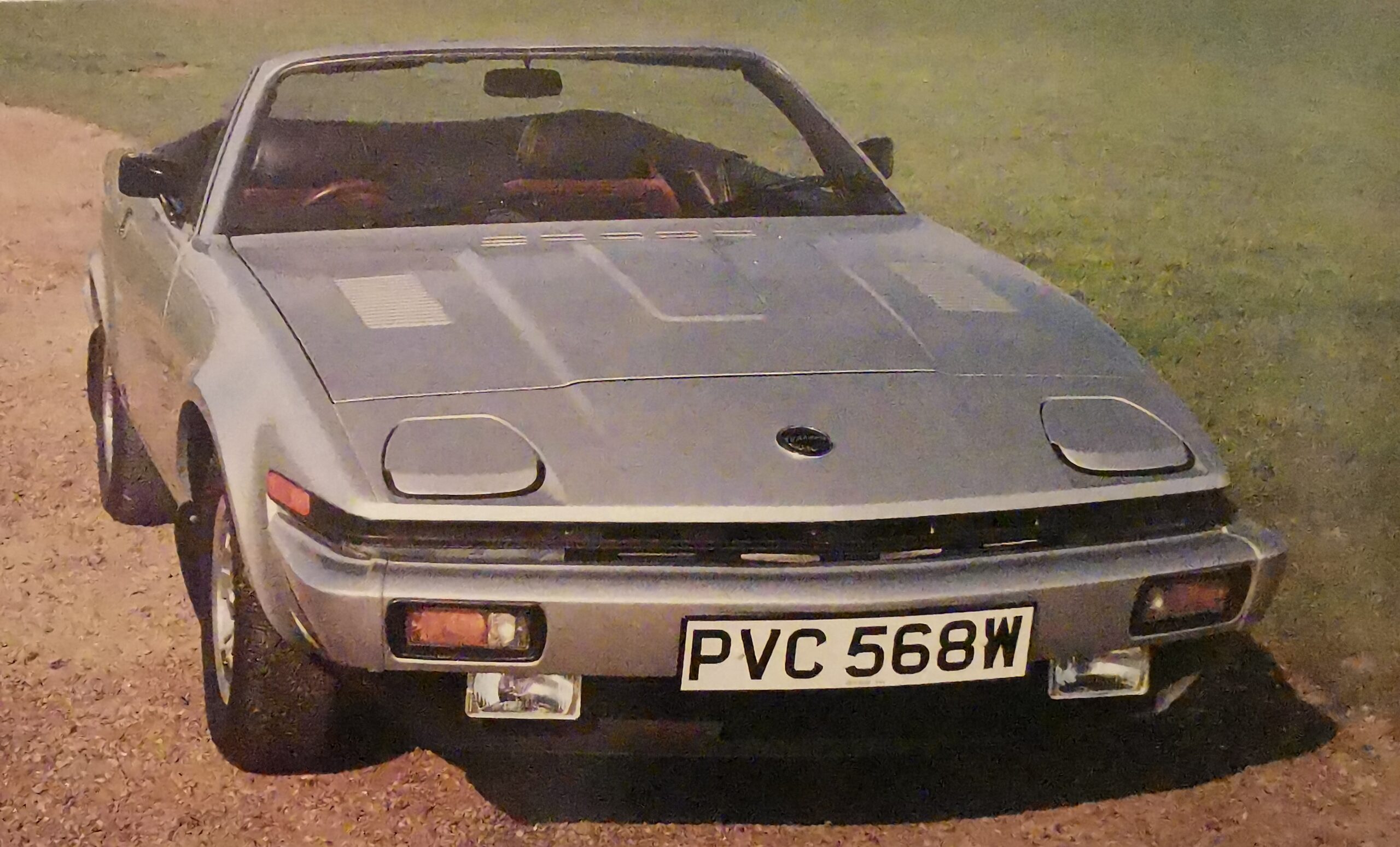
PVC568W


Sale of RHD TR8s at Measham – 1981
During August–September 1981, more than 22 registered and 14 unregistered cars were sold by British Leyland at Measham. It is known that nearly all of the RHD TR8s described above were included in these auctions.
On the whole, any RHD TR8 sold at Measham can be considered genuine, with only a few exceptions—most notably EXP 923, a Mira test car that was retained by the factory.
The Measham auction was a dealer-only event, as some cars were sold new and unregistered. British Leyland required these vehicles to be sold through official dealers in order to maintain eligibility for factory warranty coverage.
British Car Auctions at Measham Video
RHD TR8 214004 POSEIDON GREEN – NWK988W – appears in this video at about 0.26
More Information is HERE