BL MOTORSPORT SPECIAL EDITION TR8 NWK988W

For over 35 years, I’ve known about RHD TR8 NWK 988W, ever since Garry Owen, an ex-manager at Canley/Solihull and the man behind the RHD TR8 project, shared a collection of memos and documentation on the car for my TR8 website. From the moment I uncovered its extraordinary history at BL Motorsport/Special Tuning, Abingdon, it became the only RHD TR8 I ever wanted to find.
In March 2022, I was incredibly fortunate and, frankly, a little lucky, to finally acquire this remarkable vehicle: the ultimate “holy grail” among the 22 RHD TR8s ever built.
What makes NWK 988W truly unique isn’t just its rarity, t’s a one-of-one masterpiece. While only 22 RHD TR8s left the factory, this is the only car ever modified and tuned by BL Motorsport/Special Tuning at Abingdon. It carries the unmistakable mark of Tony Pond’s 1980 rally team, with Cliff Humphreys responsible for the engine upgrades and Richard Hurdwell perfecting the suspension. The result? The most powerful and best-handling road-going TR8 the factory ever made, capable of reaching 150 mph on a test run.
NWK 988W isn’t just rare, it’s historically significant. Development continued on this car until July 1981, well after the last batch of nine marketing cars had been built. During its final months, it served as Richard Hurdwell’s personal company car, making it the last RHD TR8 ever built and worked on by the factory. Its story also intersects with legendary figures: Tony Pond and other rally personalities drove it occasionally while at Abingdon, though mainly as a “pool car function” to and from the shops and Pub as it was also Richard Hurdwell’s company car for a while.
When the decision was made to close TR7/8 production due to financial pressures, the factory held a major sell-off at Measham in August–September 1981. NWK 988W survived, selling for around £12,000 to its first owner, cementing its place in TR8 history.
This isn’t just a car. It’s the pinnacle of RHD TR8 engineering, rally heritage, and factory development, a once-in-a-lifetime collector’s dream.
Make Triumph
Model TR8
Engine 3528cc, V8
Power 270bhp @ 5800rpm @ the wheels
(rolling road test September 2023 , approximately 300bhp at flywheel)
(STD RHD TR8 153bhp @ 5250rpm – minus 117bhp)
(STD Carb LHD TR8 133bhp @ 5000rpm – minus 137bhp)
Torque 301lb ft @ 4600rpm
(STD RHD TR8 197lb ft @ 2500rpm – minus 104lb ft)
(STD Carb LHD TR8 168lb ft @ 3000rpm – minus 133lb ft)
Top speed 150mph
(STD RHD TR8 130mph – minus 20mph)
0-60mph 5.6 seconds
(STD LHD/RHD TR8 8.1/8.6 secs – minus 2.5/3.0 secs)
Consumption 28mpg (average round Britain run 2023)
Gearbox Five-speed manual
This car is not just rare—it’s a rolling testament to the evolution of the TR8 engine. Over its life, NWK 988W effectively had two engine builds:
-
The first build—a precursor to the 20E engine—laid the foundation for what would become the standard for RHD TR8s.
-
The second build—essentially a Vitesse engine fitted with the WL9 cam—represents the engine that would have powered production RHD TR8s had they launched with this specification (perhaps designated 30E).
In September 2023, a performance run confirmed just how potent this car truly is: over 270 bhp at the wheels, reaching the road’s absolute limit. Estimates suggest that back at the factory, the same engine would have produced around 300 bhp at the flywheel—staggering for a car of its era.
This unique engine history, combined with BL Motorsport/Special Tuning modifications, makes NWK 988W the most powerful and best-handling road-going TR8 ever built. It’s not just a collector’s car; it’s a rolling piece of engineering history, a living bridge between TR8 development and the very peak of what the factory could have produced.
Heritage proof of genuine factory RHD TR8
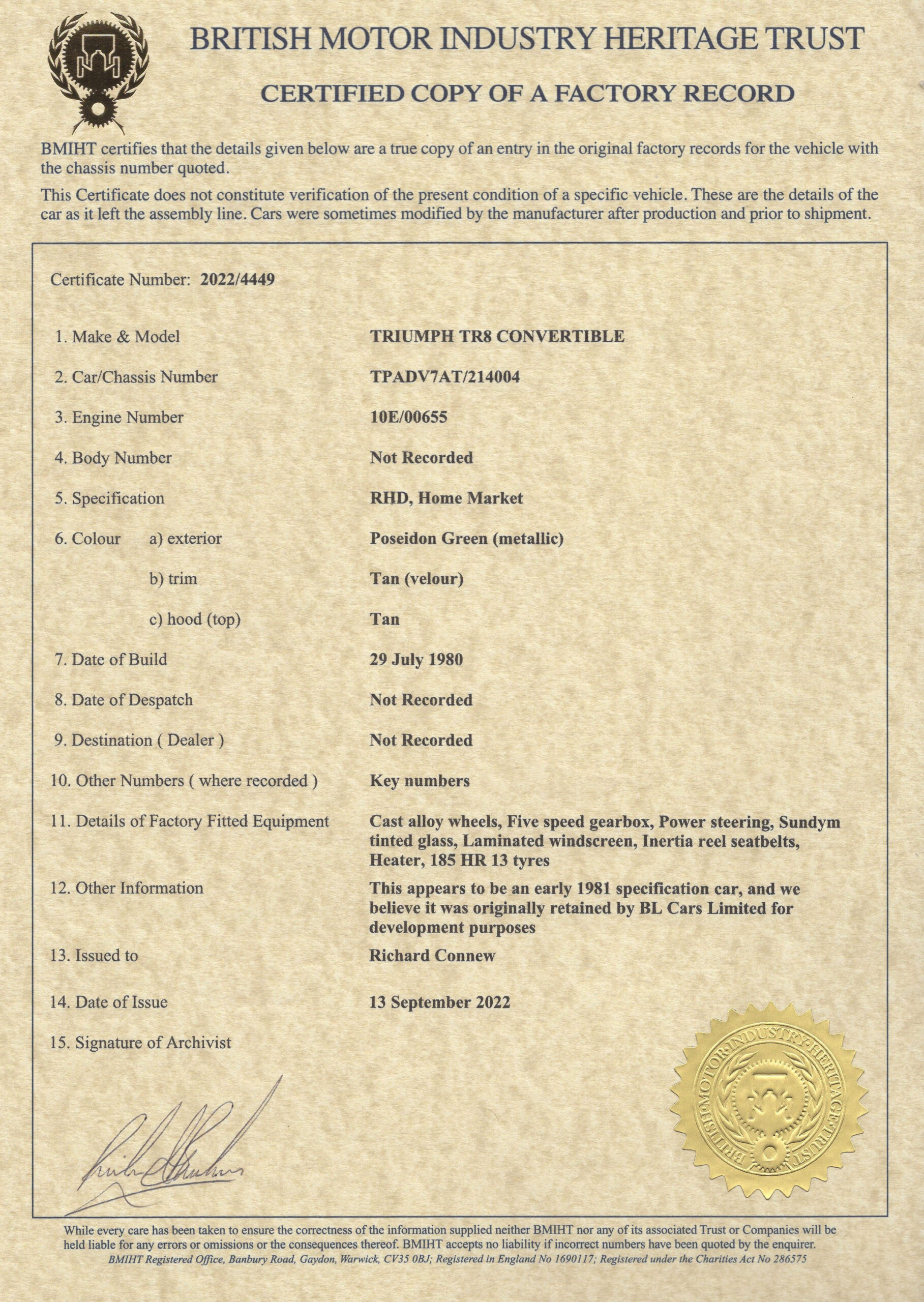
NWK 988W: The Holy Grail of RHD TR8s
NWK 988W isn’t just rare—it’s legendary. Of the 22 right-hand drive TR8s ever built by the factory, this is the only one ever modified by BL Motorsport/Special Tuning at Abingdon, making it a one-of-one masterpiece.
Over its life, the car effectively had two engine builds. The first laid the foundation for the later 20E engine, while the second was essentially a Vitesse engine with the WL9 cam, the powertrain that would have been used in production RHD TR8s had they launched (likely designated 30E). On a performance run in September 2023, NWK 988W delivered over 270 bhp at the wheels, estimated at 300 bhp at the flywheel during its factory life—a staggering figure for a road-going car of its era.
This TR8 is also the most heavily modified factory TR8 ever built. Clocked at 150 mph on a test run in early 1981, it served as the UK RHD TR8 development car, exploring alternative engine and chassis specifications for the UK and European sports car market. Work was carried out by Tony Pond’s 1980 TR7V8 works team, with Cliff Humphreys on engine modifications and Richard Hurdwell on suspension at BL Motorsport in Abingdon.
John Davenport, former Head of BL Motorsport, described NWK 988W as a hybrid rally/road car built to see just how far a road TR8 could be pushed. Peter Wilson, an ex-engineering consultant at BL, recently commented that if they had known the full extent of the modifications, it would never have been built. Perhaps that’s why the car was moved to Abingdon, with BL engineering deliberately kept out of the loop—an audacious experiment hidden from the factory engineering department and so progress could be made more quickly!
Documentation from BL Motorsport details the first round of modifications, though later changes made in 1981 remain undocumented, adding to the car’s mystique. NWK 988W wasn’t just a TR8—it was a laboratory for innovation, a performance benchmark, and the culmination of what a road-going RHD TR8 could achieve.
In short: this is the ultimate collector’s TR8, a one-of-a-kind engineering marvel with rally pedigree, factory development history, and road car performance that still astounds today.


BL MOTORSPORT MEMO
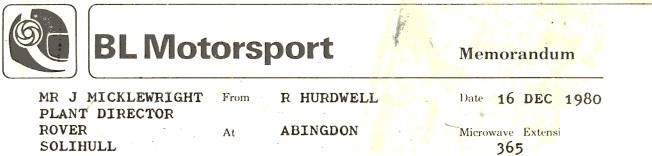
Dated Dec 16th 1980 detailing some of the many changes made to the car; the majority if not all of these changes are still on the car plus a few more.
CC: MR G OWEN
SOLIHULL
Fi: MR J DAVENPORT, MR D WOOD
TR8 MODIFICATIONS
PURPOSE
A green TR8 (NWK988W) from Solihull has been subject to both engine and suspension modifications at BL Motorsport Abingdon. The purpose of this was to present alternative engine and chassis specifications for the future UK and European Sports Car Market.
ENGINE MODIFICATIONS
All following modifications were carried out on a standard TR8 V8 unit as fitted in test vehicle.
- Compression ratio initially raised to 9.35:1 by fitting current SD1 V8 pistons.(More recent engine information/testing says it now runs 9:75:1 pistons due to the performance it puts out – 270bhp – and further evidence from the time stating all of the factory 20 x car WL9 cam conversions – of which this car was one – used 9:75:1 pistons.
- Standard camshaft replaced by ‘WL9’ Motorsport camshaft and valve spring assemblies.
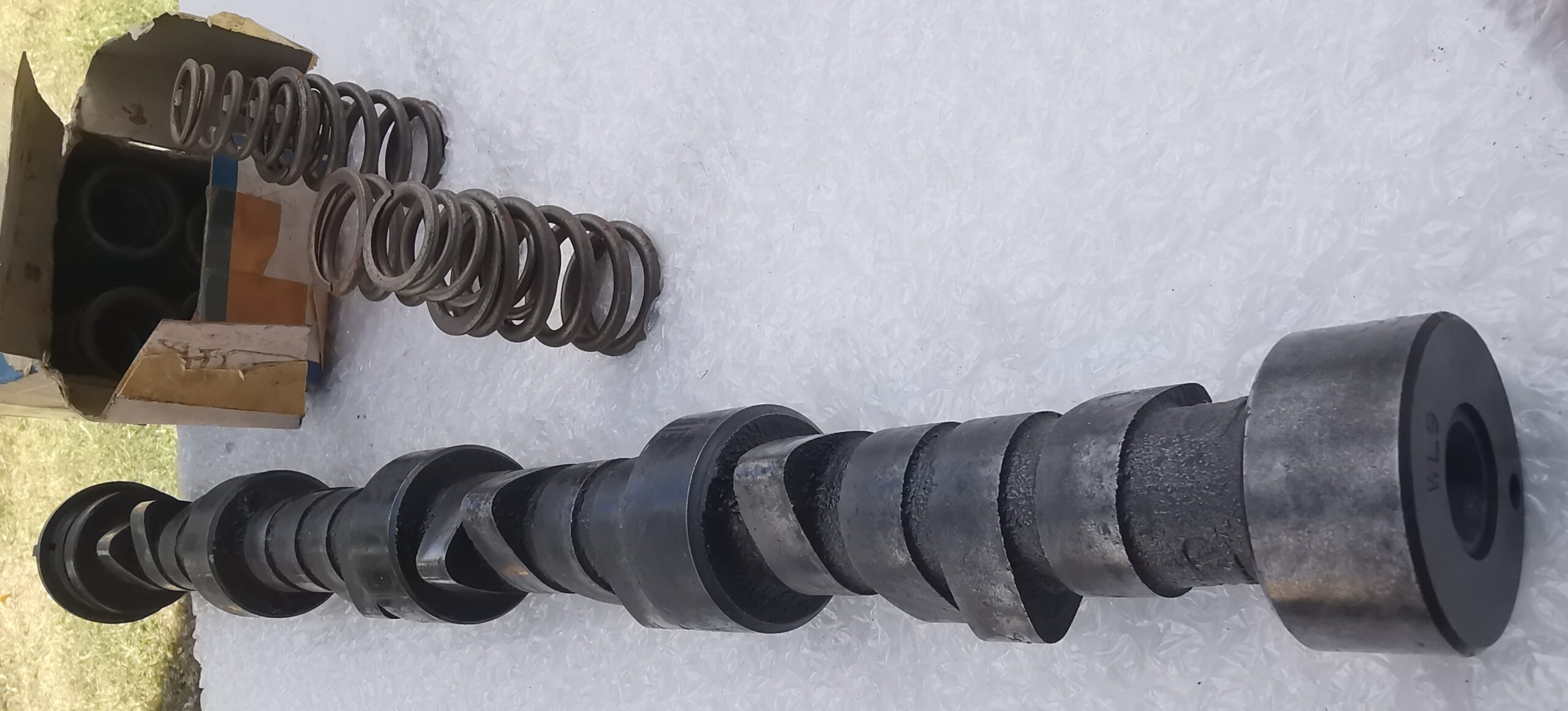
WL9 Motorsport camshaft and valve spring assemblies
3. Zenith-Stromberg carburettor fitted with alternative fuel control needle to suit ‘WL9’ camshaft.
The engine will be tested on the rolling road in Jan when it returns to Abingdon with more running-in completed.
CHASSIS M0DIFICATIONS
The following modifications have been carried out so far and are felt to have improved the car. Final ‘tuning’ of our proposed specification will be made in Jan 1981 after initial comments from Solihull test mileage.
FRONT BRAKES
A Ventilated Brake Disc Kit was fitted using Ferodo DS11 pads this has improved the standard braking significantly and is virtually fade-free from repeated high-speed stops. The kit was developed by Brian Owen at Abingdon in conjunction with John Moore at Automotive Products (Racing) Leamington.
Automotive Products would be able to supply in quantity.
These brakes will only fit the car with Alloy wheels.
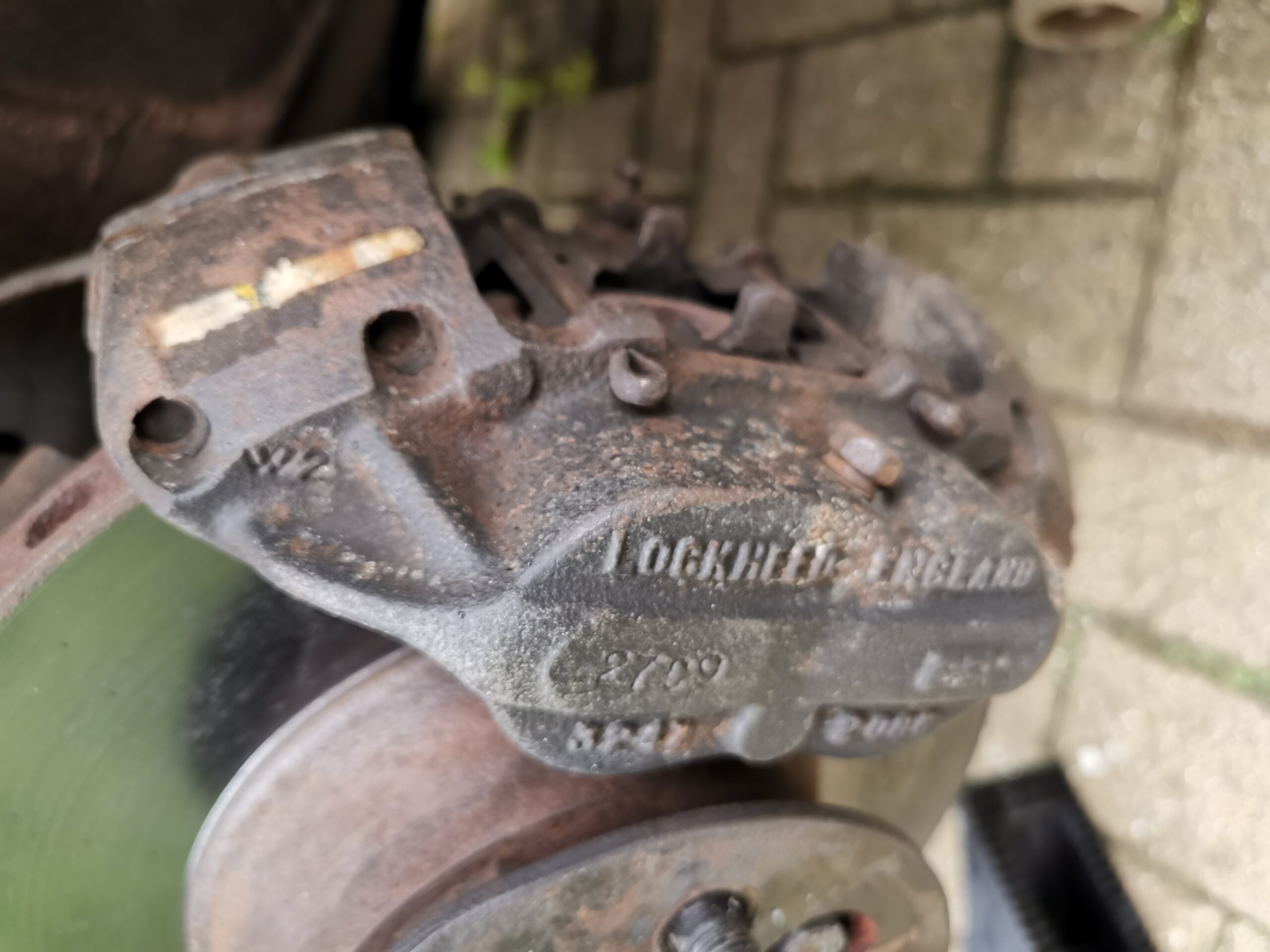
A Ventilated Brake Disc Kit was fitted using Ferodo DS11 pads
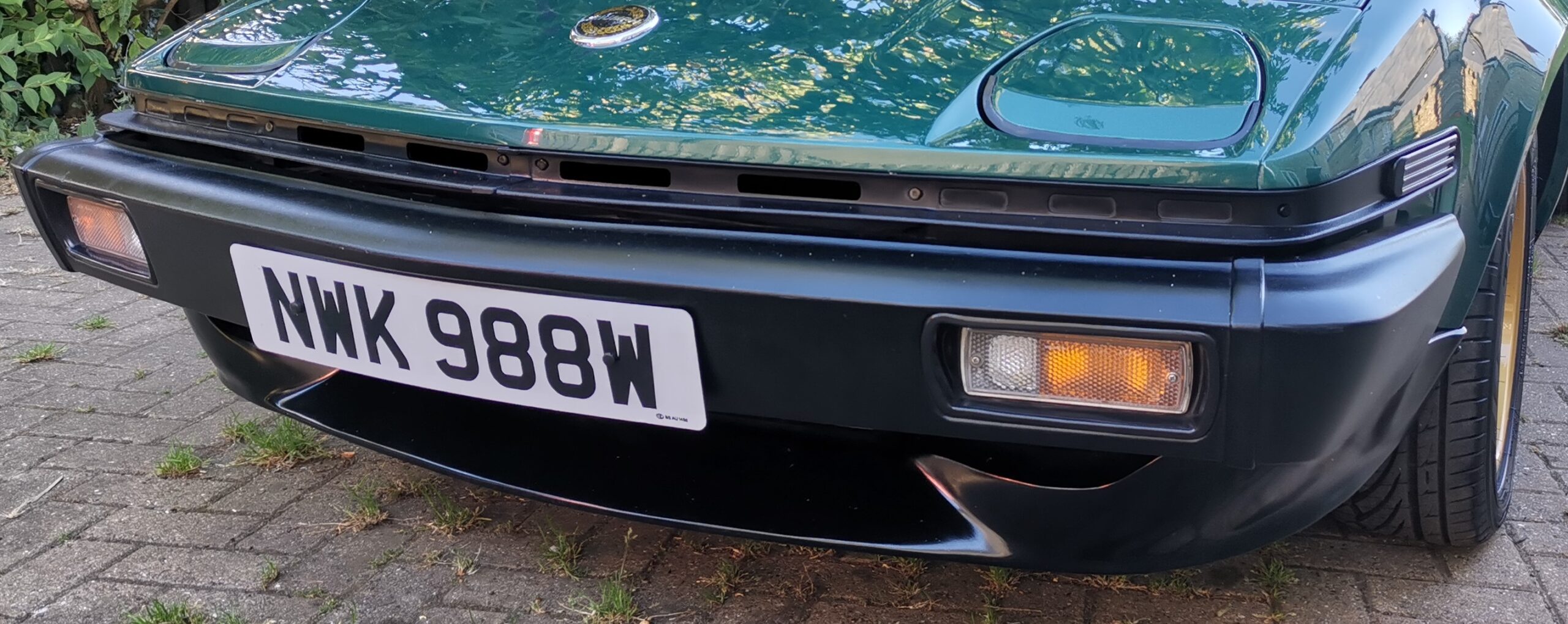
FRONT SPOILER
A works rally TR7 V8 spoiler was fitted, with small modifications to fit under the bumper. This is a GRP moulding made for us by Albert Coates in John Cooper’s ‘Plastics Development’ area at Solihull.
The spoiler has proved very robust, but for extra durability a flexible polyurethane moulding was planned for the (now scrapped) 1981 rally TR8.
Advanced aerodynamics were also tested: wind tunnel sessions at MIRA during rally development indicated that the front spoiler could reduce lift by 10–30%, improving straight-line and crosswind stability—issues previously identified on the TR8. Engine cooling was also enhanced, demonstrating the team’s attention to performance as well as safety.
(On the under rear side the red gel colouring for the works TR7V8 rally cars can still be seen indicating it originally came from the works stock)
Wind tunnel testing at MIRA during rally car development indicated that this spoiler should reduce front lift by between 10 and 30%.
FRONT SPRINGS
These were as set up for the 1979 Donnington Rally sprint cars i.e.TKC 3088 (blue) springs lowered 25 mm by heating one coil. Actual spring specification will be established by removal and measurement in Jan. A properly made and heat-treated pair will be made for final presentation. A further 10 mm reduction of trim height is envisaged for this final presentation.
FRONT DAMPER INSERTS
The standard car seems to suffer from under damping especially on rebound. This causes a large amount of pitch over bumps even on ‘smooth’ motorways and causes large variation of tyre/ ground contact force.
Dampers with approximately 25% more bump and 50% more rebound £force were considered but since we had already units with 25 and 100% extra these have been fitted at present. Armstrong are willing to make a set of trial units to our specification.
FRONT SUSPENSION
The standard car suffers badly from nosedive under braking which is uncomfortable, reduces braking stability and causes large variations in headlight range. To reduce this an extra packing piece UKC 9883 is fitted between roll bar clamp ~ sub frame. The standard bolt is long enough to allow this. UKC 9883 does not appear in our parts lists but seems to be fitted on the cars. The proposed extra reduction in trim height will further reduce brake dive.
The standard car also suffers badly from compliance in the track control arm/roll bar joint. To reduce TCA movement and caster change under braking, a hard polypropylene bush is used behind the TCA. This is similar to the standard part UKC 208 but with approximately 70 shore hardness. This modification also greatly assists straight-line stability as there is considerable fore/aft motion of the wheel over bumps.
Rally experience shows that a completely revised joint giving far less compliance would provide very significant improvements in handling and braking. It is not anticipated that this would give a large increase in road noise transmitted to the body since there is already rubber in the roll bar and TCA transmission paths to the sub frame, which itself is rubber mounted to the body.
STEERING
No changes have been made in this area but bump steer checks will be carried out before final presentation. My personal impression of the steering is that it gives a very good balance between steering effort and feel which suits the car well. Steering ratio is good for road use.
Congratulations to whoever developed this.
REAR SPRINGS
The first set of springs tried were TKC 2404 lowered by approximately 25 mm. These worked well but have settled further and given problems of bottoming on the bump stops.
The springs originally fitted were then lowered by 25 mm, and subsequently by a further 12 mm. These seem to have a higher rate than the first set but the MG closure has temporarily left us without testing facilities.
As with the Front Springs a properly made and heat-treated pair of springs will be fitted for final evaluation.
REAR SHOCK ABSORBERS
The standard units seem to be about right on bump setting but, as the front, lack rebound capacity. Some adjustable units have been fitted to the rear and are set to give a good compromise between ride and handling.
The bump setting at the rear has a very great effect on ride comfort, the occupants being close to the rear axle and any large increase over standard bump makes the ride harsh.
Armstrong are willing to make a set of trial units, testing the adjustable units to arrive at the required setting.
REAR SUSPENSION
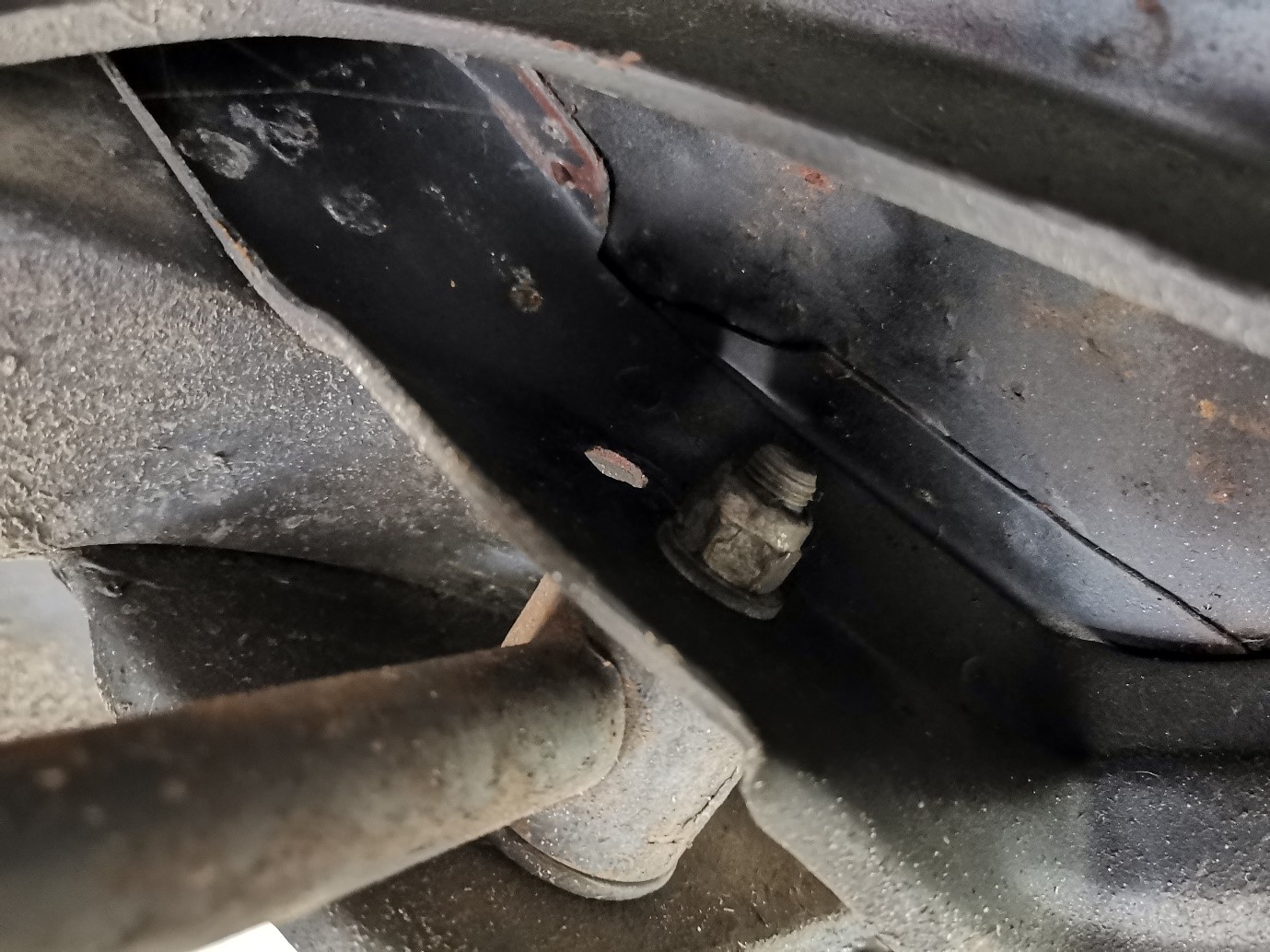
To reduce compliance (and hence steer and tramp) the ‘windowed’ lower link bush has been replaced by standard Dolomite and
TR7 Part 149827. The 4 upper link bushes have been replaced
by Motorsport tuning parts for Dolomite – Part No STR 0018.
These bushes are similar to the standard bush but with shore hardness increased from 45 to approx. 65-70.
Stiffening the bushes does not seem to give an unacceptable
increase in transmitted noise – especially in this soft top version.
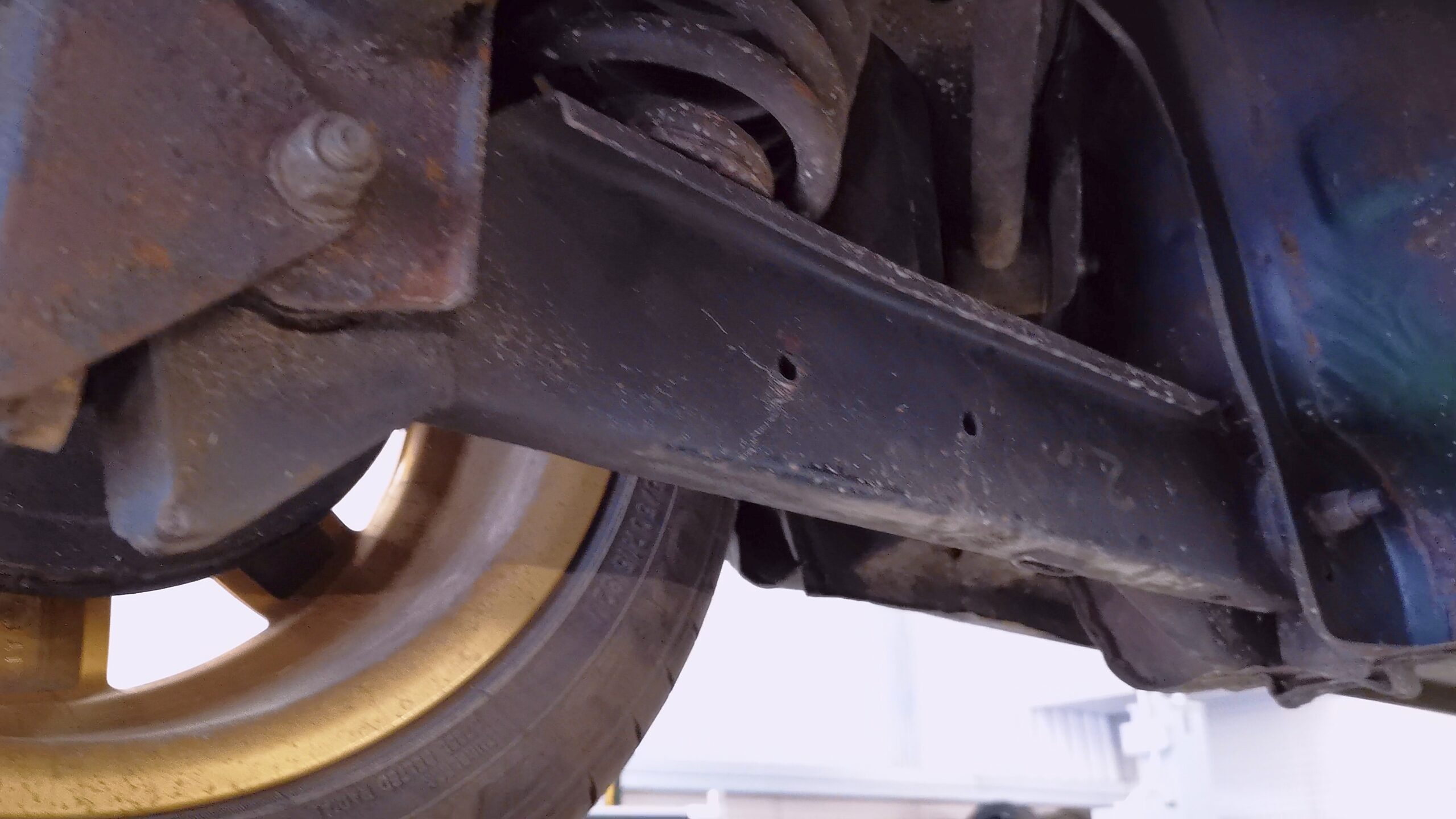
The mounting in the body for the lower trailing link has been raised by 25 mm. This considerably reduces the rear end ‘squat’ which is very evident on acceleration in the standard car. Traction is considerably improved and the standard tendency for axle tramp is reduced.
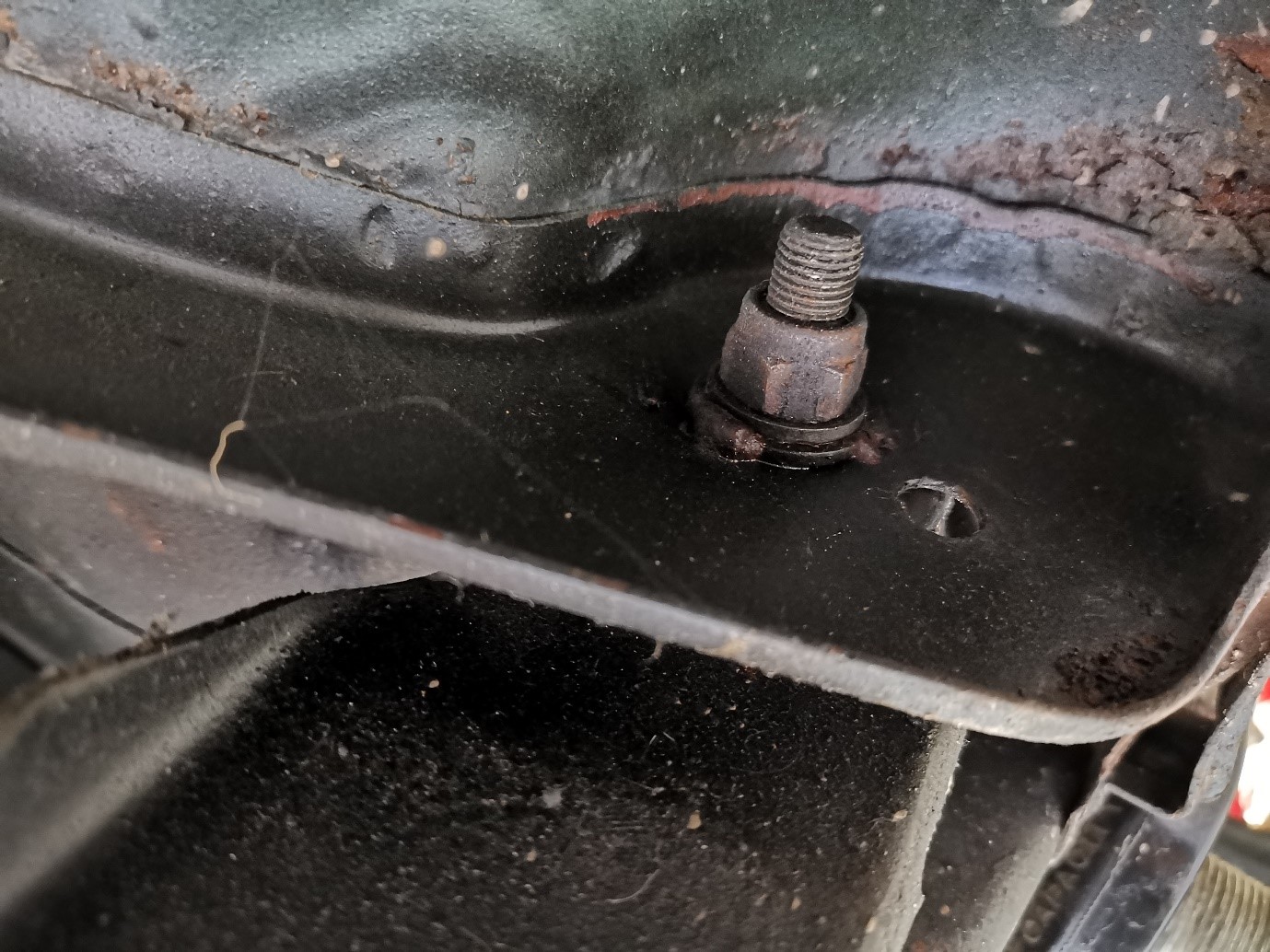
(The upper mounting was also moved 25mm and the rear anti roll bar was removed- but this was done later than this memo was written, most likely in early January 1981)
REAR BRAKES
Alternative brake lining material (VG 95) was fitted to reduce fade. This material is readily available from Ferodo.
TYRES
The car was fitted with 185-70/13 Goodyear tyres. These do not give particularly good grip, especially in the wet. From our experience with Michelin TRX tyres these can give improved ride as well as cornering power. The ride properties of the tyre would help to counterbalance any extra harshness from stiffer suspension. The extra handling performance will enhance the car’s already high cornering power and make it safer.
John Re at Canley has or will have some fabricated wheels to try TRX tyres on a TR7 but they may not fit on the ventilated brake hubs. Michelin are to provide some suitable wheels and tyres in late Jan for test purposes.
Contact at Michelin – Dave Taylor (0782 48101 Ext 241).
Richard Hurdwell Engineering Liaison
RH/AM
To quote the late Rex Holford (TR8 Archivist)
“From the attached document (BL MOTORSPORT memo) You will see that RHD TR8 NWK988W has been modified, but in such a way that it would be the forerunner of the 1982 spec TR8s”
The BL Motorsport Abingdon Team and NWK 988W
The development of NWK 988W was carried out by the highly skilled team at BL Motorsport, Abingdon, making it the only road-going TR8 ever worked on by Tony Pond’s 1980 works rally team.
Engine Development – Cliff Humphreys
The car began life with a standard 10E federal-spec TR8 engine, which was first increased to 9.35:1 compression. It later received a BL Motorsport WL9 camshaft, modified Stromberg carburetors, and further in-line valve and spring upgrades to maximize performance. Modern testing confirms that NWK 988W now runs 9.75:1 pistons, delivering 270 bhp at the wheels. Historical records show that all 20 factory WL9 cam conversions—including this car—used 9.75:1 pistons, underlining the advanced engineering at play.
Suspension Development – Richard Hurdwell
The suspension was comprehensively upgraded, including a rally-style front spoiler, vented front discs, improved rear brakes, and lowered, strengthened suspension throughout. These modifications created a car with superior handling, cornering stability, and overall performance, unmatched in any factory RHD TR8.
Both Humphreys and Hurdwell were part of Tony Pond’s works rally team, and their involvement gives NWK 988W an unparalleled pedigree. Development continued right up until shortly before the Measham auctions on 7th August 1981, when it was Richard Hurdwell’s company car, making it arguably the most advanced RHD TR8 BL ever produced.
Works Drivers
Did Tony Pond drive it? Yes—but only as a pool car around Abingdon, never in competition. Other BL Motorsport personalities also drove the car in a similar casual capacity during development, giving it a unique link to the works team.
Management Perspective
John Davenport, former head of BL Motorsport, described NWK 988W as a hybrid rally/road car built to see just how far a road TR8 could be pushed, highlighting its experimental and boundary-pushing nature.
Round Britain Rally 1980
In 1980, NWK 988W was one of two factory TR8s used on the Round Britain Rally, alongside a silver TR8, MHP 404V. At that time, the UK launch of the RHD TR8 was still under consideration, and the project was very much active.
The rally, organized through the Triumph Club in London, set off on a Friday night and covered the full route to John O’Groats, down to Land’s End, and back to London by Sunday night. The event was designed to generate publicity for the RHD TR8 ahead of its planned UK launch and to give Triumph Club members the opportunity to see the cars in action. NWK 988W’s participation highlights its role not just as a development car, but as a flagship example of what the UK TR8 could offer.
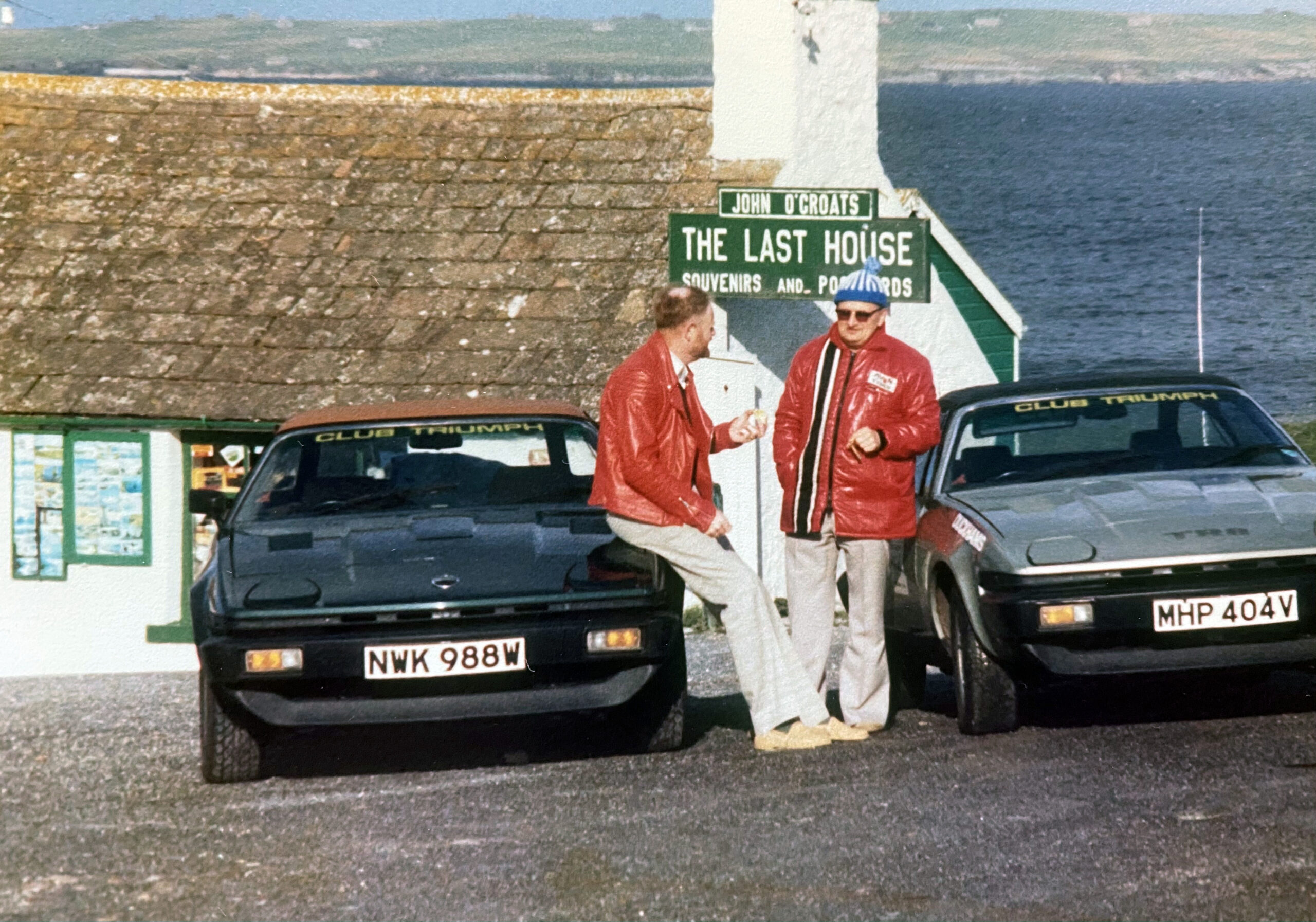
Rover Triumph Plant Director John Micklewright and Transport Manager Bob Train having a break. Silver TR8 MHP404V driven by Group Manufacturing Director Brian Fox and Bob Train.
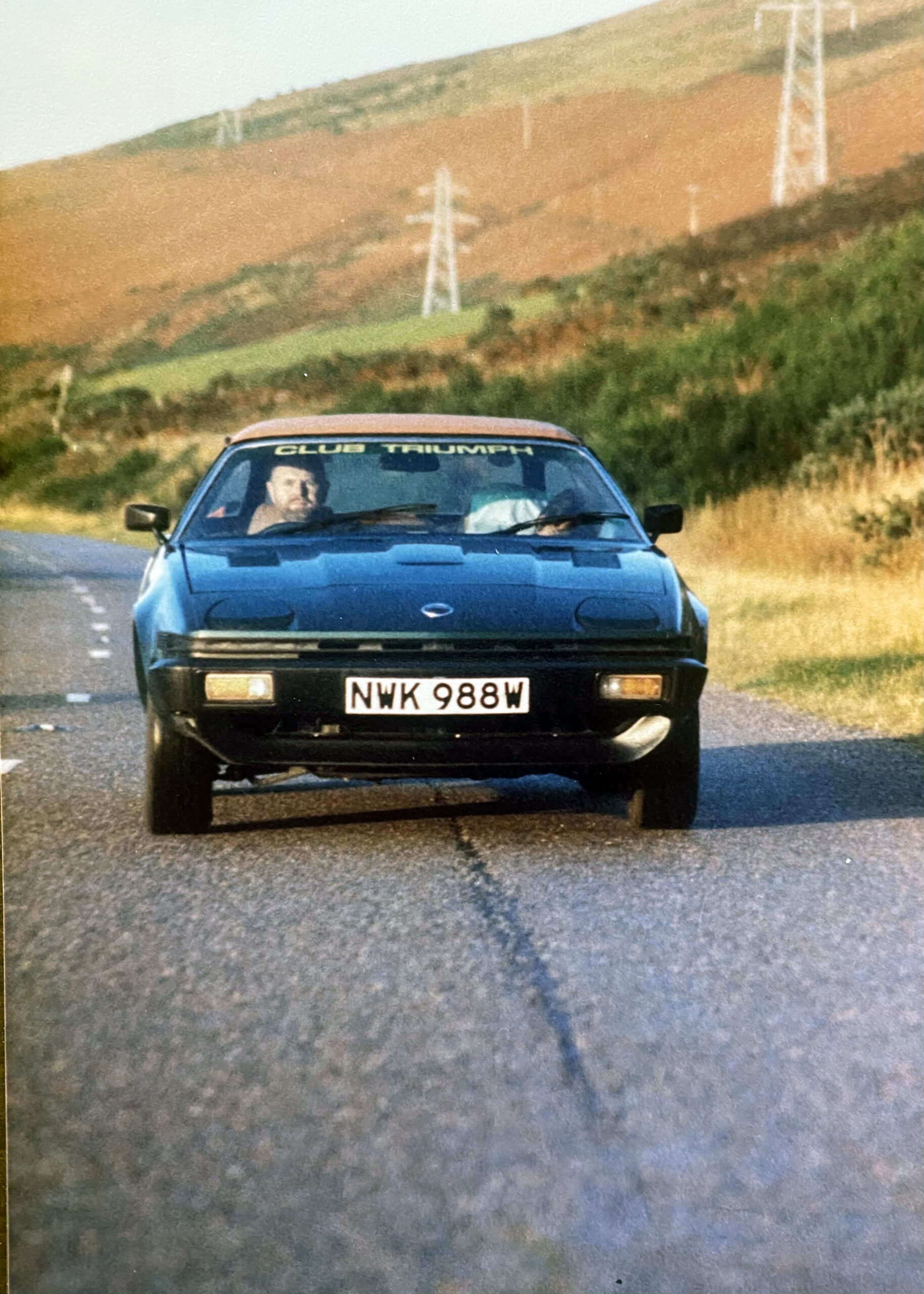
Rover Triumph Plant Director John Micklewright and Triumph Factory Manager Gary Owen (asleep) driving NWK988W.
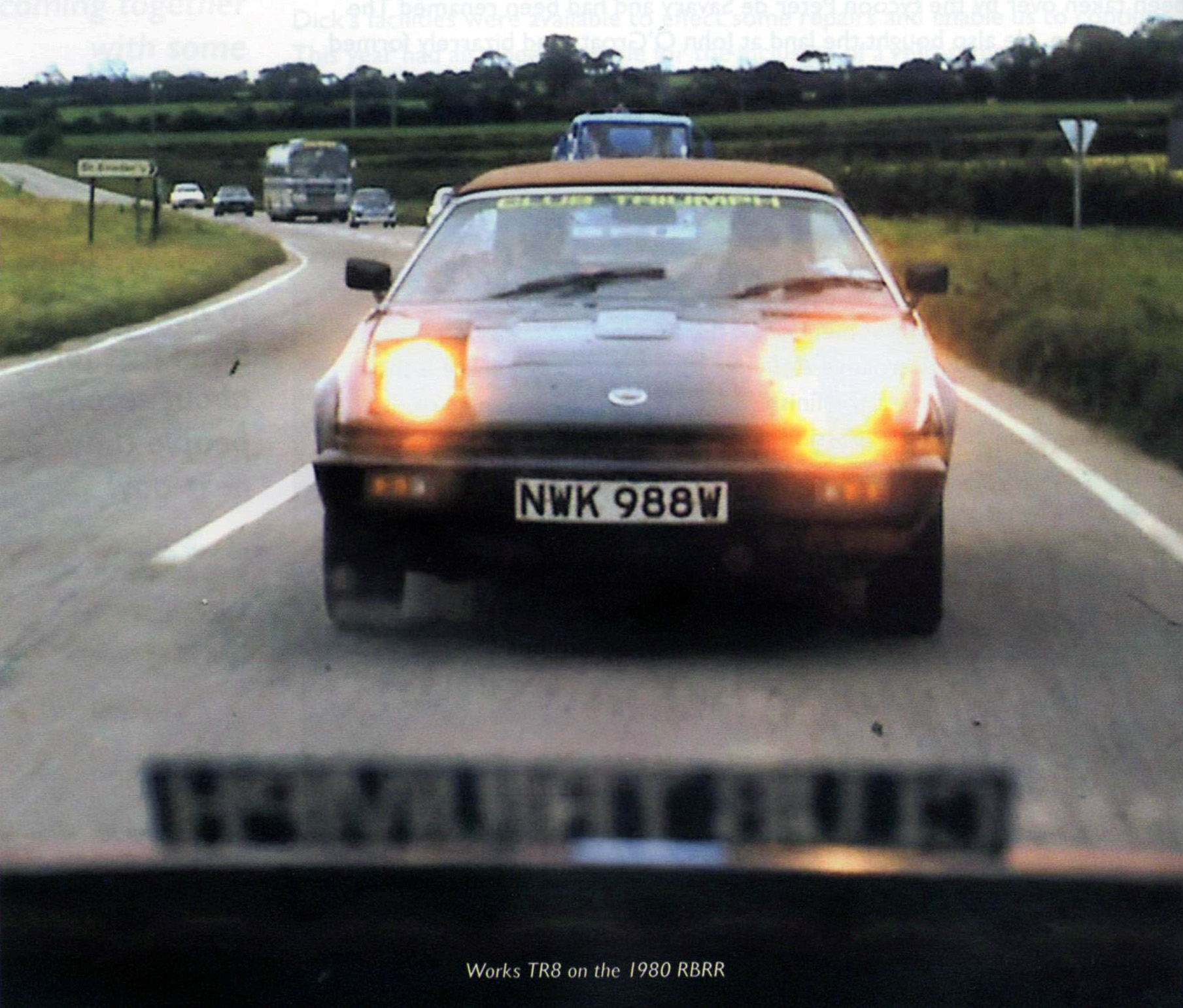
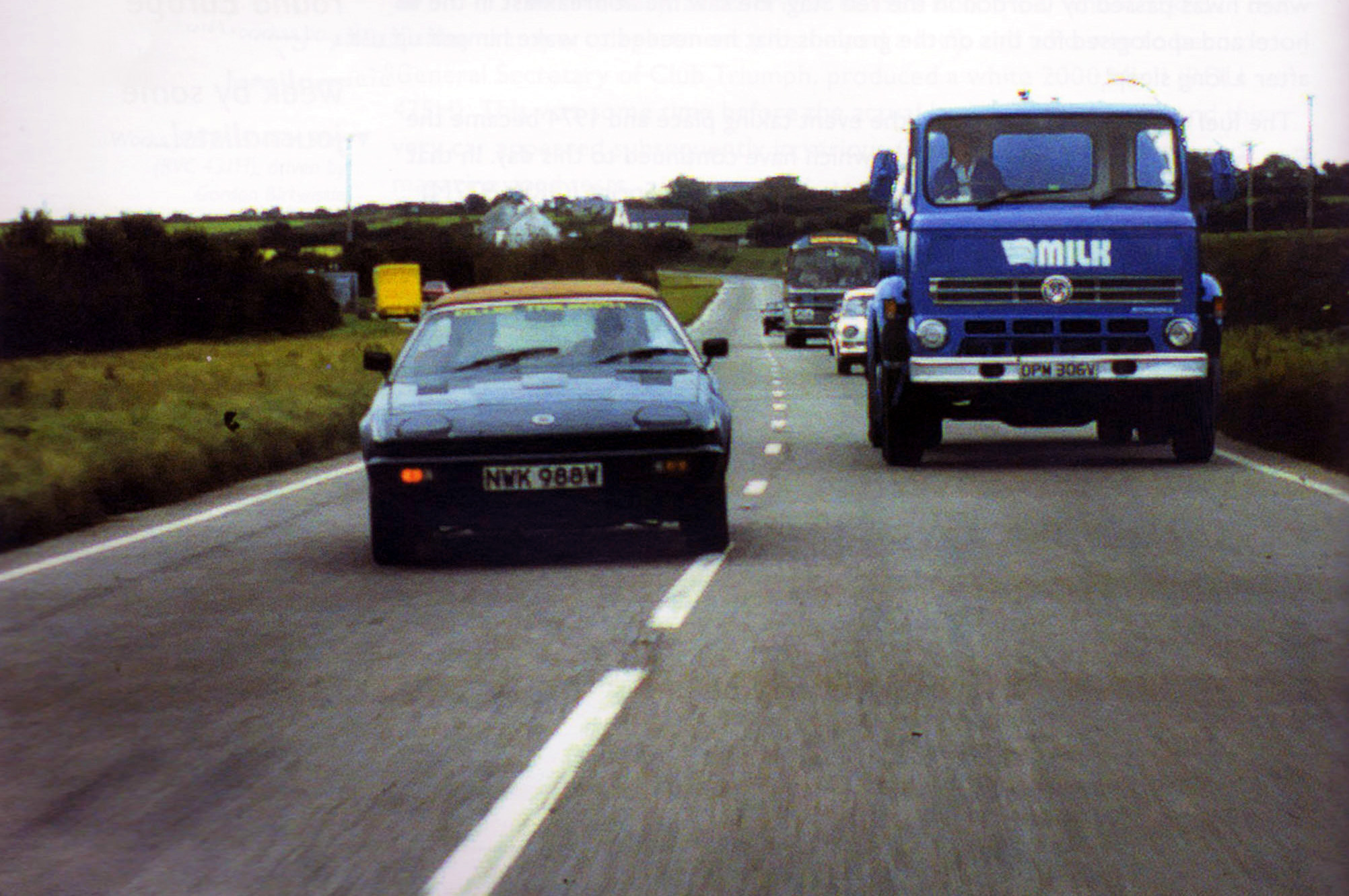
Rover Triumph Plant Director John Micklewright and Triumph Factory Manager Gary Owen driving NWK988W
Practical Classics September 1997
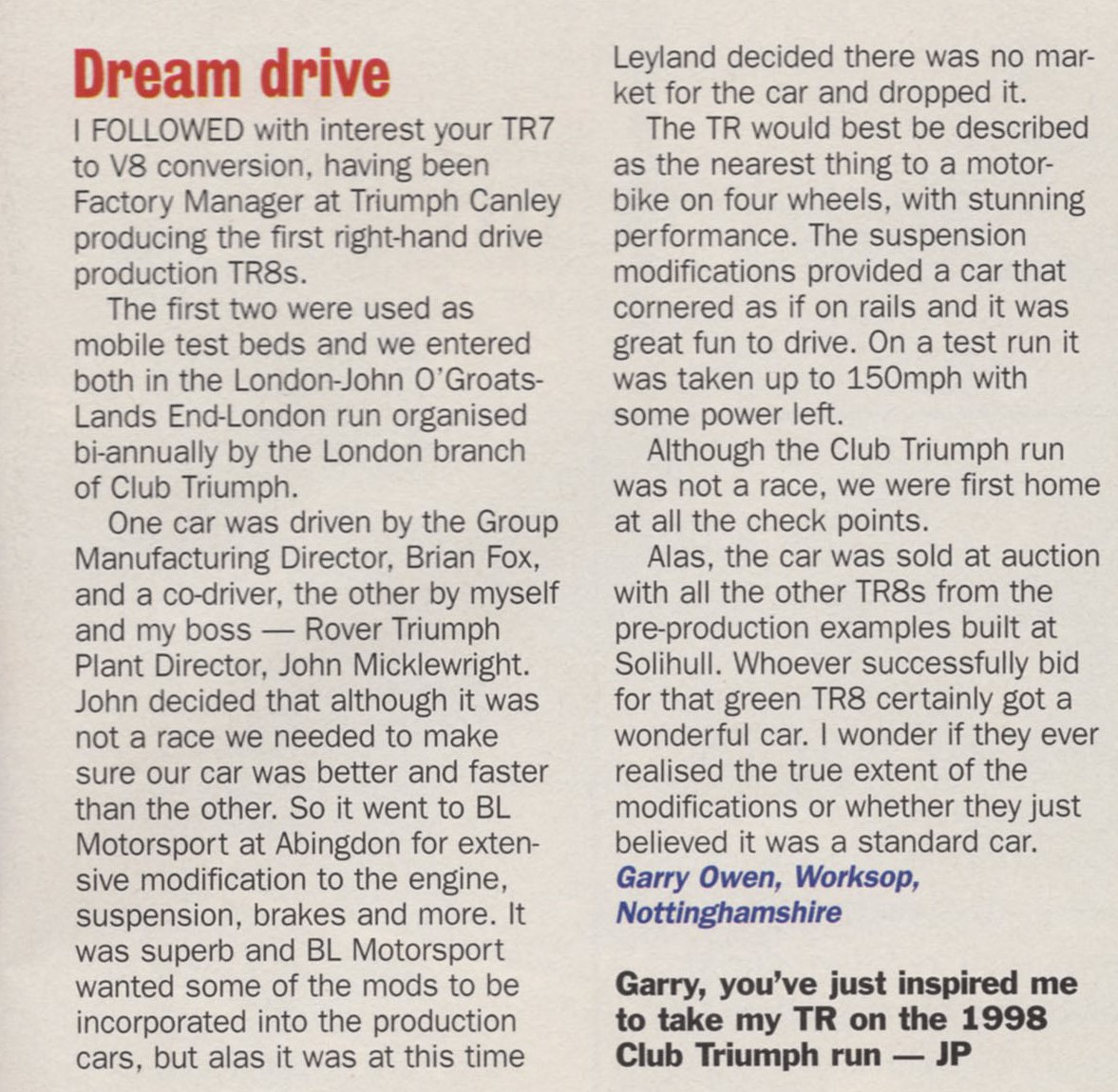
It turns out the first owner, who kept NWK 988W on the Isle of Man for 40 years, had no idea just how special the car really was—he believed the only modification was to the brakes! His original information sheet even contained a few inaccuracies, including the total number of RHD TR8s.
While some sources claim fewer, there were actually 22 RHD TR8s built. The confusion likely comes from the Measham auction, where 14 unregistered RHD TR8s were sold. The remaining eight were either already registered—like NWK 988W, MHP 404V, and RDU 35W—or sold privately by BL to select dealers. This means that, in total, 17 RHD TR8s appeared at the auction, with another five registered or unregistered cars going directly to preferred dealers.
This long-hidden history only adds to the mystique of NWK 988W, highlighting just how rare and unique it truly is.

NWK 988W Owners and continued history
When I spoke with the ex-manager, no one seemed to know where NWK 988W had gone after it was sold at the Measham auctions in 1981. Richard Hurdwell even admitted that he had wanted to buy the car himself, but at the time it was sadly beyond his budget.
For those interested in seeing it, NWK 988W appears briefly in a video of the Measham Auctions, around the 0:26 mark.
It wasn’t until about ten years later that I discovered NWK 988W had ended up on the Isle of Man with Andy McClements of Colby, an amateur rally driver who owned it for 38 years and maintained a collection of interesting sporting cars. Sadly, Andy passed away in 2015, and his family had the car sent to a local garage to get it running again in preparation for sale.
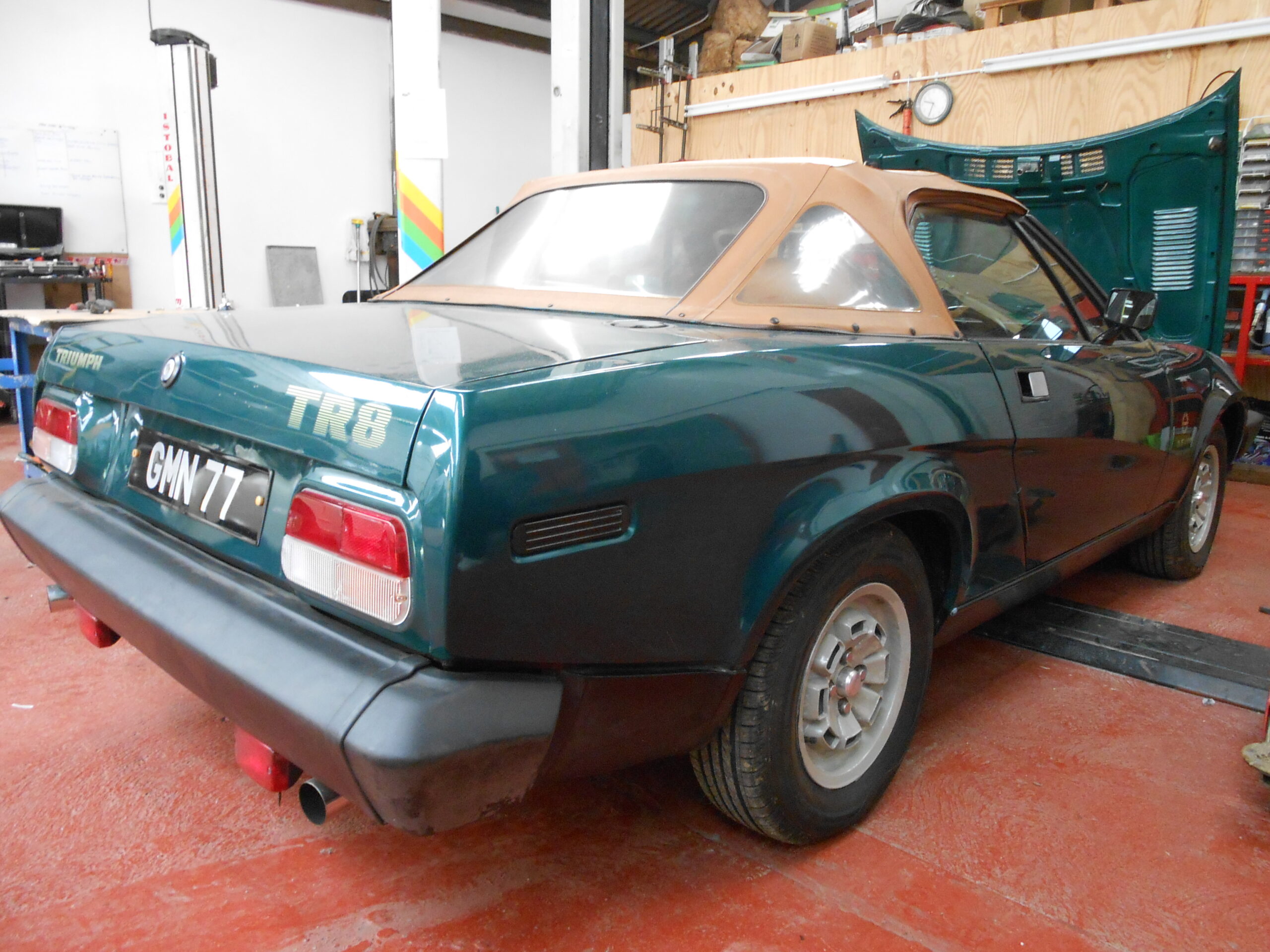
NWK988W with its Isle of Man registration GMN77
For a time, the family considered selling Andy’s car collection as a job lot, but that plan never came to fruition. They then reached out to Mervyn Johnston in County Fermanagh, Northern Ireland, for help selling NWK 988W. Mervyn, a skilled rally driver—mostly Minis—had been a close friend of Andy’s and often stayed with him during rallies on the Isle of Man.
In the end, Mervyn purchased the car himself on 28/10/2019 and brought it home to Northern Ireland, owning it for 1.3 years. Unfortunately, he was soon struck by illness, and the car remained unused for over a year before being sold to William John Ferguson (Billy) on 12/2/2021, who owned it for 1.1 years. Billy, then 86, found the car difficult to get in and out of, so he ultimately placed it for sale through his local auction.
The car was essentially being sold at a farmer’s auction in a remote part of Northern Ireland. Fortunately, as part of my passion for TR8s, I run programs that actively track TR8s for sale, and this one appeared in my alerts. On 19/3/2022, I took possession of NWK 988W, and after a brief delay caused by ferry issues, it arrived safely in North Yorkshire on the 24th.
Because I’ve known the car’s history for many years and spoke at length with the ex-manager at Solihull, I already had a deep understanding of NWK 988W. A small part of that knowledge was captured in the memo I posted on my TR8 website at the time (I removed the registration number for privacy). Needless to say, it was “borrowed” and has appeared in various places since!
I’ve also been fortunate enough to speak extensively with Richard Hurdwell, who worked on the car at BL Motorsport. Once NWK 988W was properly recommissioned, I arranged to meet him at Gaydon so he could drive it again—echoing its original use as his company car for testing running suspension improvements.
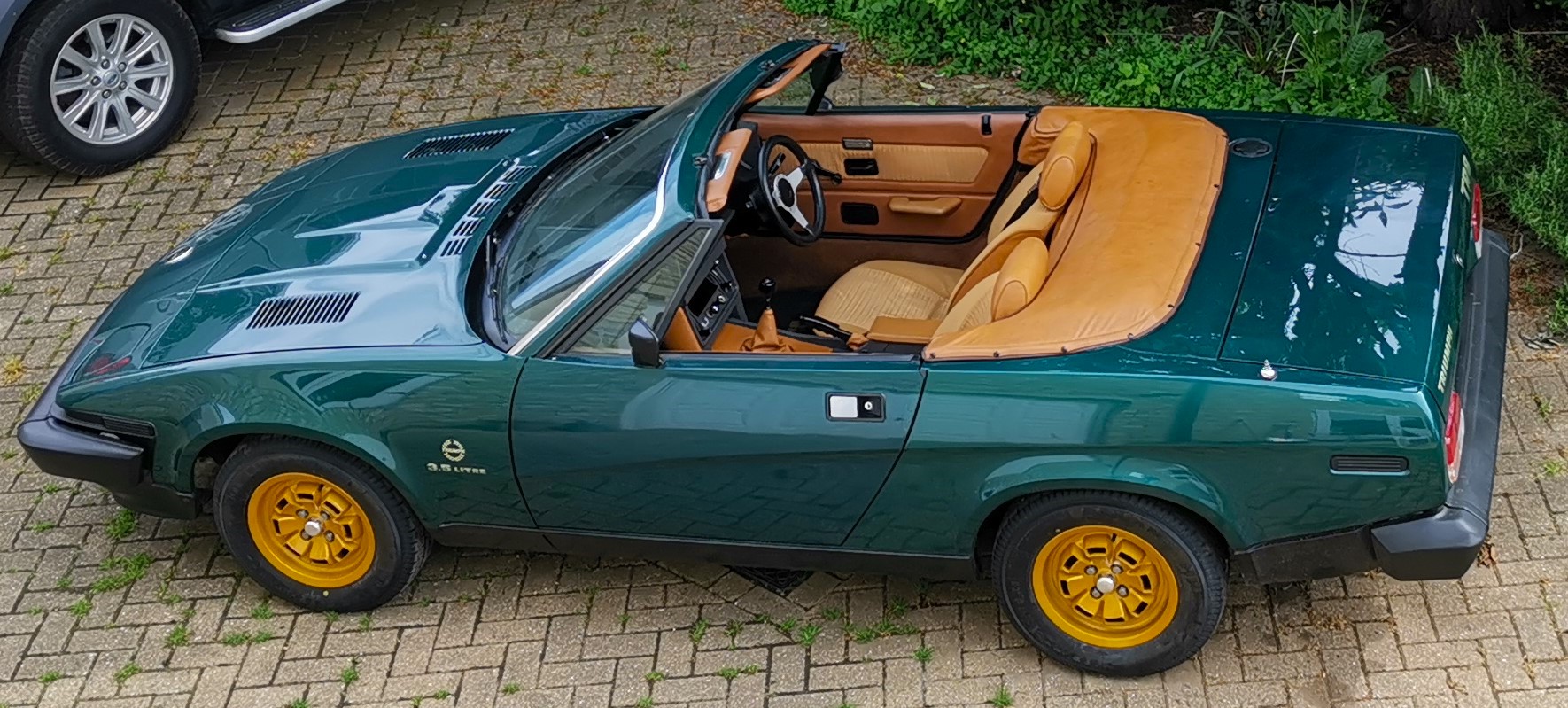
The car underwent a thorough overhaul from March to July 2022, replacing components as needed after years of neglect and minimal maintenance. The wheels presented a particular challenge: the last owner had powder-coated them so thickly that I had to use blocks of wood, large hammers, and even drive the car with loose wheel nuts just to break them free. Today, NWK 988W runs on a set of gold Minilite 15” wheels with low-profile tyres. The original wheels will be correctly blasted and coated, allowing them to be refitted if desired. Personally, I prefer gold with green, which is historically fitting—some early TR8 development cars were fitted with gold wheels.
Since then, work has continued to undo previous owners’ “mistakes” and bring the car back to the condition it enjoyed under factory care. While a few minor issues remain, NWK 988W is now essentially fully operational, just over a year after it came into my possession.
When NWK988W first arrived with me in March 2022 it’s mileage was just 18,171 from new!
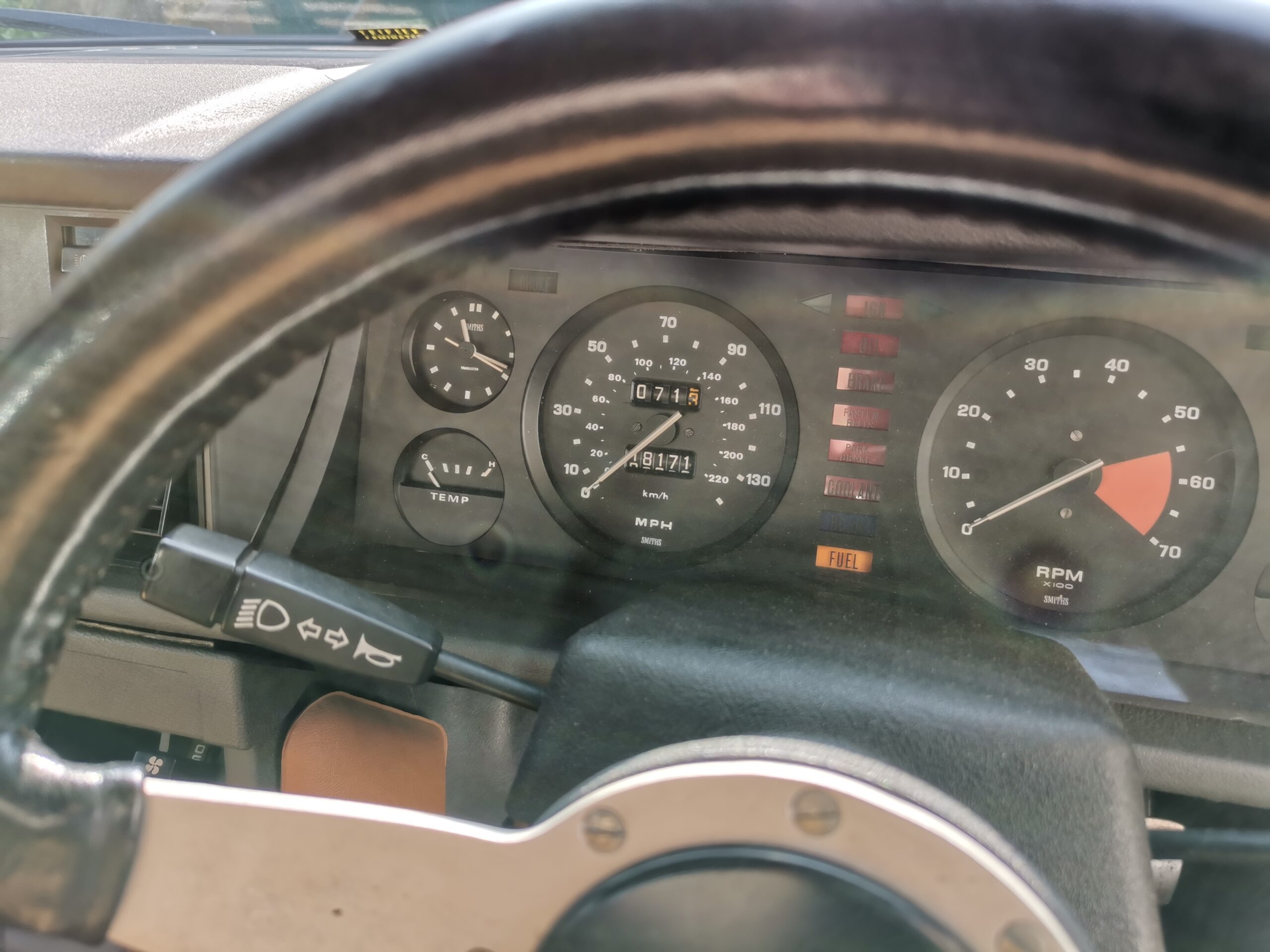
Approximately 20K has been spent on the TR8 getting it back to running condition. Many parts have been reconditioned due to corrosion and new parts fitted where needed, full fluids change throughout the car etc etc.
Restoration and Recommissioning Work on NWK 988W
Carburetors & Fuel System
-
Complete rebuild of Stromberg carbs with all new parts. Original needles had been soldered/bodged and were impossible to identify; replaced with B24081 needles, the richest still produced by Stromberg. Tuned for optimal performance.
-
Repair of automatic choke.
-
Repainted inlet manifold in original grey.
-
All new carb gaskets, including one remade when unavailable.
-
Replaced fuel cap with new vented version (old cap gummed up, causing vacuum in tank).
-
Replaced air filters with K&N units.
-
Installed external fuel pump with regulator, as originals were gummed up with old fuel.
Engine & Cooling System
-
Replaced heat hoses, coolant hoses, water pipes, pipe clips, coolant sensor, and thermostat.
-
Refurbished corroded coolant header and bracket.
-
Refurbished corroded rockers.
-
Oil, coolant, spark plugs (Iridium), coil, HT leads, and rotor arm all replaced.
-
Adjusted distributor timing and advance curve.
Exhaust
-
Refurbished corroded hot air exhaust.
-
Replaced exhaust system with new stainless steel.
Transmission & Drivetrain
-
Replaced all gearbox remote bushes (all had disintegrated).
-
Replaced broken gearbox selector frame on stick.
-
Replaced steering bush (disintegrated).
-
Fitted new clutch master and slave cylinders, replaced clutch pipe with braided version, and fitted shorter fork.
-
Replaced power steering belt, alternator belt, starter motor.
-
Replaced track rod ends, adjusted tracking, replaced ball joints, and steering bushes.
Wheels & Suspension
-
Replaced badly powder-coated wheels with 15” gold Minilites.
-
Fitted low-profile tyres.
Body, Seals & Exterior
-
Refurbished and repaired front works spoiler; repainted.
-
Quarter lights repainted with new seals.
-
Doors fitted with new seals; window seals replaced.
-
NS door mirror replaced.
-
Weatherproofed underside with Lanoguard to allow visibility of modifications.
-
Replaced rear light seals.
Interior & Trim
-
Heavy-duty interior clean.
-
Carpets cleaned.
-
Repaired minor hood damage.
-
Repaired seat belts.
-
Replaced damaged knee pad and heater knob.
-
Fitted missing TR8 glove box badge.
-
Sourced and fitted original/new-old-stock badges and decals.
-
Corrected screws in door locks and releases.
-
Handles fitted with new seals.
Electrical & Lighting
-
Replaced lights with LED units.
-
Replaced wiper motor and blades.
Other / Miscellaneous
-
Corrected incorrectly fitted SU needle, which previously limited top speed to 70 mph.
-
Refurbished corroded air boxes.
-
Repaired Gear gator and replaced top rubber section.
Paintwork – Minimal, Preservation-Focused
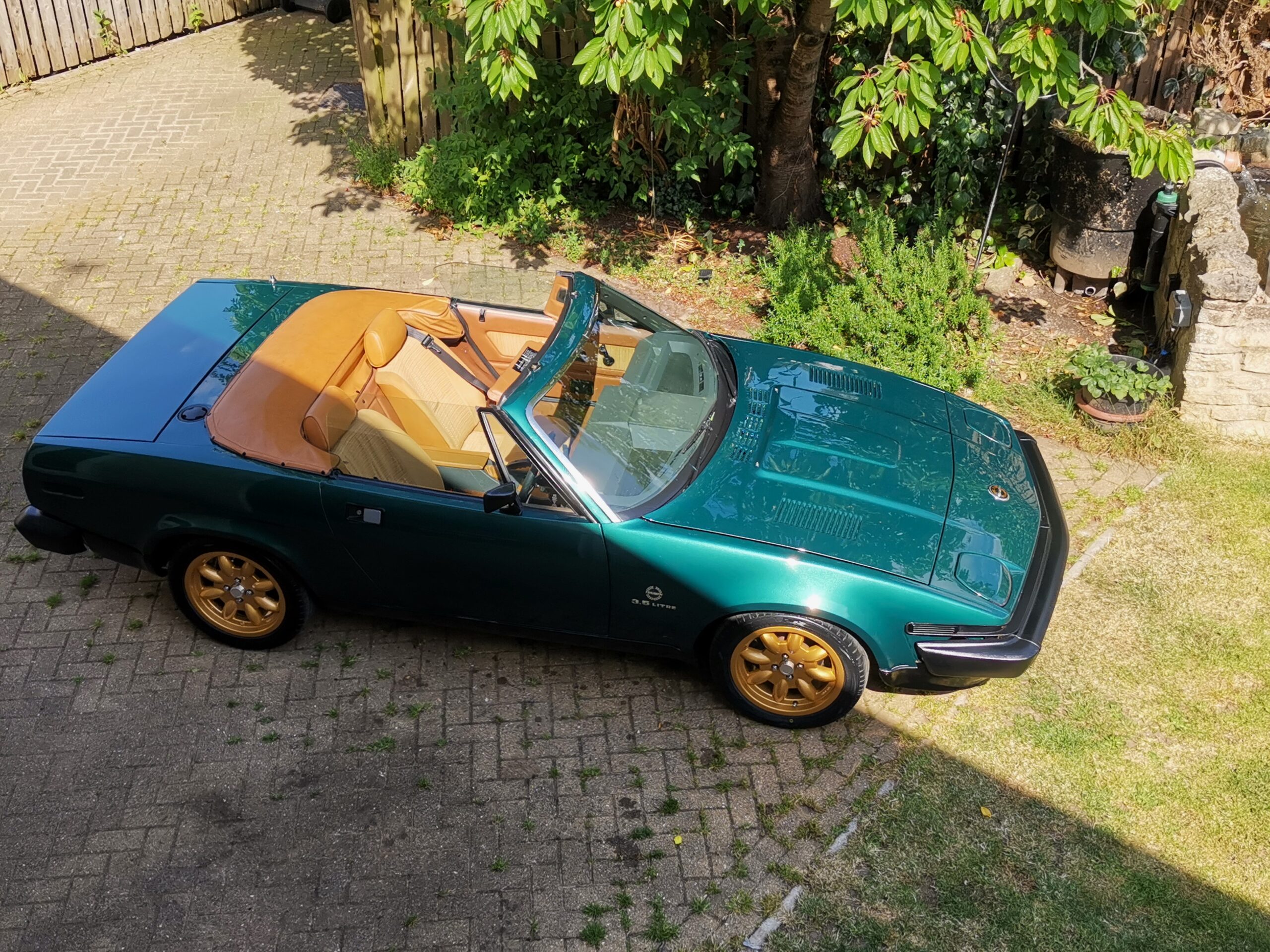
The car received a bare-minimal “blow-over” repaint, aimed solely at preserving its originality rather than achieving a concours finish. Over the years, NWK 988W had accumulated two or three slightly different shades of green, and this minimal respray focused on blending the panels while maintaining the original character and finish.
Door was found to be a different shade of green as were other panels
Passenger Door Repair
During the repaint, it was discovered that the passenger door had a very large dent that had previously been poorly filled and painted. The thick layer of filler was carefully removed, and the dent was pulled out and repaired correctly. Achieving a proper restoration required stripping the door back to bare metal before refinishing.

Front Panel and Overall Paint Approach
The front panel was also discovered to have suffered damage at some point. A very bare-minimalist blow-over paint job was carried out, combined with the repair of widespread dents, to ensure all panels matched while preserving as much of the original paint as possible.
No black areas or ancillary components were painted, and critical sections such as the under-bonnet, engine bay, inner doors, windscreen frame, and boot area were left completely untouched, maintaining authenticity throughout.

Back from the Paint shop and as NWK is currently with Minilite wheels in gold
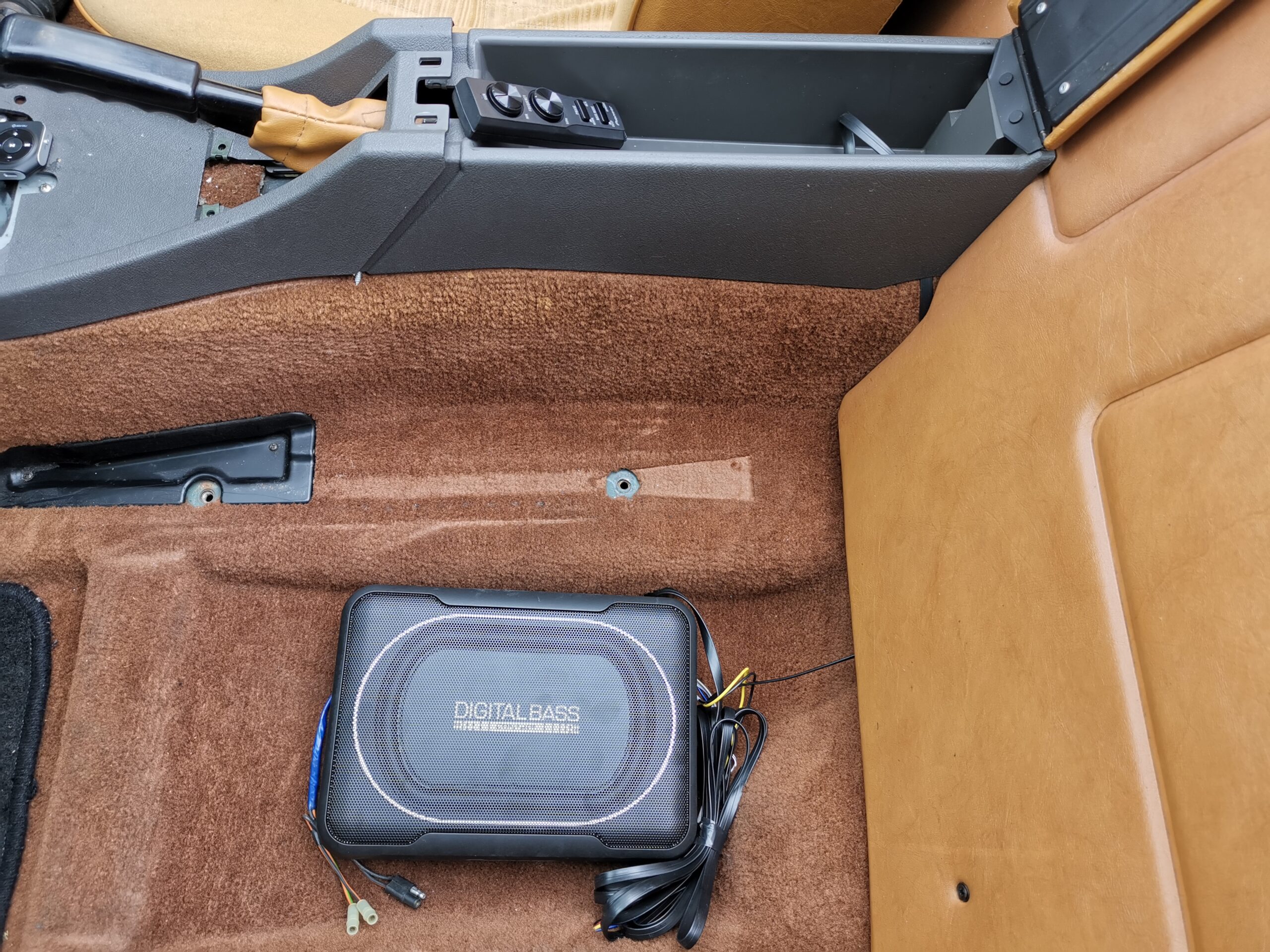
Fit a NEW/OLD STEREO – car still had the black cubby box with no stereo ever fitted. Retro system fitted – Looks 1980 period Pioneer facia but behind is a modern 50-watt amp and USB and Bluetooth system. Speakers and Tune-ups are period 80’s NOS. The sub-woofer fitted under the passenger seat is a new Pioneer Sub as I couldn’t track a NOS one down.
(LATER the Bluetooth amps were found to be just not be up to the job for multi speakers, so a modern minimal Pioneer stereo was fitted)
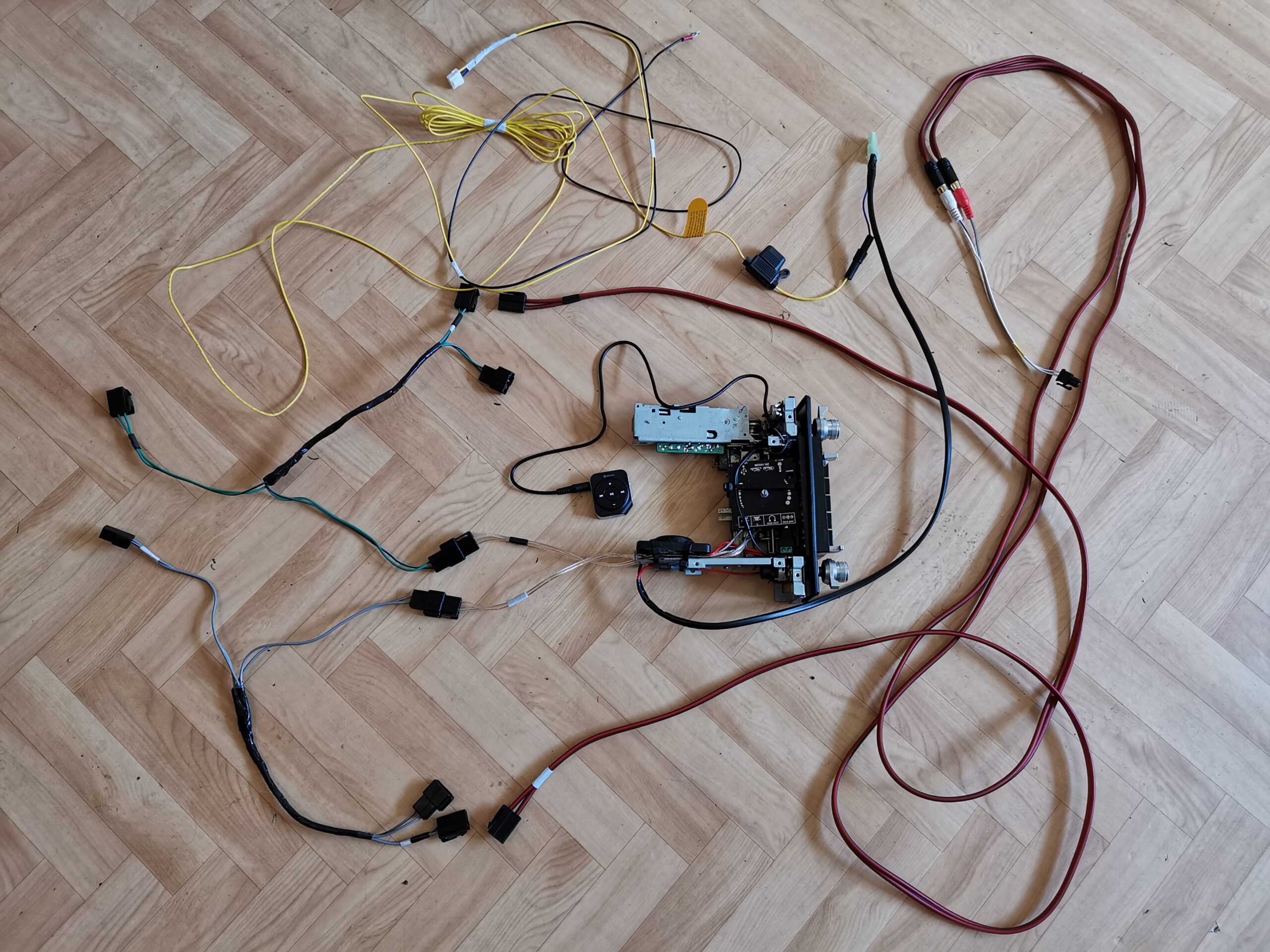
Modified old stereo to take a modern amp and Bluetooth
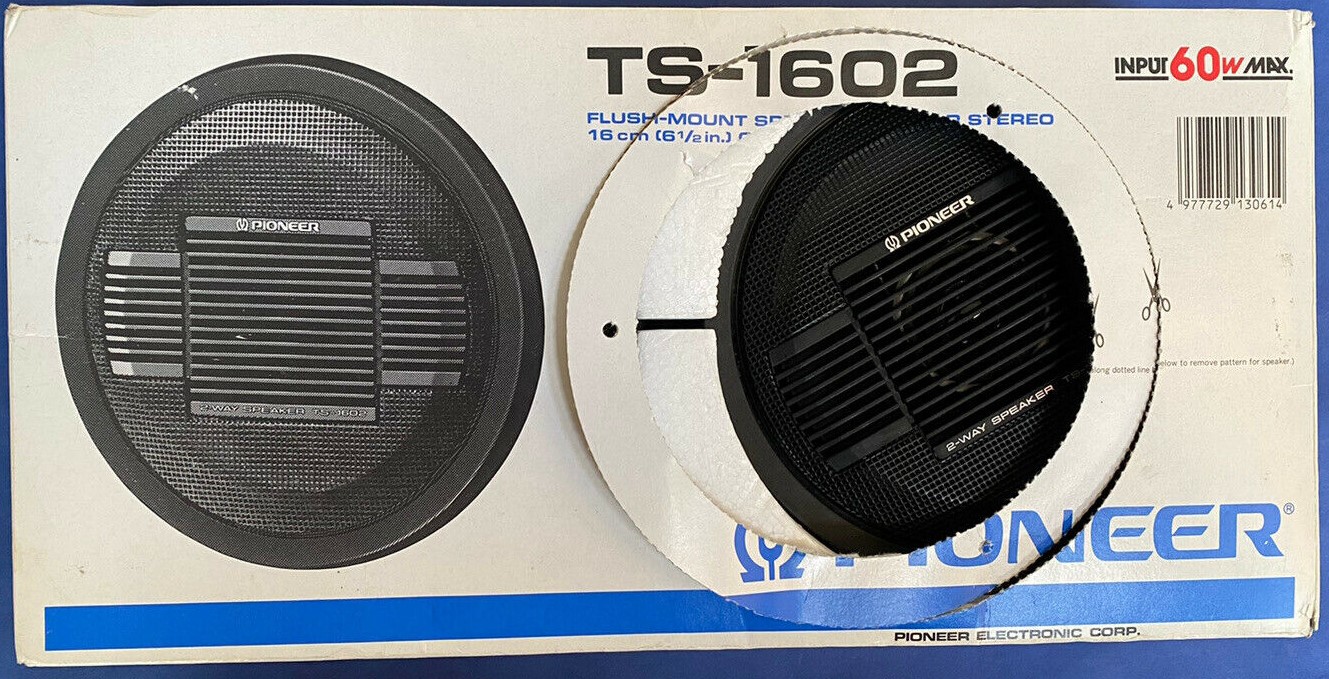
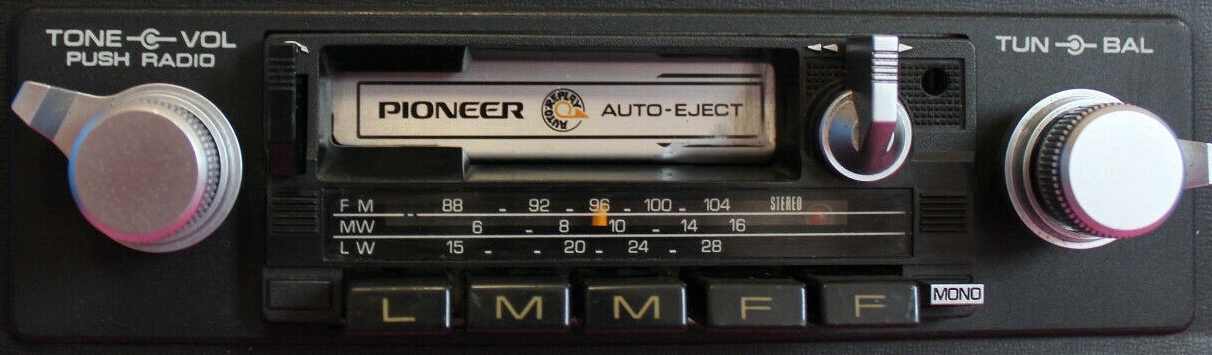
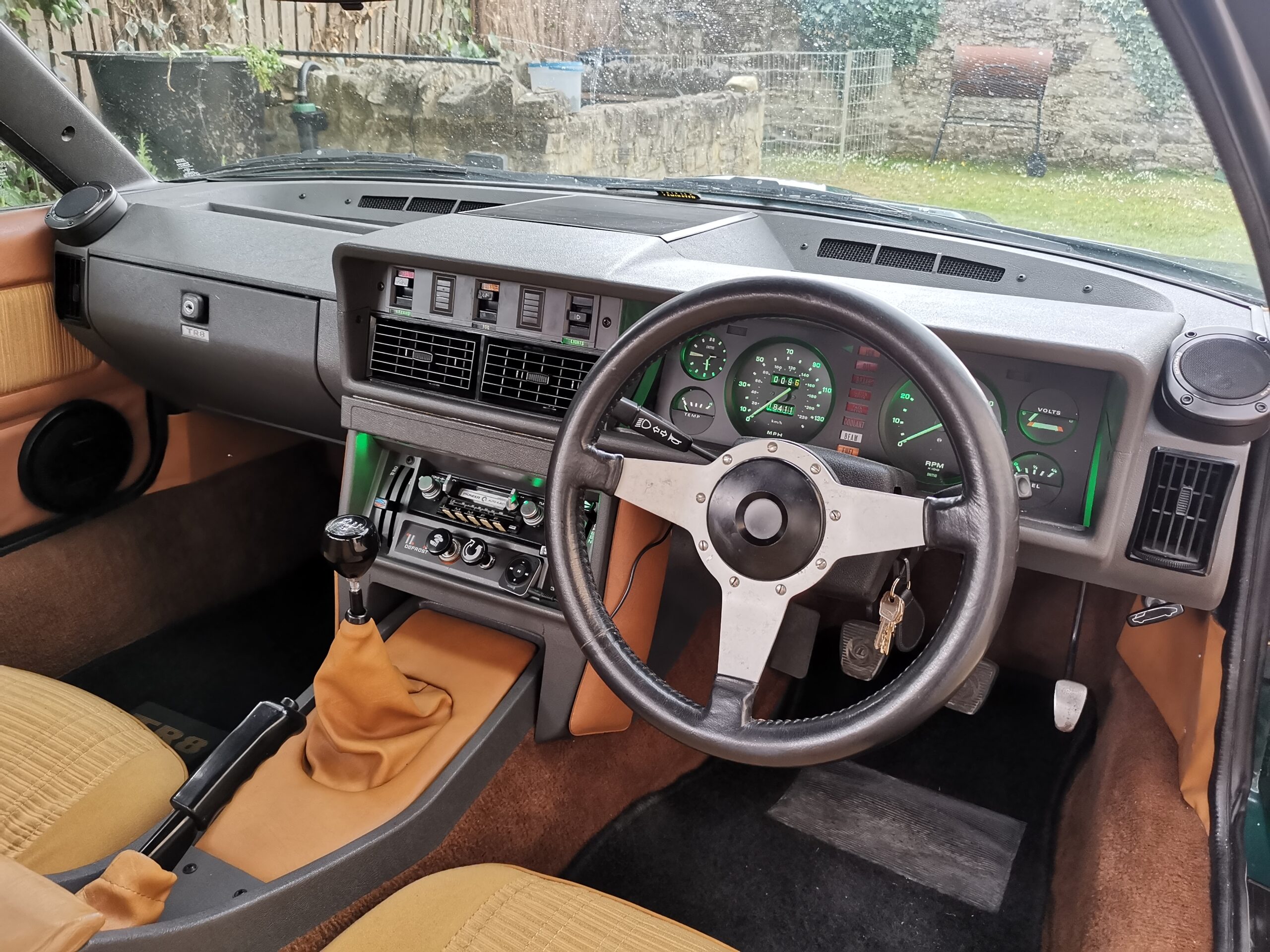
It was important to keep the car looking period so everything that can be seen is circa 1980. The modern Bluetooth amp is hidden behind the Pioneer KP-5800 fascia
DIFFERENCES FOUND ON NWK
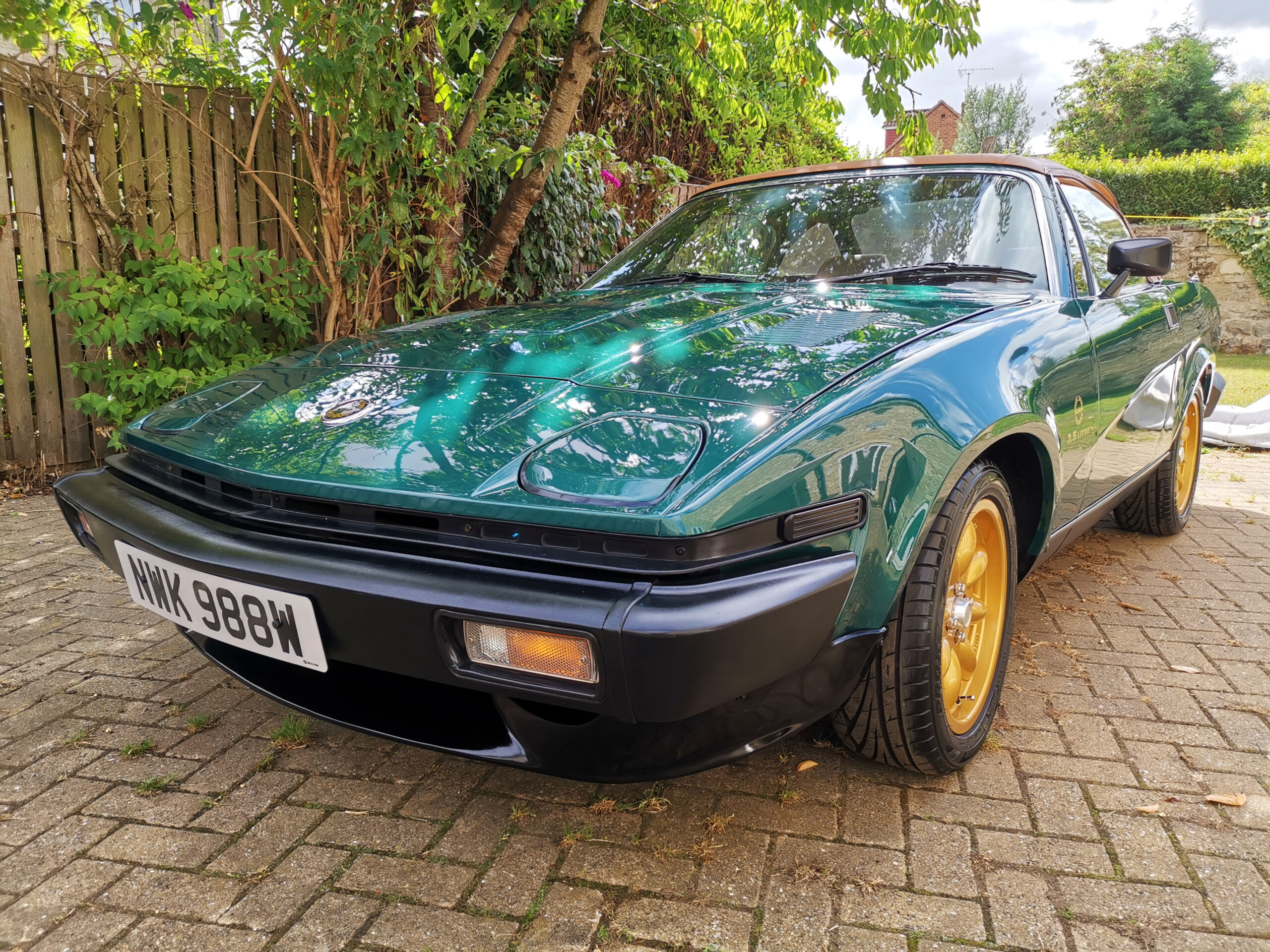
There are a number of differences on this car over other RHD TR8’s, these are some of the main ones,
Works spoiler fitted for up to 30% lift reduction – The spoiler is still RED fibreglass behind so you can see it came from works stock originally, before being painted black to match the car style.
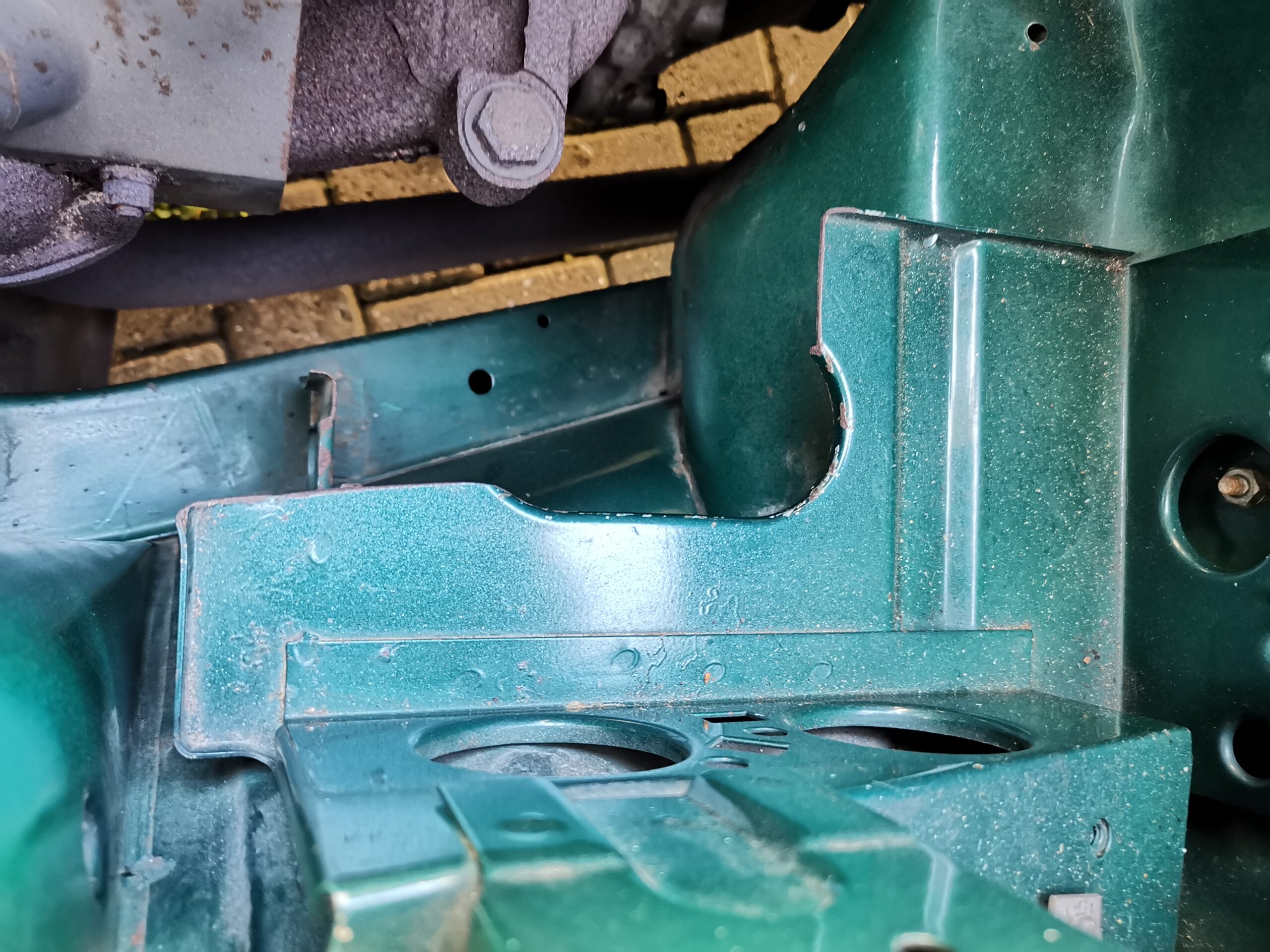
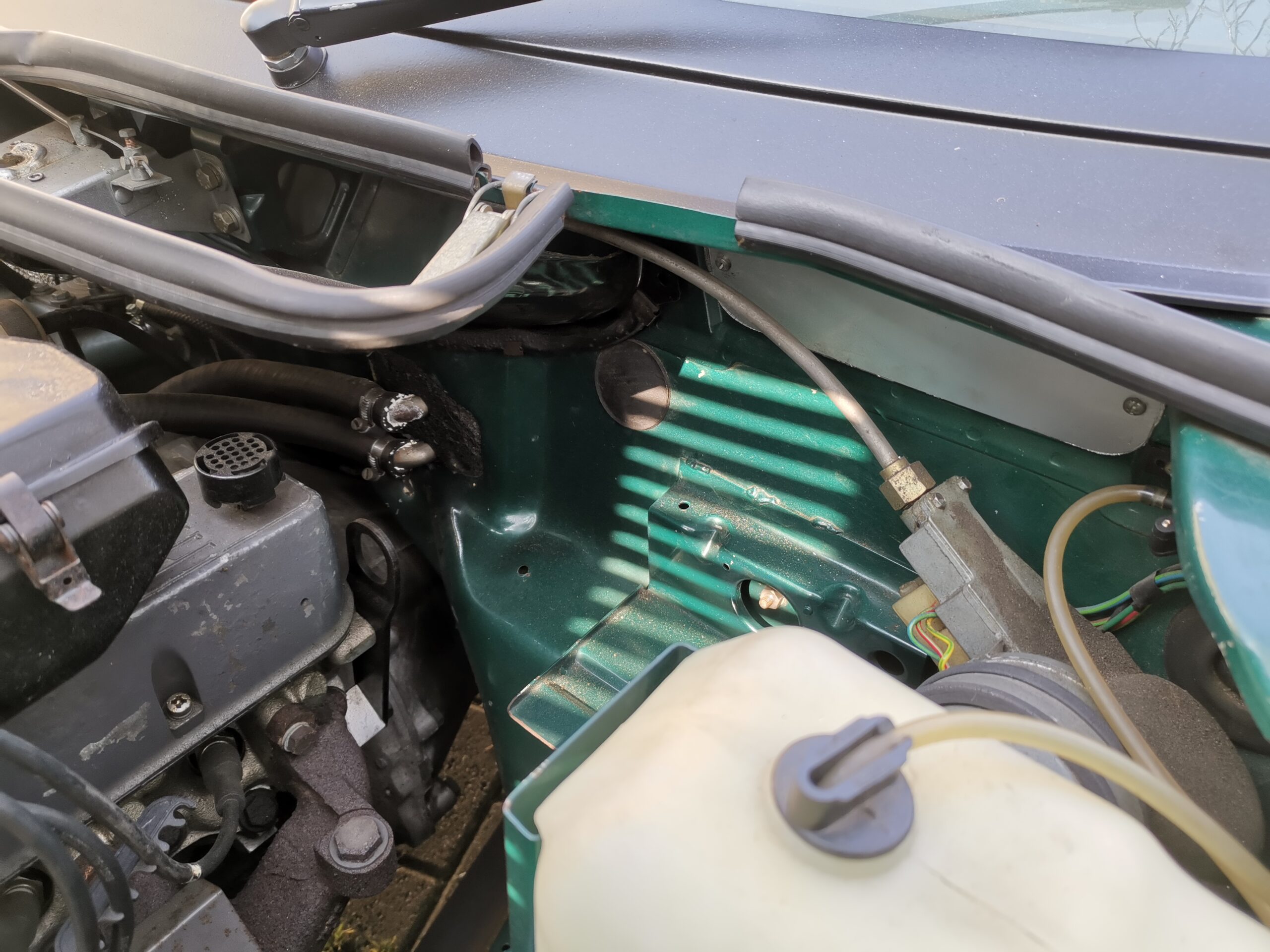
Battery tray cut away to allow easy access
Efi Breather system instead of the normal pipe across to the other carb
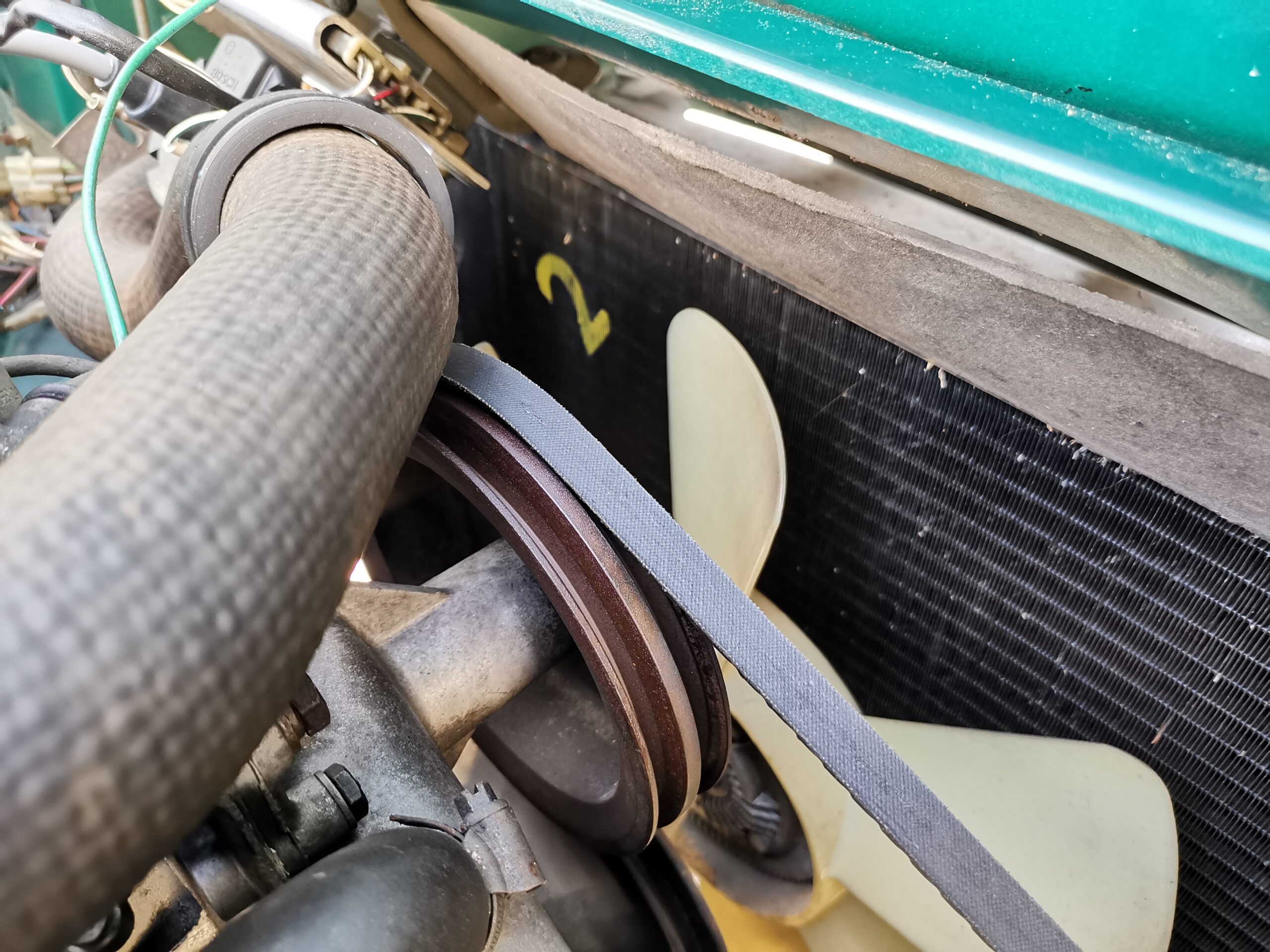
Radiator No 2? Various exp items were tried out on the car.
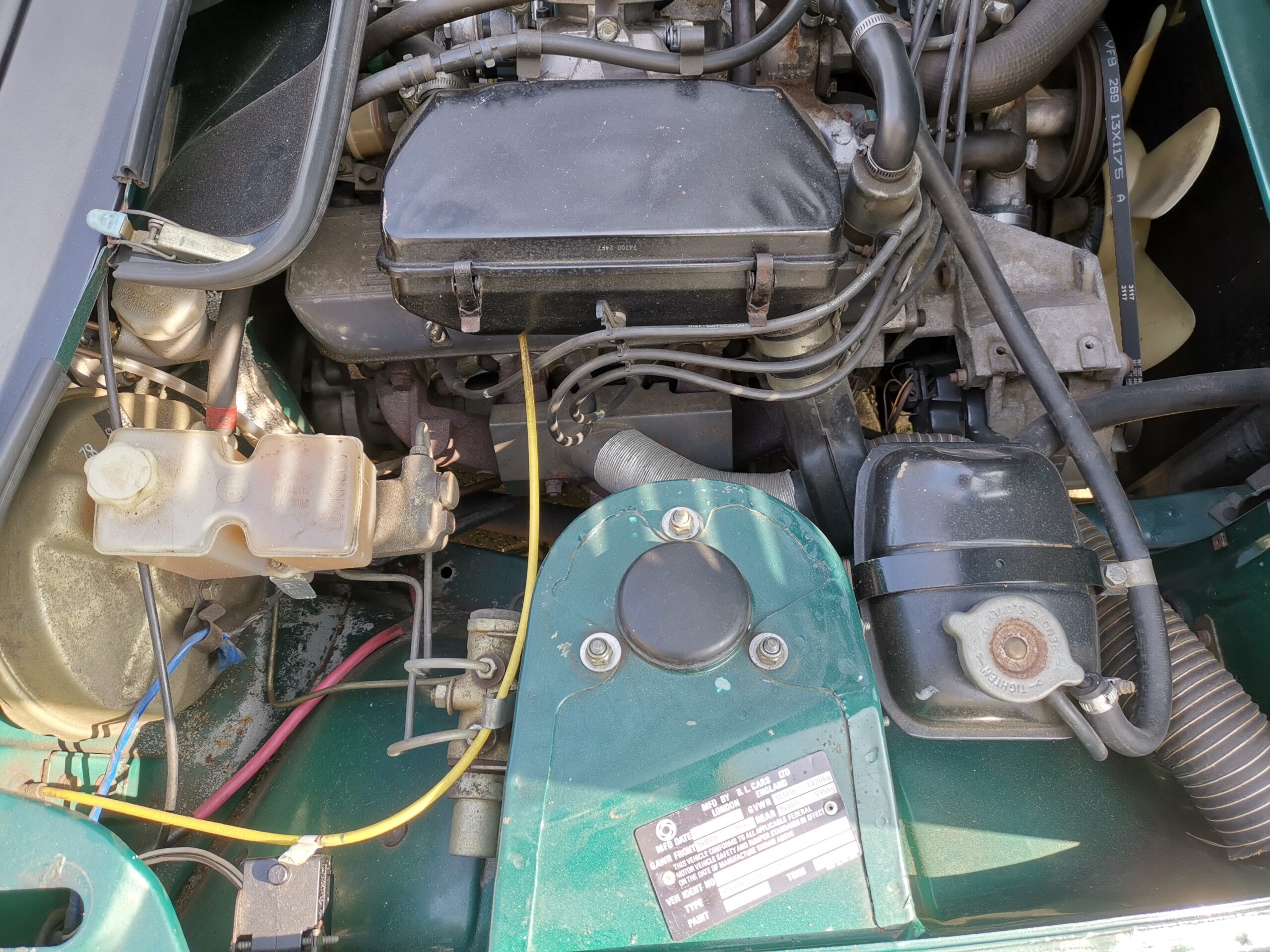
Chassis Plate USA type but fitted in correct UK position with UK RHD Chassis number
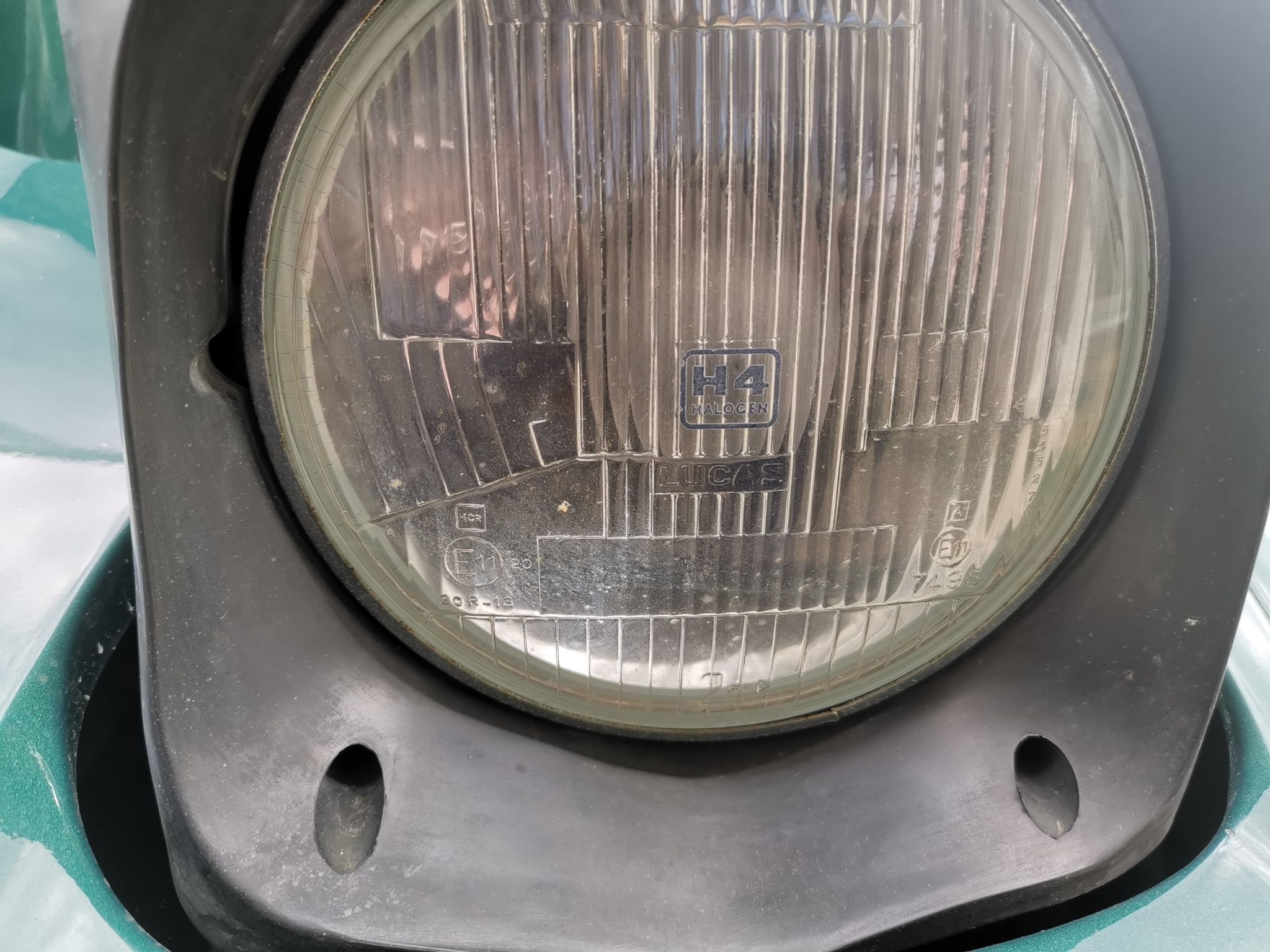
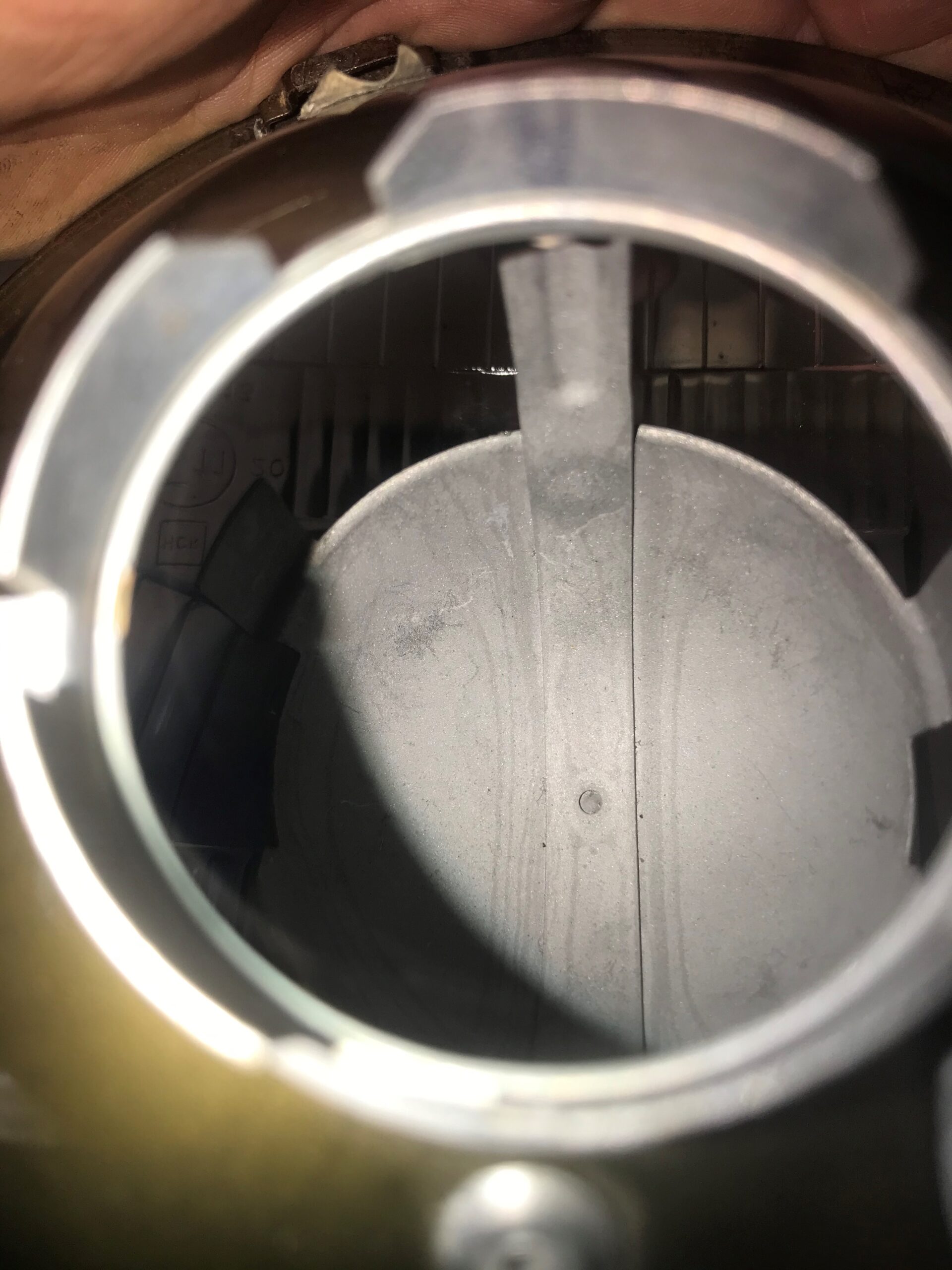
H4 Headlights – Marked Blue logo on light – Inside has a dish element.
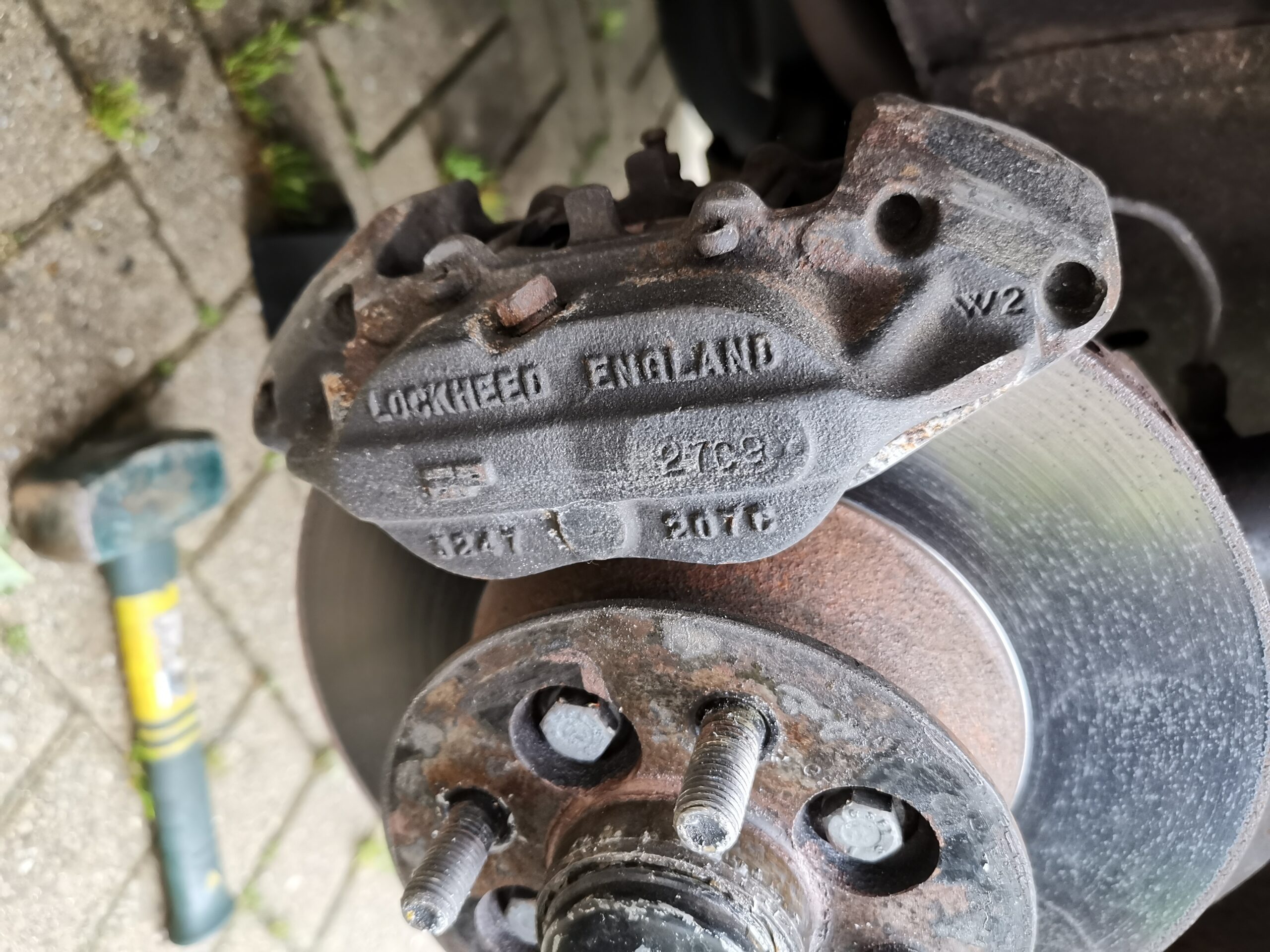
Vented Disk Brakes plus various other suspension modifications
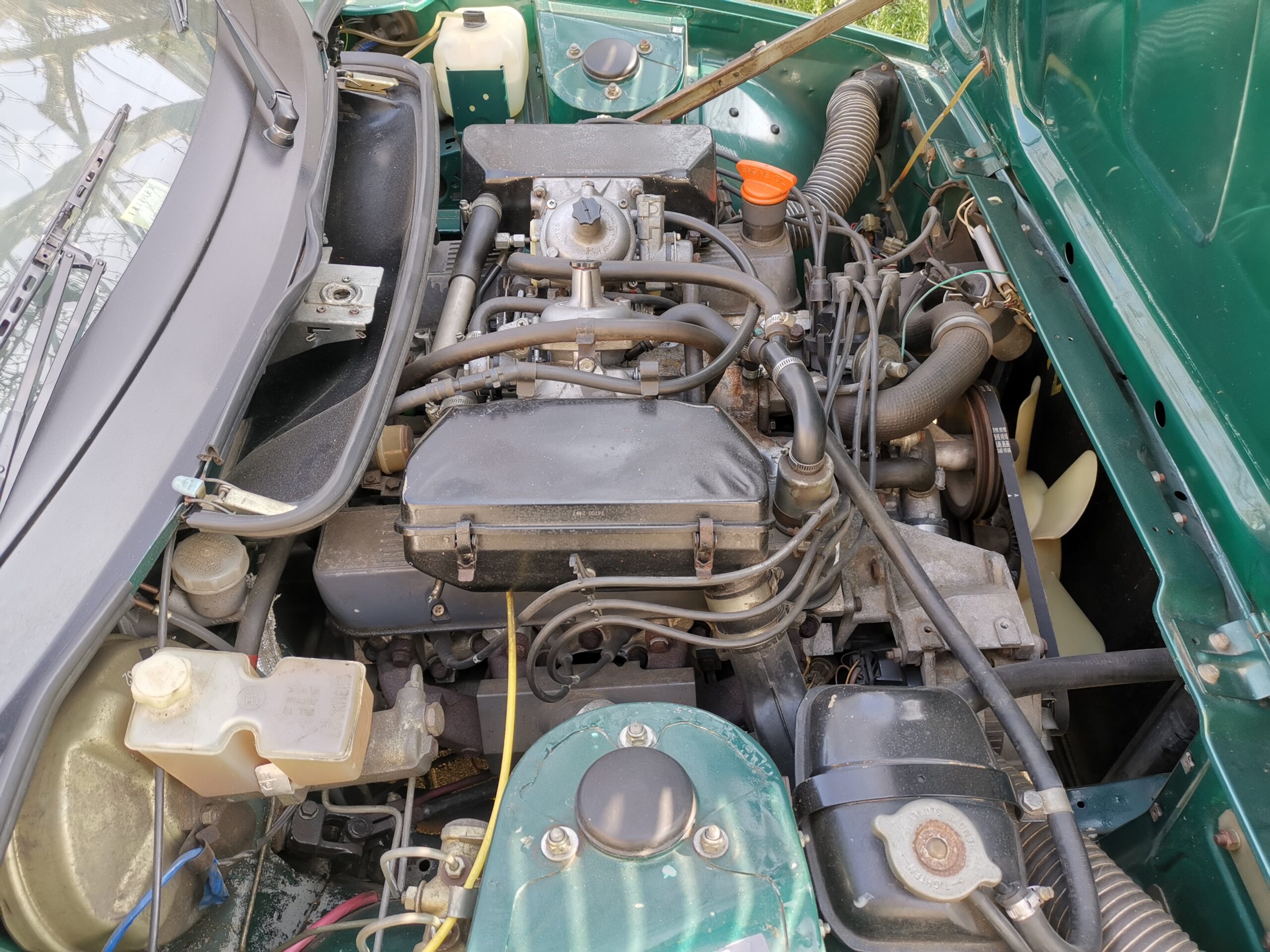
Engine when I got it had a lot of corroded parts and worn pipes along with flaking paint
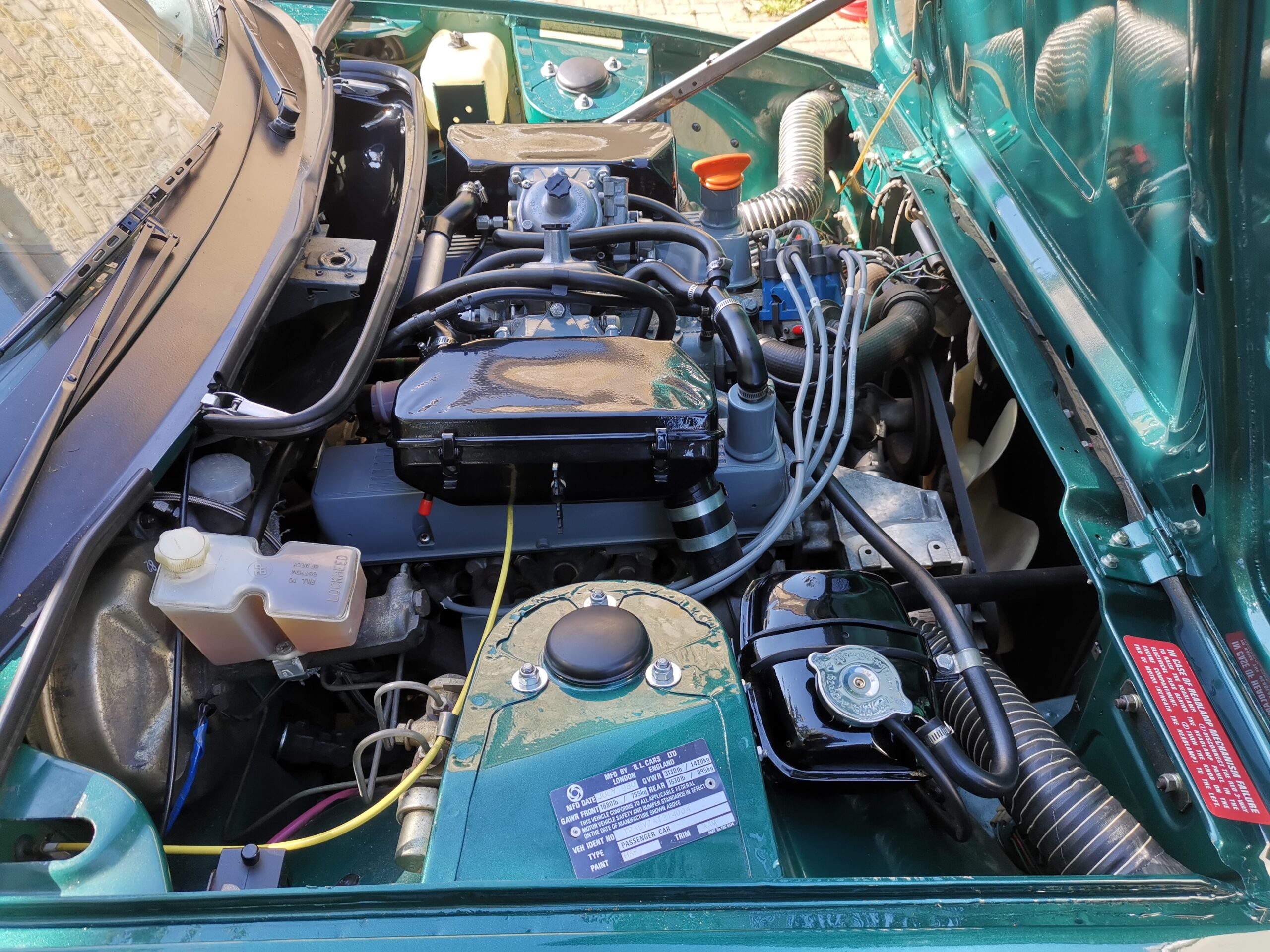
After powder coating and new pipes etc
Engine is fitted uniquely with the WL9 BL MOTORSORT CAMSHAFT and appropriate valve spring assemblies.
Former ARG Motorsport Director John Davenport disclosed that the WL9 cam was developed by the Motorsport division and fitted to around twenty of the company’s own cars (NWK988W was among these and the only road going TR8 fitted with one) and a few clients’ vehicles. ARG’s Engineering Division also fitted some WL9 cams to engines for testing as assessment, (Pictures of WL9 are from one of those engines that I was lucky enough to get hold of as a spare) but it was never accepted for full scale production. As it was not a required part of the homologation regulations for the ETCC race cars, it did not need to be fitted to the road-going cars.
The bare figures are 19/57/57/19 = 256 deg period, 435/.430 valve lift with 1.6 rockers. That doesn’t tell the whole story, of course, as the secret is in the steep opening and closing ramps. It was the cam homologated for the later racing Vitesse’s, but only fitted to about 10 actual production cars. The earlier Group A racing Sd1s were limited to the .390 standard lift, so it is likely that BL actually developed the WL series for the TR8 initially moving to SD1’s after the TR8 programme ended.
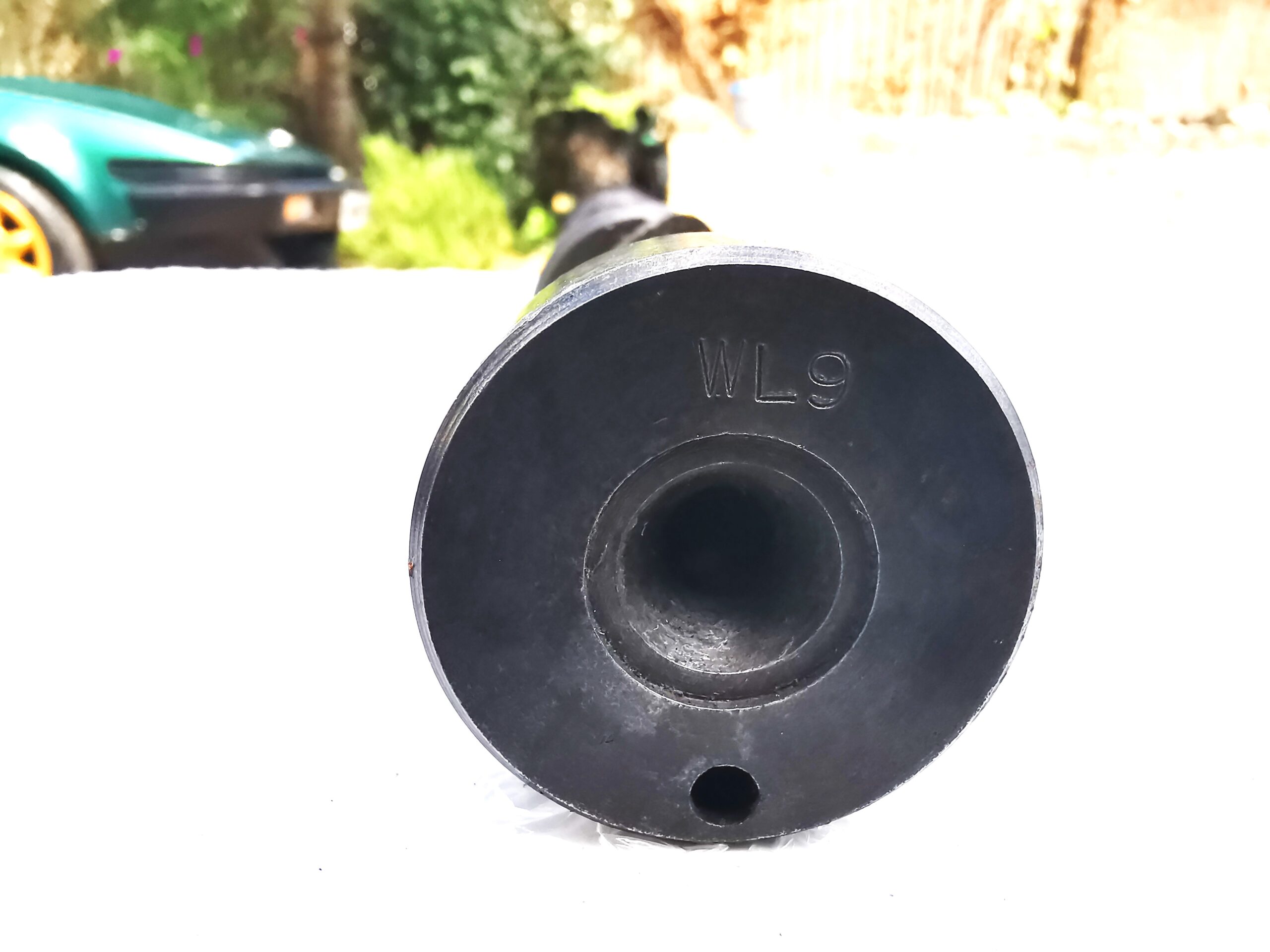
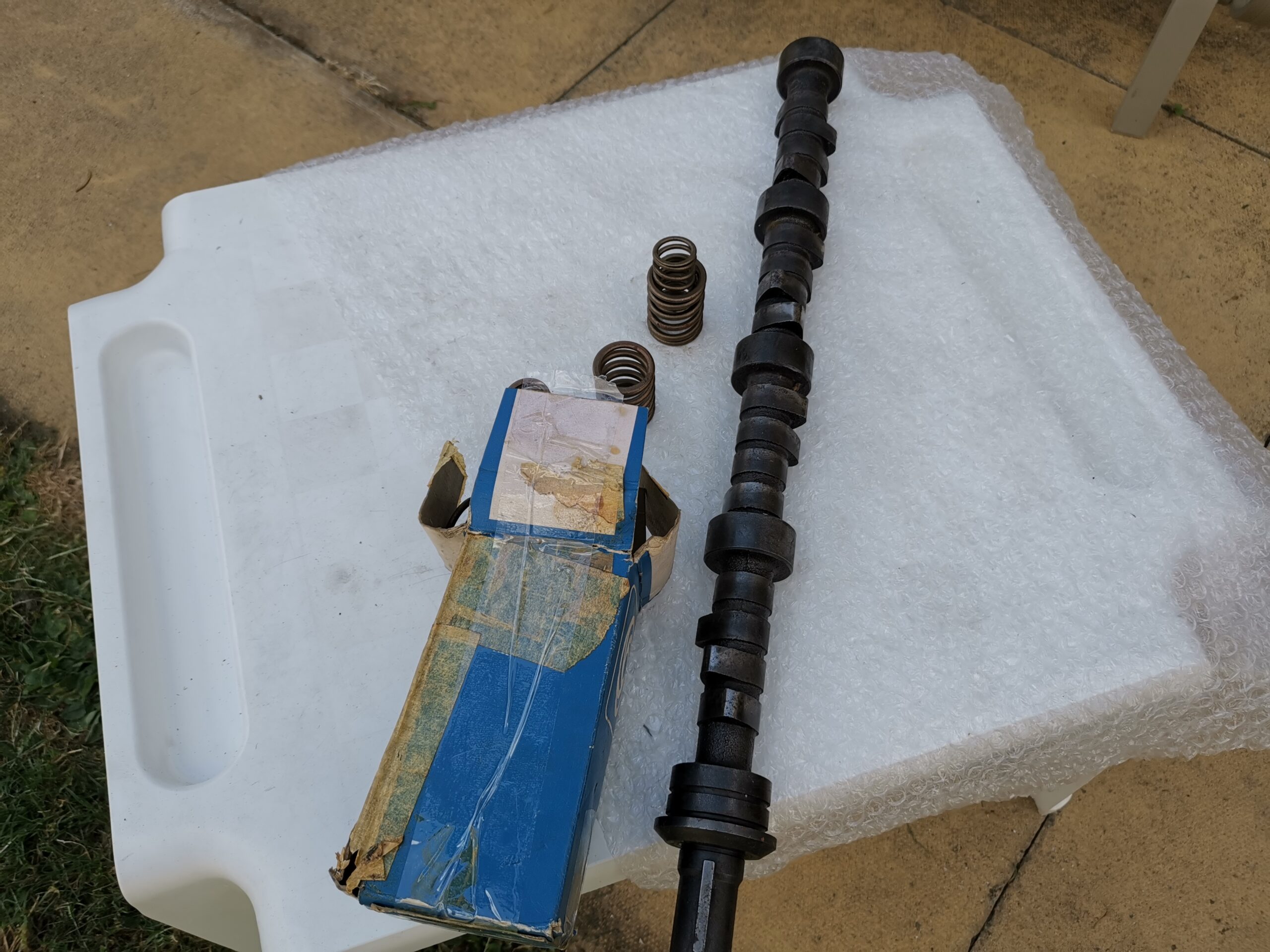
Body plate is the CHP 300 series.
Only used on the RHD HOME MARKET TR8’s. this is the lowest in the 300 series known. It is the second RHD TR8 built. Earliest known CHP body number.
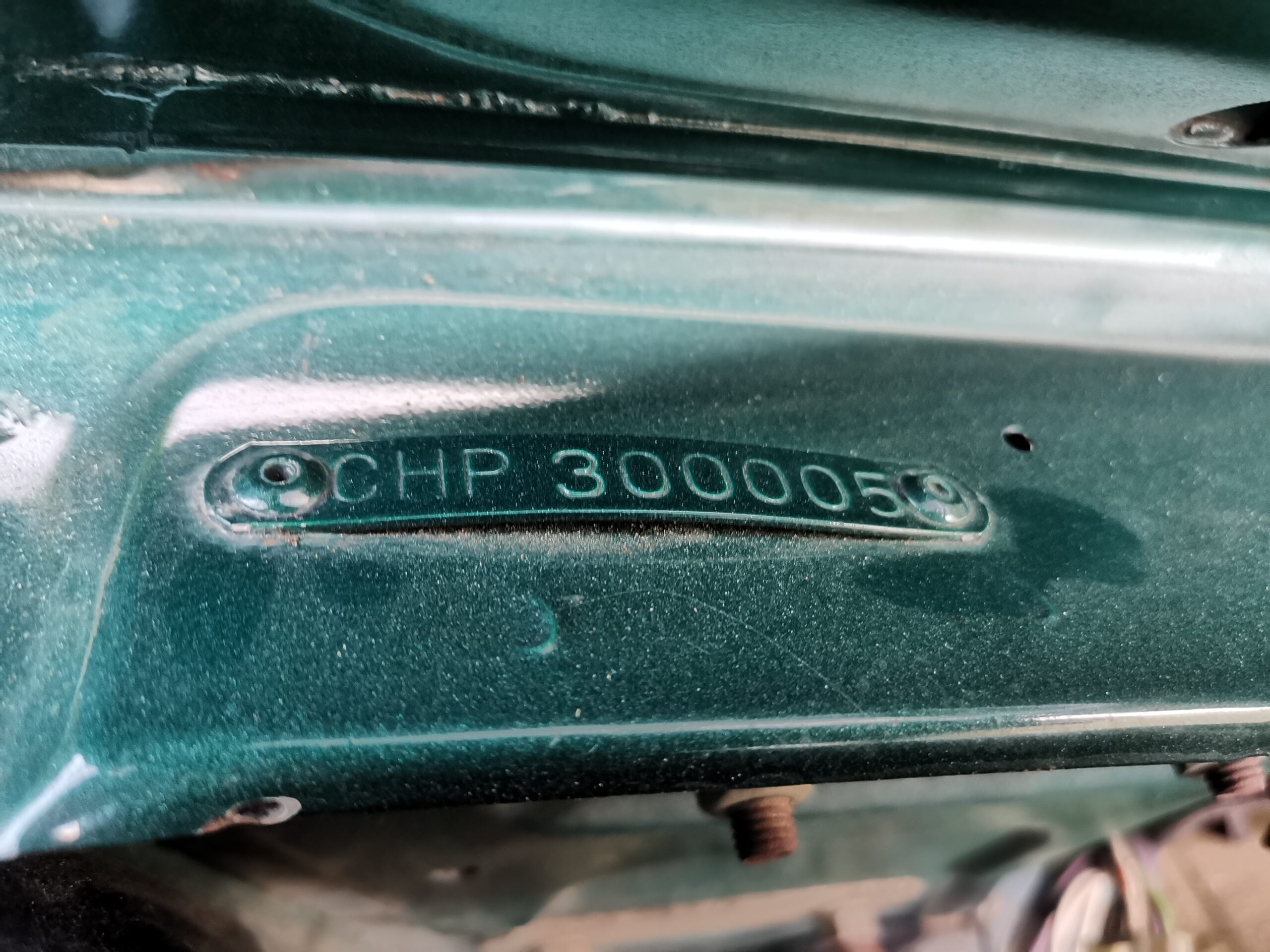
CHP300005
NWK988W for 1980/81 was one a hell of a car, and it isn’t slow by today’s standards either.
Handling is the best of any TR8 I’ve ever driven, like it’s on rails, and as Gary Owen Triumph Factory Manager at Canley, said in his letter in September 1997 Practical Classis it’s a “DREAM DRIVE”
At least this TR8 survived so we now know what might have been. It would/could potentially have been the spec for the 1982 RHD TR8s so it is as such, “The very last specification factory RHD TR8” And what a GREAT note to end on! End of production was announced in the USA on May 14th 1981 with the last cars rolling off the production line in October 1981.
PERFORMANCE CLAIMS NWK988W
In his letter to Practical Classics in September 1997 Garry Owen Manager responsible for the RHD TR8’s stated the car achieved 150mph.
I have in 2022 spoken to Garry personally where he again stated 150mph. Sadly the data from the rolling road test Richard Hurdwell mentioned in his December memo 1980 “The engine will be tested on the rolling road in Jan when it returns to Abingdon with more running-in completed” no longer exists. We do know however due to a rolling road test we did September 2023 with the car it reached 270bhp at 5.8k rpm.
So, as I am unlikely to risk damaging such a unique car getting it to 150mph again after so many years, what do we know for sure is on paper, it is easily doable. Car reaches maximum power of 270bhp at 5.8k plus but will easily rev to 6k plus.
| TR8 UK SPEC | 80/81 | |
| Miles 5th Gear | Revs K | MPH |
| 27.6 | 1 | 27.6 |
| 2 | 55.2 | |
| 3 | 82.8 | |
| 4 | 110.4 | |
| 5 | 138 | |
| RED LINE | 5.5 | 151.8 |
| 6 | 165.6 |
Given the normal engine redlines at 5.5k the maximum theoretically would be 151.8 mph however with this cam we can go to over 6k. For a standard car much more than 5.5k and the hydraulic lifters run out of oomph and you have to back off the throttle for the engine to run correctly. In effect they pretty much run as a speed limiter, so it’s not possible with the standard engine setup/cam. That is borne out by TR8 X923 (USA 13E engine – modified to 9:35?) speed tested at Mira to 130.4mph flying quarter mile (top speed very briefly 137mph) with most likely the same 5th gear ratio. X923 didn’t have enough power or revs for more and nor was it likely to have been very stable at its maximum, although it does have the earlier MK1 works spoiler fitted.
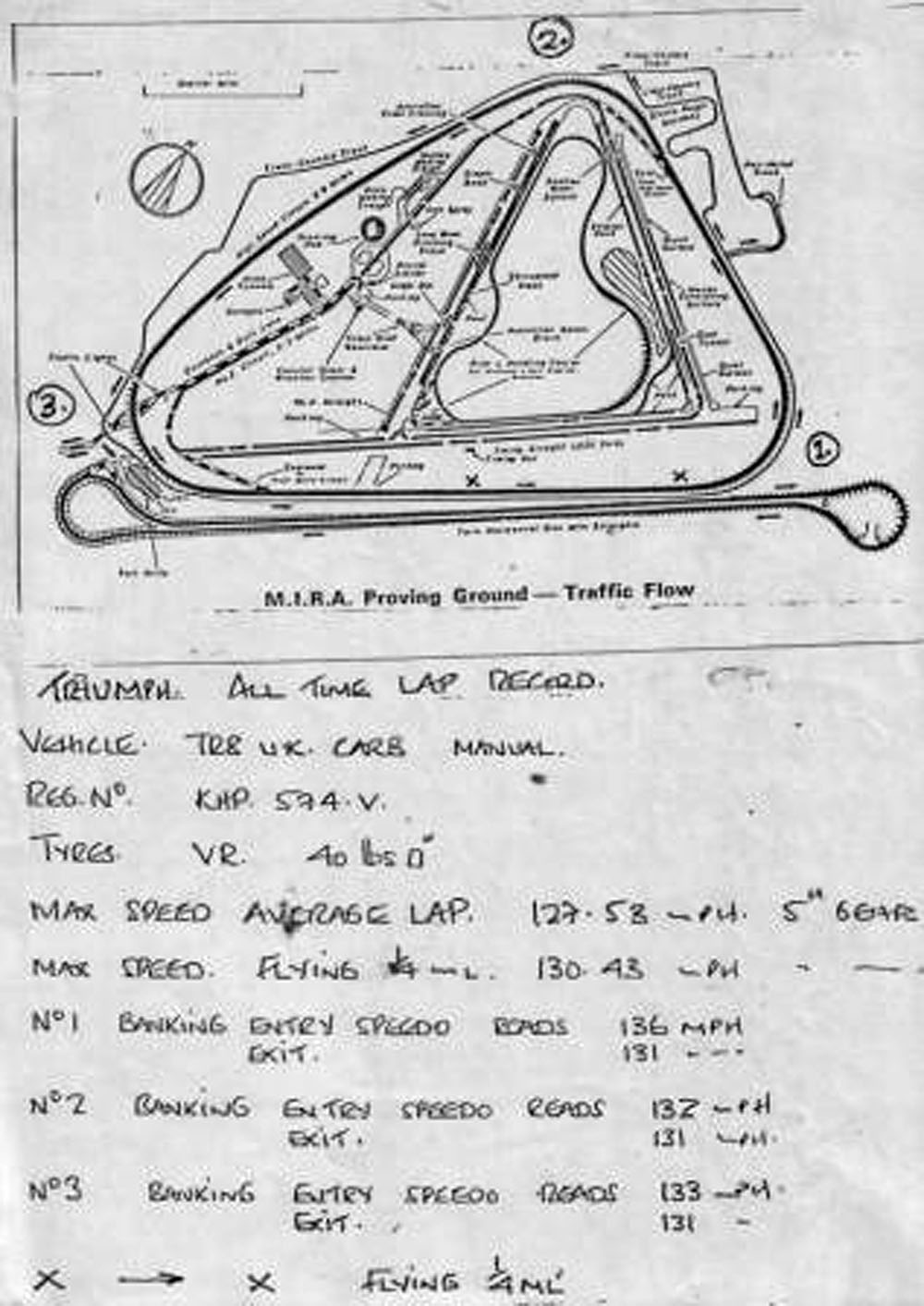
Stability
Having driven a modified TR7V8 200 bhp on the Autobahn many years ago on a long straight heading south from Hamburg early one Sunday morning I can attest unless you have a death wish 130mph with the standard spoiler/suspension setup is about the absolute limit. Maybe I could have gone a bit more, but I decided that was more than enough excitement for one day.
A close friend and TR7/8 engineer did take on the Autobahn a modified TR7V8 200bhp plus car that had a high lift cam fitted (allowing revs to 6.5k) along with the later works tarmac MK2 spoiler fitted, and got the needle right round the clock to the P at the bottom of the cloc,.so in theory past 150mph.
Fitting the tarmac or MK2 spoiler RE Richard Hurdwells memo “Wind tunnel testing at MIRA during rally car development indicated that this spoiler should reduce front lift by between 10 and 30%” so you are going to need that fitted or the car will be too unstable at high speed. It is fitted to NWK988W.
NWK988W Engine
Sadly, after so much time we only know the following about the engine from the memo Richard Hurdwell wrote Dec 1980. (Rolling road tested September 2023 to 270bhp)
“1. Compression ratio raised from 8.13:1 to 9.35:1 by fitting current SD1 V8 pistons. (Believed later changed to 9:75:1)
2. Standard camshaft replaced by ‘WL9’ Motorsport camshaft with valve and spring upgrade assemblies.
3. Zenith-Stromberg carburettor fitted with alternative fuel control needle to suit ‘WL9’ camshaft.”
On talking to Richard Hurdwell about the engine; when he wrote the memo, he only knew the basics of what was done to the engine. More work was likely done he said, he just didn’t know what, as all the engine gearbox work etc was completed before he was given the car. Axle ratio could have also been changed to 2.84 for example to give 33 per 1K revs, but in the absence of any proof we will assume not. The 5th gear ratio could have also been changed, but again no proof so we assume not. What we do know however, is that for the run NWK was on different wheels and different high-speed tyres Michelin TRX (metric – first available low-profile tyres).
From Richard Hurdwell Dec 1980 MEMO “From our experience with Michelin TRX tyres these can give improved ride as well as cornering power. The ride properties of the tyre would help to counterbalance any extra harshness from stiffer suspension. The extra handling performance will enhance the car’s already high cornering power and make it safer. John Re at Canley has or will have some fabricated wheels to try TRX tyres on a TR7 but they will not fit on the ventilated brake hubs. Michelin are to provide some suitable wheels and tyres in late Jan for test purposes.”
They were larger than the standard wheel/tyre approximately 15” to clear the vented disk brakes, and thus changed the ratio that way, increasing actual mph. Average on a selection of available likely TRX tyre sizes on, was between 7 to 9 miles plus over
standard wheels tyres at 140mph. A larger wheel from Michelin was required to clear the vented disk kit fitted to the car as per RH memo. The TRX tyre could only be mounted on TRX wheels and they were conceived to work as a unit from the start, TRX wheels are built in metric sizes instead of inches and the inner shape of the wheel is different than regular J-type imperial wheels. So that is most likely the missing ratio piece of the 150mph puzzle. To achieve 150mph again, the current wheels/tyres would likely need to be changed. NWK currently has 15” with 195/50 fitted. Standard was 13” 185/70.
Conclusion
- What we do know is the WL9 cam fitted to the car with valve mods will allow revs 6K plus, so reaching 150mph with the gearbox and 3.08 axle ratio is certainly achievable. More so with larger wheels and tyres increasing the miles per turn over standard. Maximum power we now know after testing on a Rolling road September 2023 is 270 bhp at the wheels so more than enough for such a small light car. It is also believed the car actually has 9:75:1 pistons fitted probably done at the same time as WL9 cam.
- With increased stability due to the Richard Hurdwell handling package and tarmac spoiler fitted, the car is more than stable enough to hit 150mph.
TR8 X923 very briefly reached 137mph with a much less powerful engine (minus 117 bhp) and no WL9 CAM fitted for higher revs. So could NWK988W with considerably more power and higher revs get the extra 13mph over X923. BL Engineering dept put X923’s engine together and BL Motorsport Abingdon put NWK988W’s engine together; so, Abingdon’s version would also have a lot more inherent performance knowhow engineered into the car than BL. With a road long enough a 150mph maximum speed for NWK988W is correct. The fact it was said with “some power left” seemed a tad optimistic at first, unless of course the ratio was changed in some way as well, and that was the case at the time with larger wheels and tyres.
Going forward
June 10th 2022 Gaydon. Richard Hurdwell (Suspension Engineer on the car) turned up to look his old car over again and close a chapter for him. It was a privilege to take him for a drive in the car.
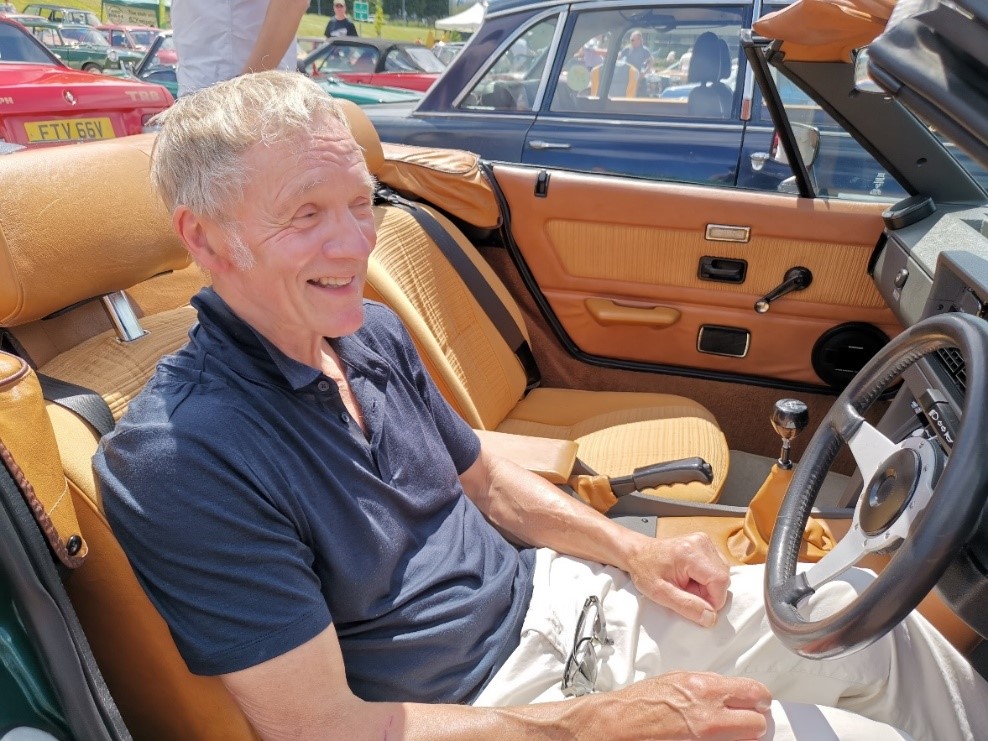
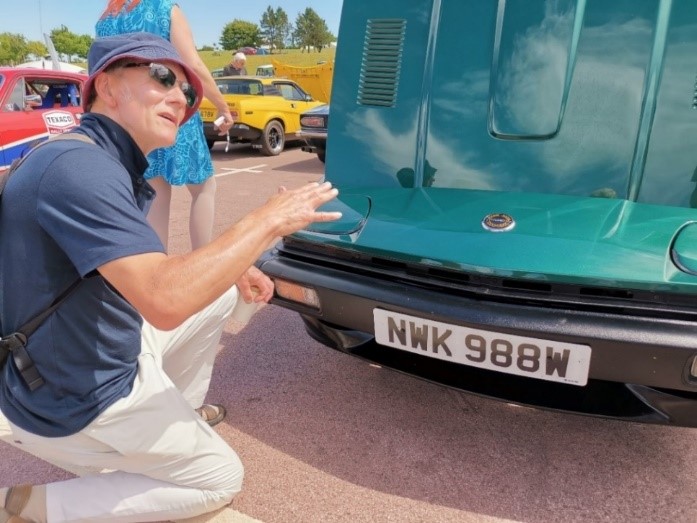
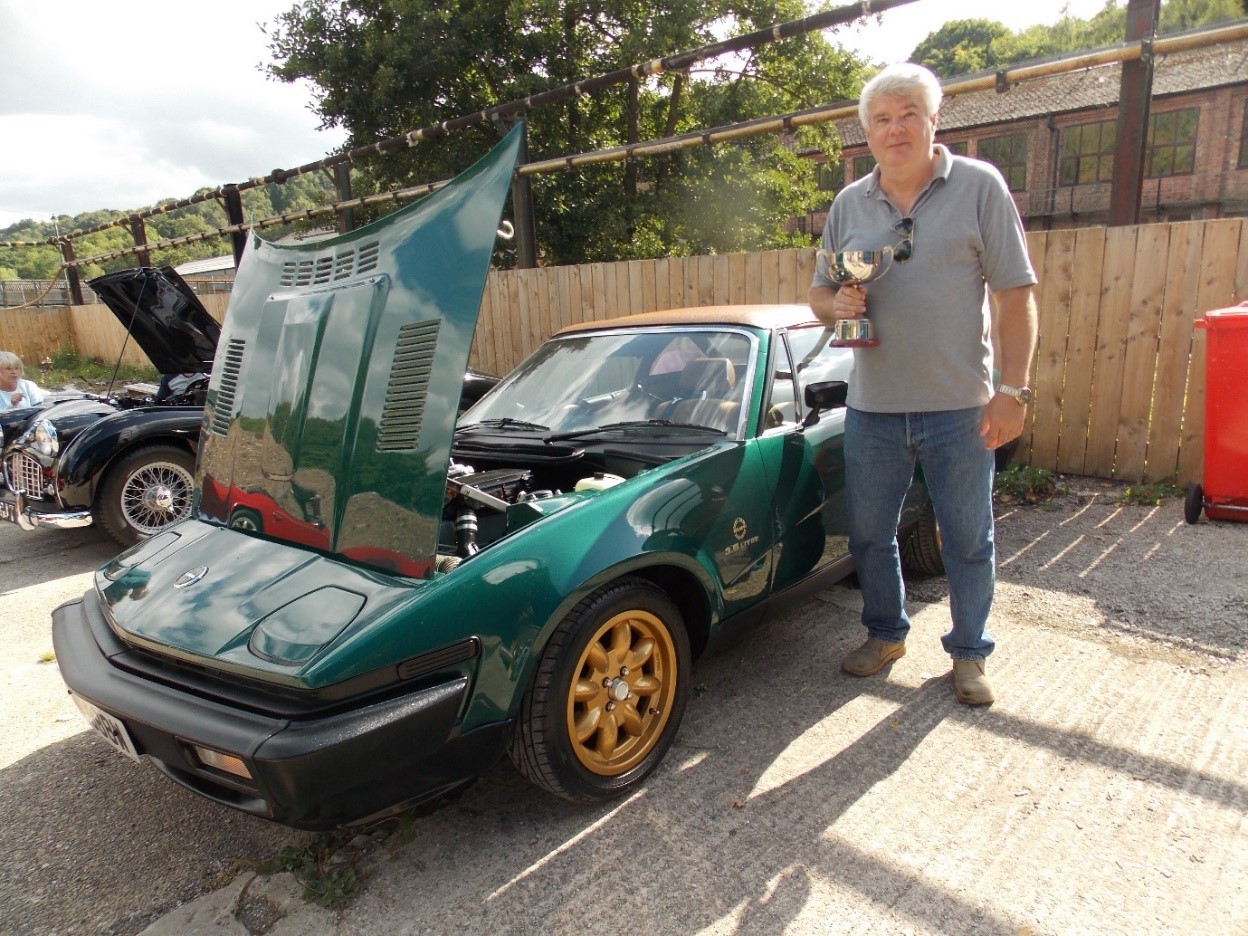
August 20th 2022 TR Register Event Derby – NWK988W won the survivor’s cup.
November 13th 2022 TR Register stand NEC Birmingham Classic Car Show
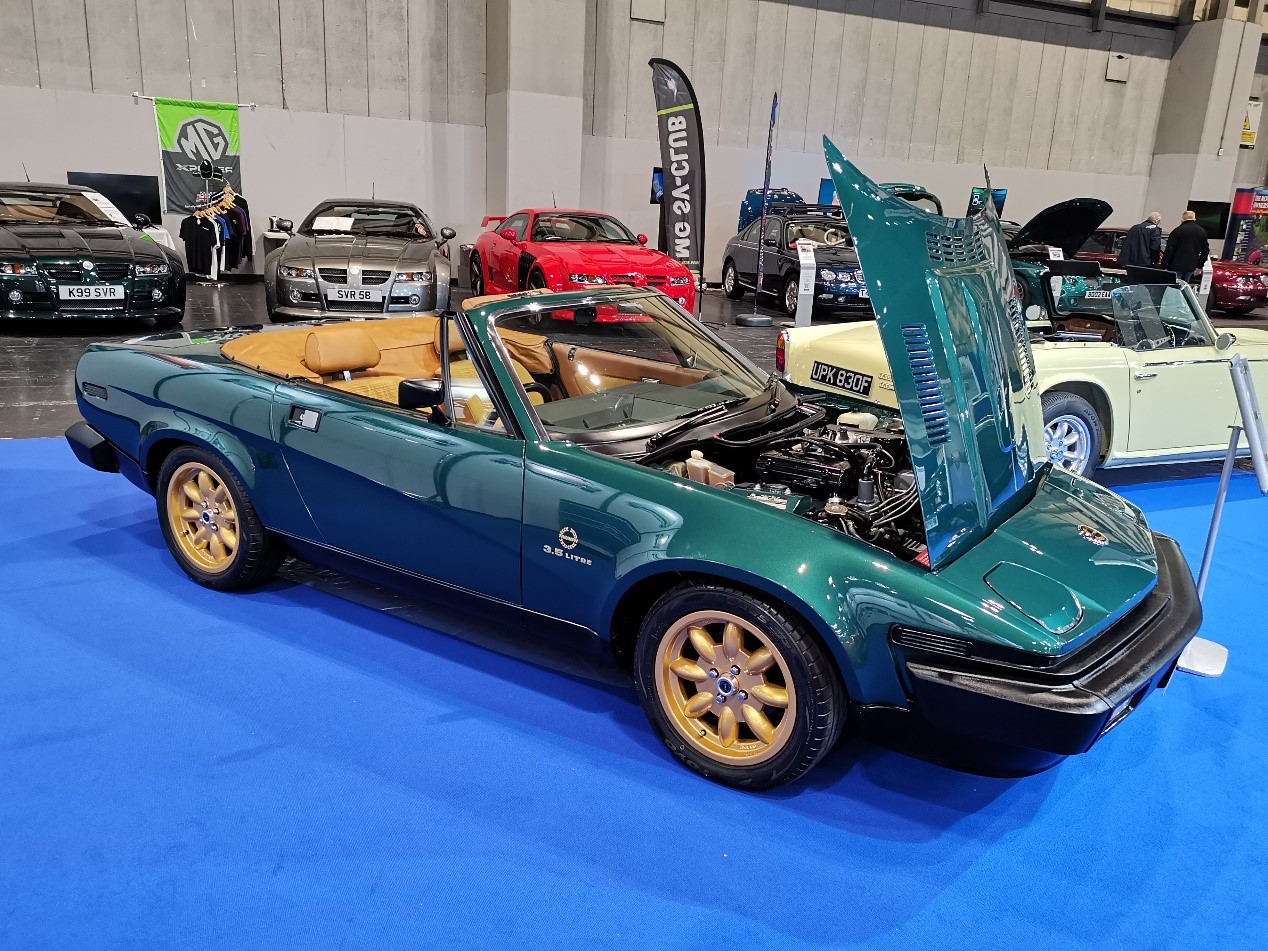
November 13th 2022 TR Register stand Richard Hurdwell for his second visit of the year.
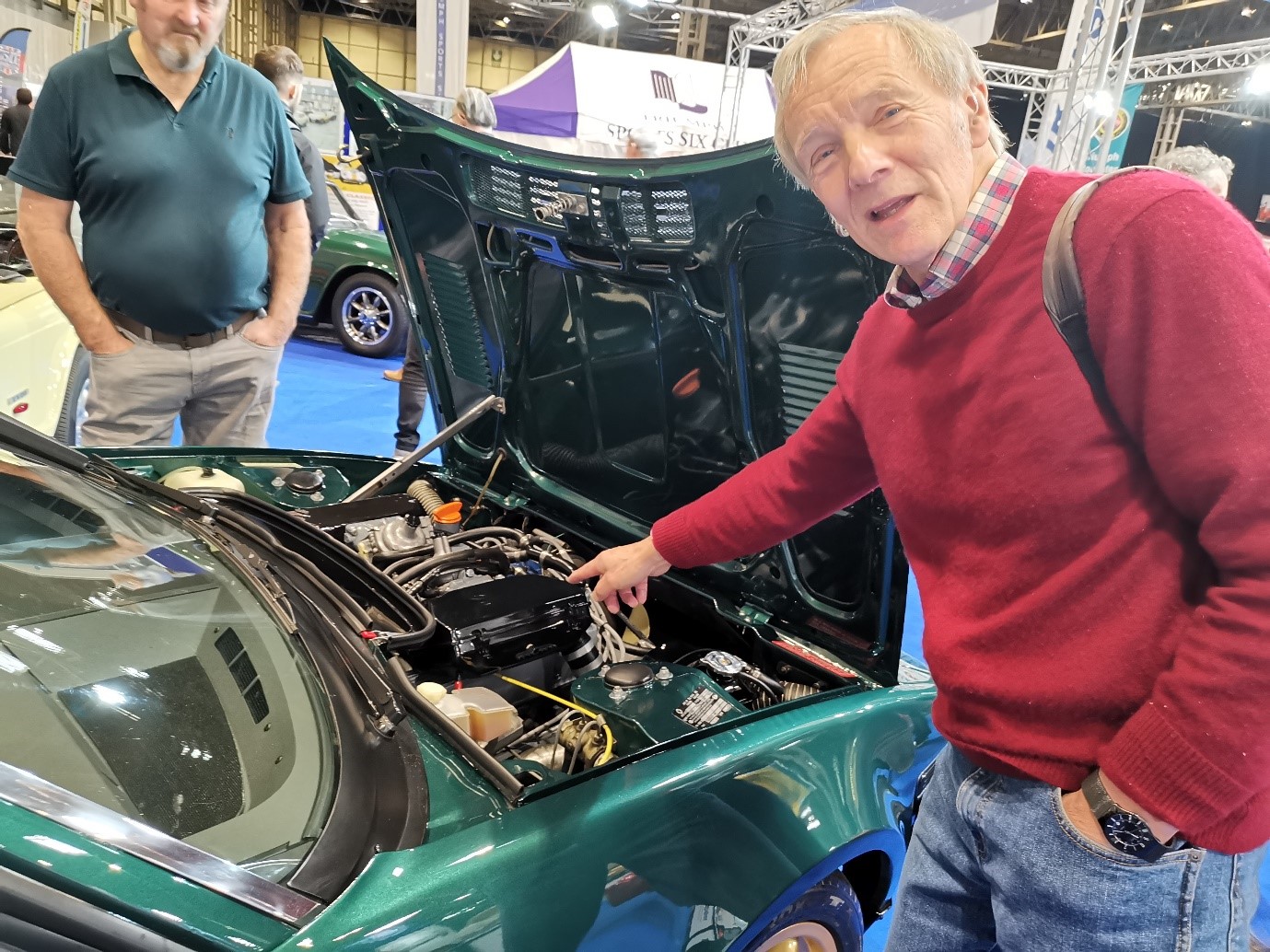
Mileage for NWK988W in March 2023 was just 18,411 from new! Only a few hundred miles from when I first got it because it had taken so long to get the car running correctly again.
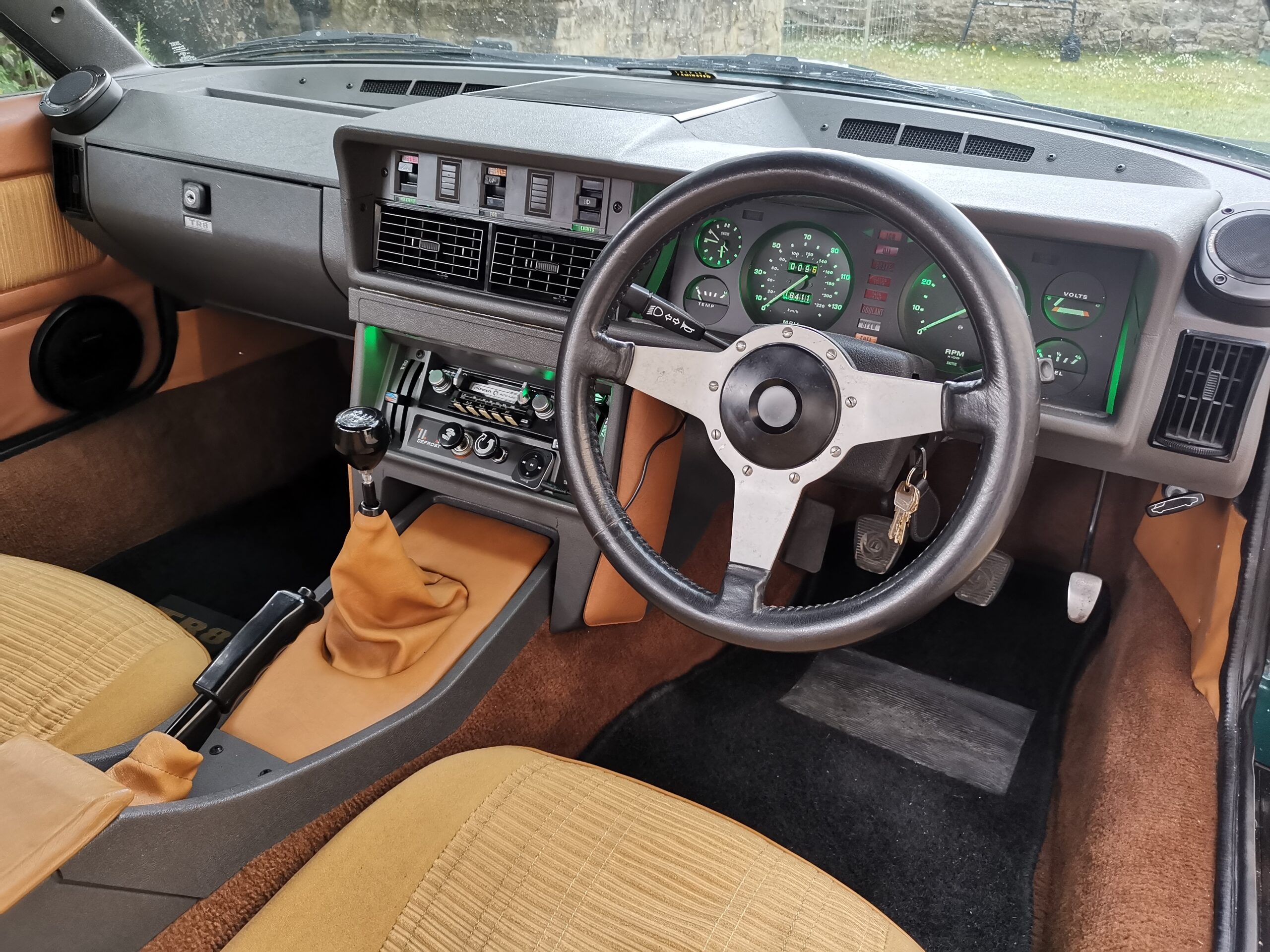
NWK988W further tuning 2023
When the car arrived the maximum speed, it would do was 70mph then it ran out of fuel! So, I send the carbs away to be completely rebuilt. There were many, many faults, auto chokes blocked up, floats in upside down, SU needles fitted and soldered up, to name just the main ones.
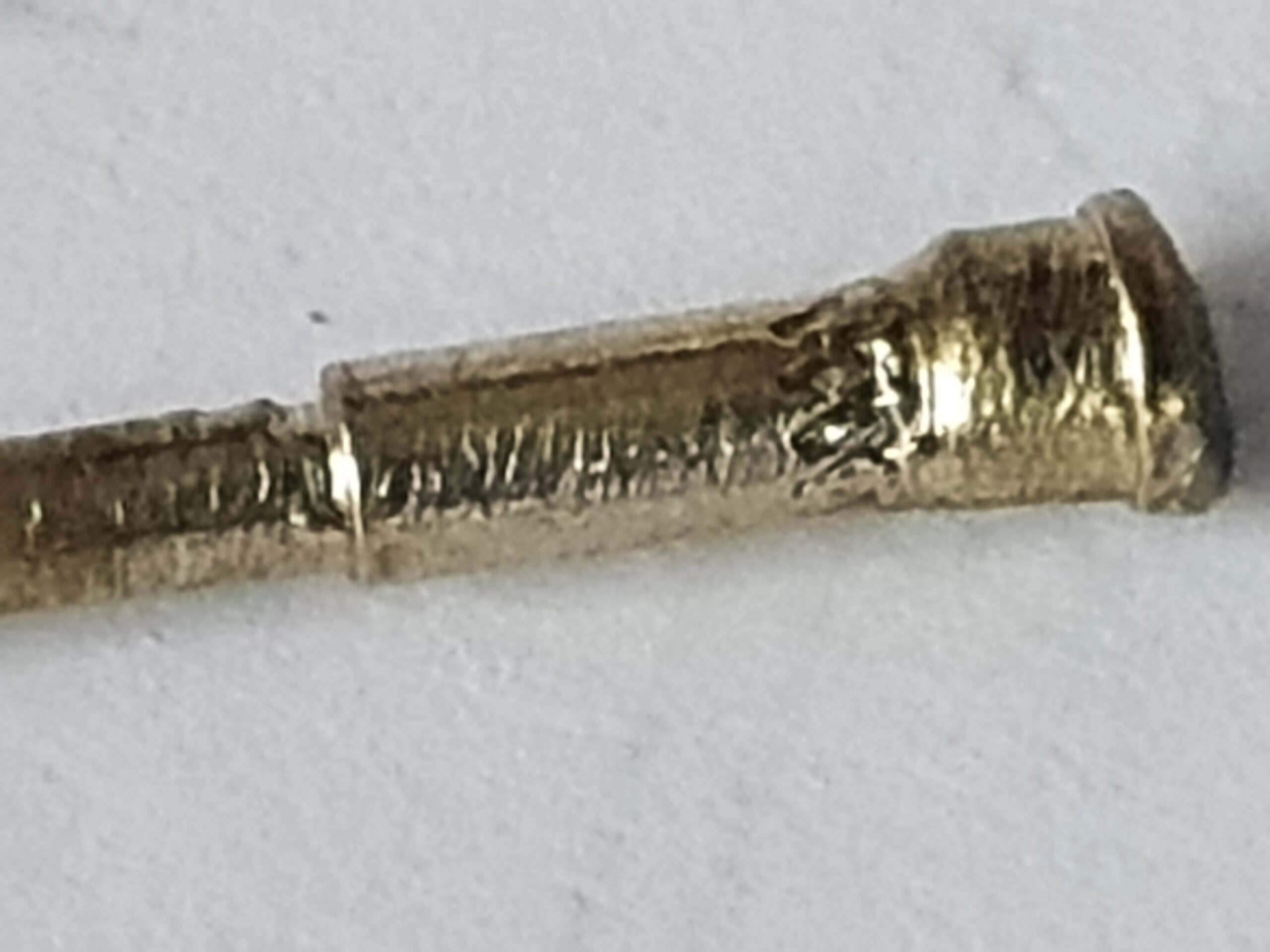
Soldered up SU needle squashed into the Stromberg’s resulting in poor performance
So for 2022 just getting the car running was the priority. There was unfortunately no refence to what needles the factory used,
“Zenith-Stromberg carburettor fitted with alternative fuel control needle to suit ‘WL9’ camshaft”
so, to start we had no choice than to put the standard North American TR8 ones in which are B1EM and for 2022 it ran fine for what I needed it to do. Getting the car back to how it ran when the factory had it was always the priority for 2023 so a richer needle B1BF often used in the Stag was fitted and the car was taken to Dave Boggs rolling road in North Yorkshire to see where we were.
Not enough fuel; at higher rev’s speeds and problems with the butterfly valves in the throttle flaps. Having said that, it was much quicker than it had been on the drive home.
MARCH 2023
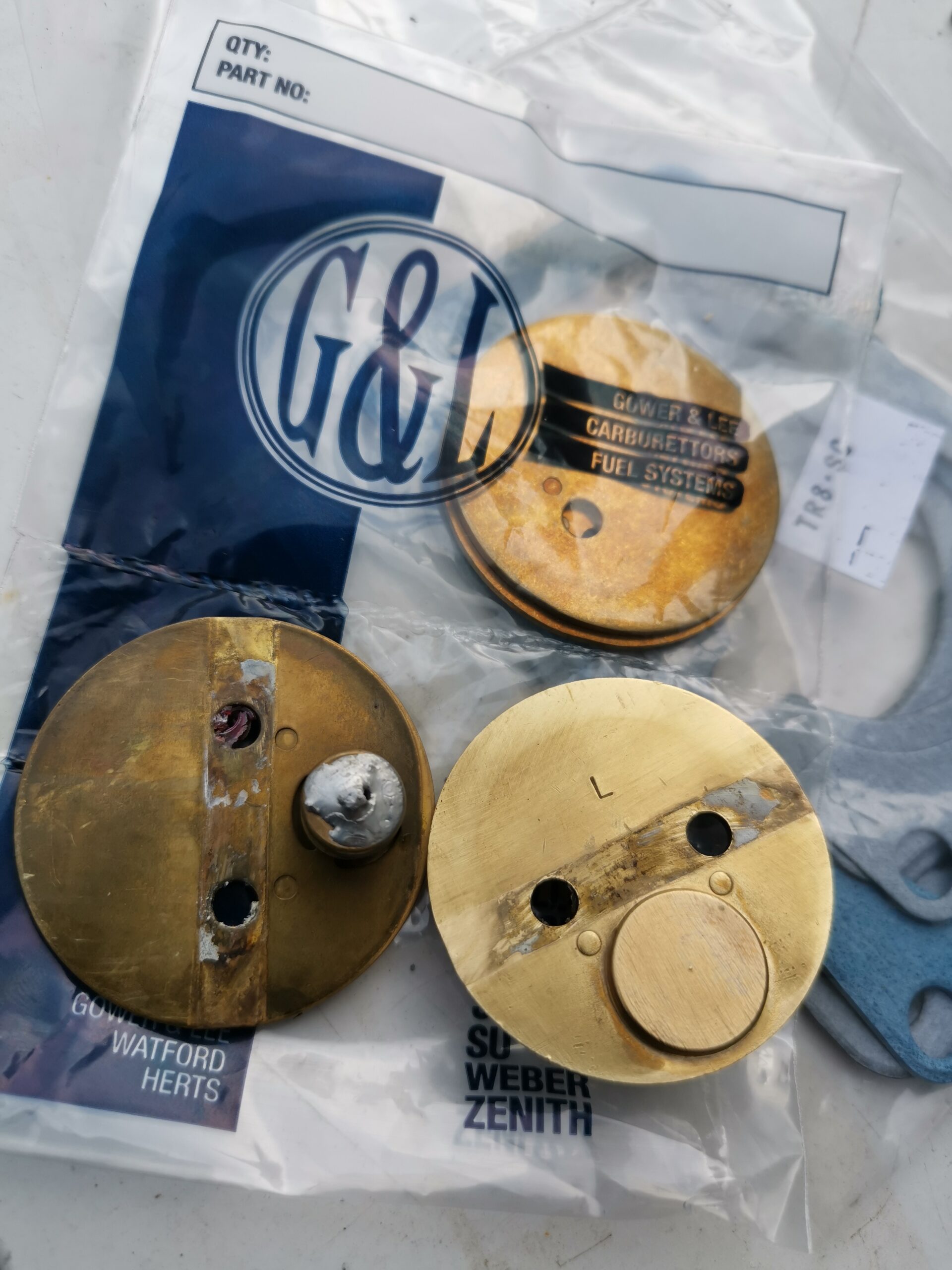
Butterfly valves removed and replaced with TR4 throttle flaps (no valves – seen in the plastic bag with the removed ones for comparison) and the richest needle Stromberg still make B24081was fitted and a return to Dave Boggs for the end of March 2023.
This time we got what we were looking for and quite a bit more than I had thought we were going to get – 217bhp. How ever we knew there was a serious issue with the distributor and the advance curve plus the needles still weren’t right so after a distributor with the correct advance curve fitting, plus rebuild and needles hand profiled we tried again in September 2023.
SEPTEMBER 2023
This time we clocked the road at 270bhp. So as that was at the wheels we estimate when the factory had the car it would have been close to 300bhp at the flywheel.
OCTOBER 2023
On October 6/8th 2023 Both TR8’s completed the Round Britain Reliability Run 43 years on from when the factory first did the run in 1980.
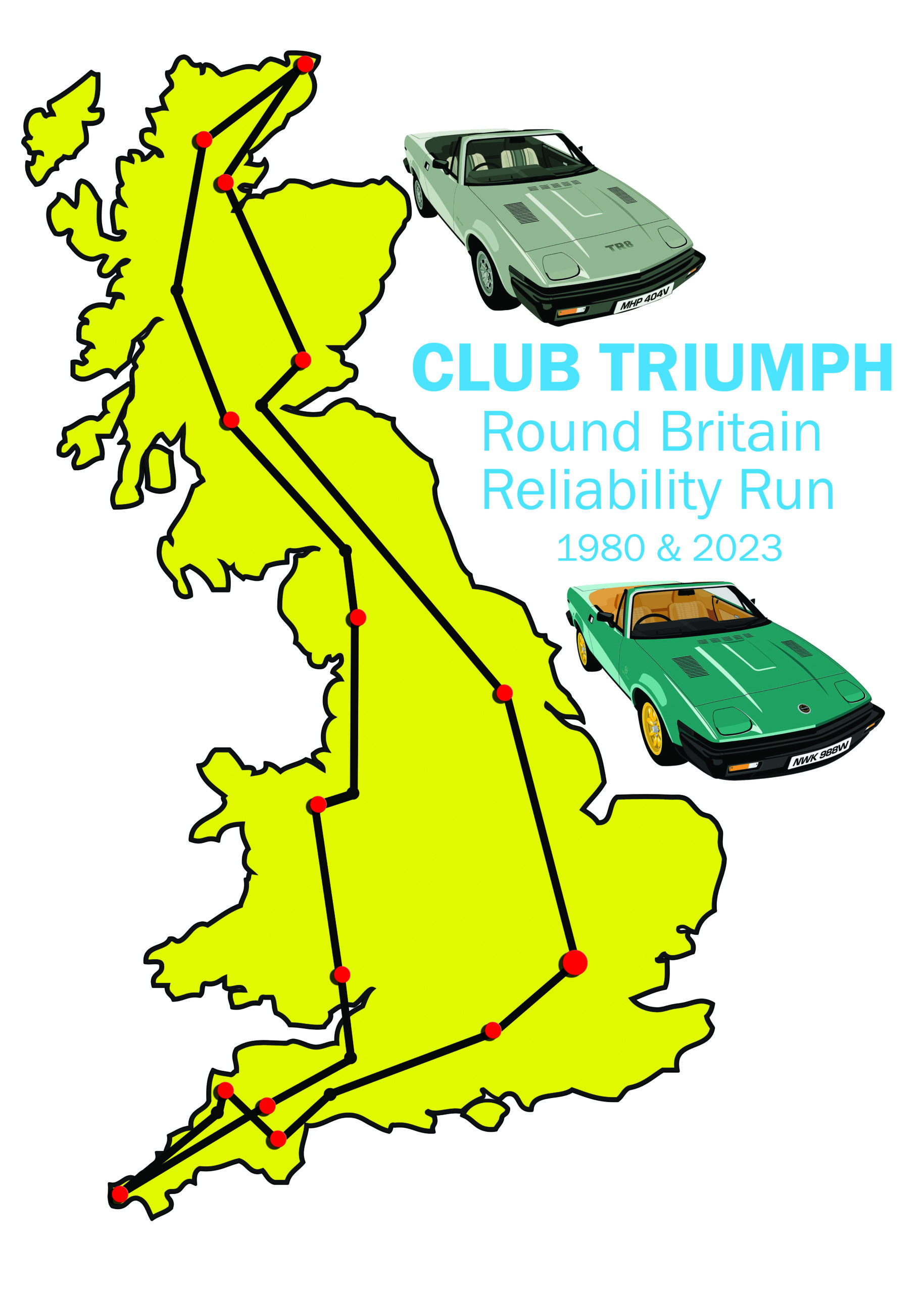
This is a condensed version of the 48hr run shown from both TR8’s NWK988W and MHP404V’s POV over the 48 hrs.
December 2023
The original Lockheed 4 pot callipers and vented discs were refitted to the car (removed to protect the 1980 originality for the RBRR 2023 run and temporarily replaced with newer versions, which are now fitted to my other LHD TR8) having all been reconditioned and painted to preserve them for the next 40 plus years
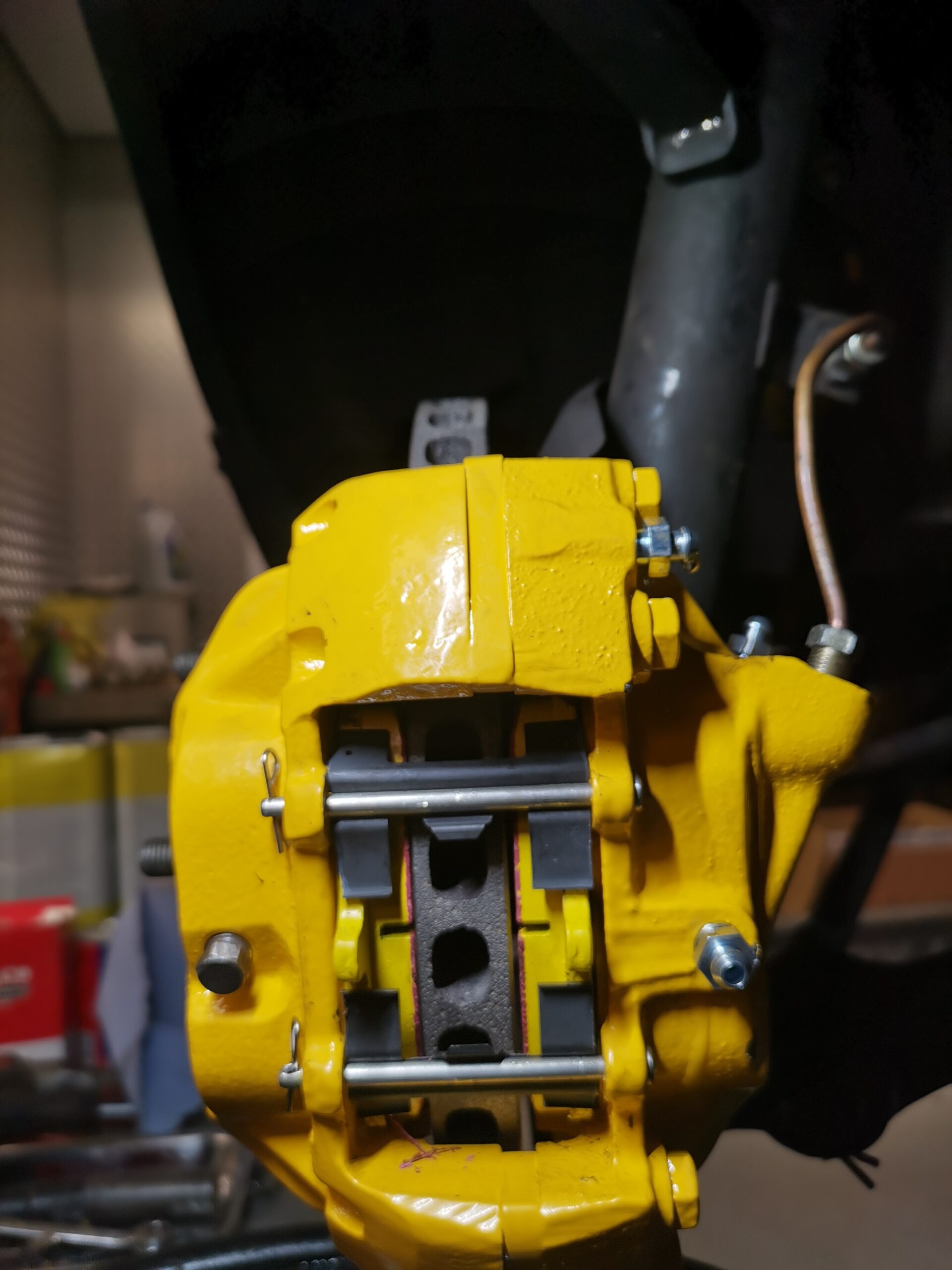
FEBUARY 2024
While the original discs were being skimmed, we had them laser measured and have since had brand new disc castings individually recreated, by the company who made them for AP Racing originally. This time to a much higher standard than the originals as well as double heat treated to prevent warping under extremes


MARCH 2024
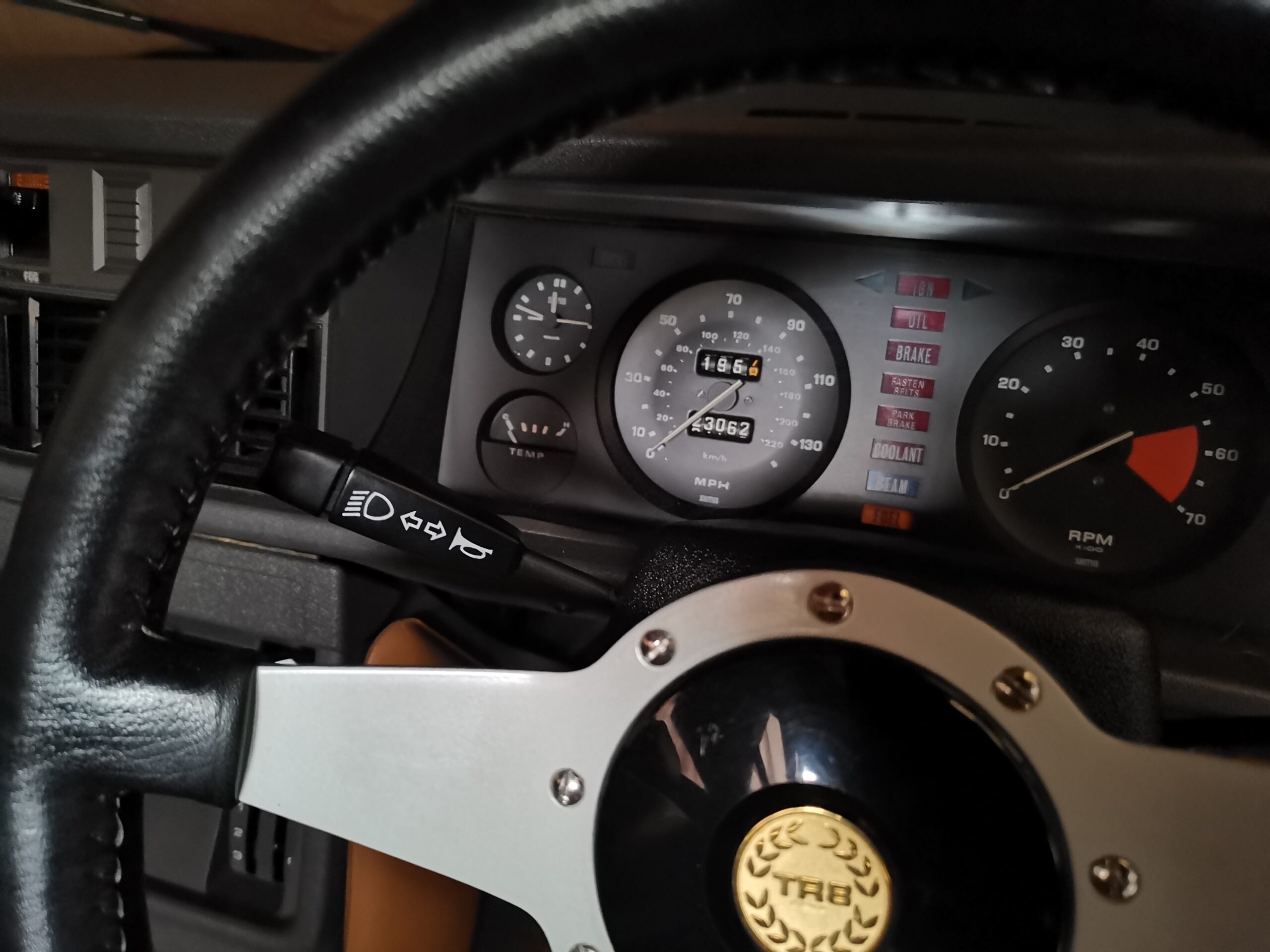
Mileage for NWK988W in March 2024 was 23,062 from new! Quite a significant jump up in mileage, but only because we clocked up 3k plus miles on the Club Triumph Round Britain Reliability Run in October 2023 on its own, plus quite a few other events in 2023, such as the TR8 Day/Weekend at Gaydon.
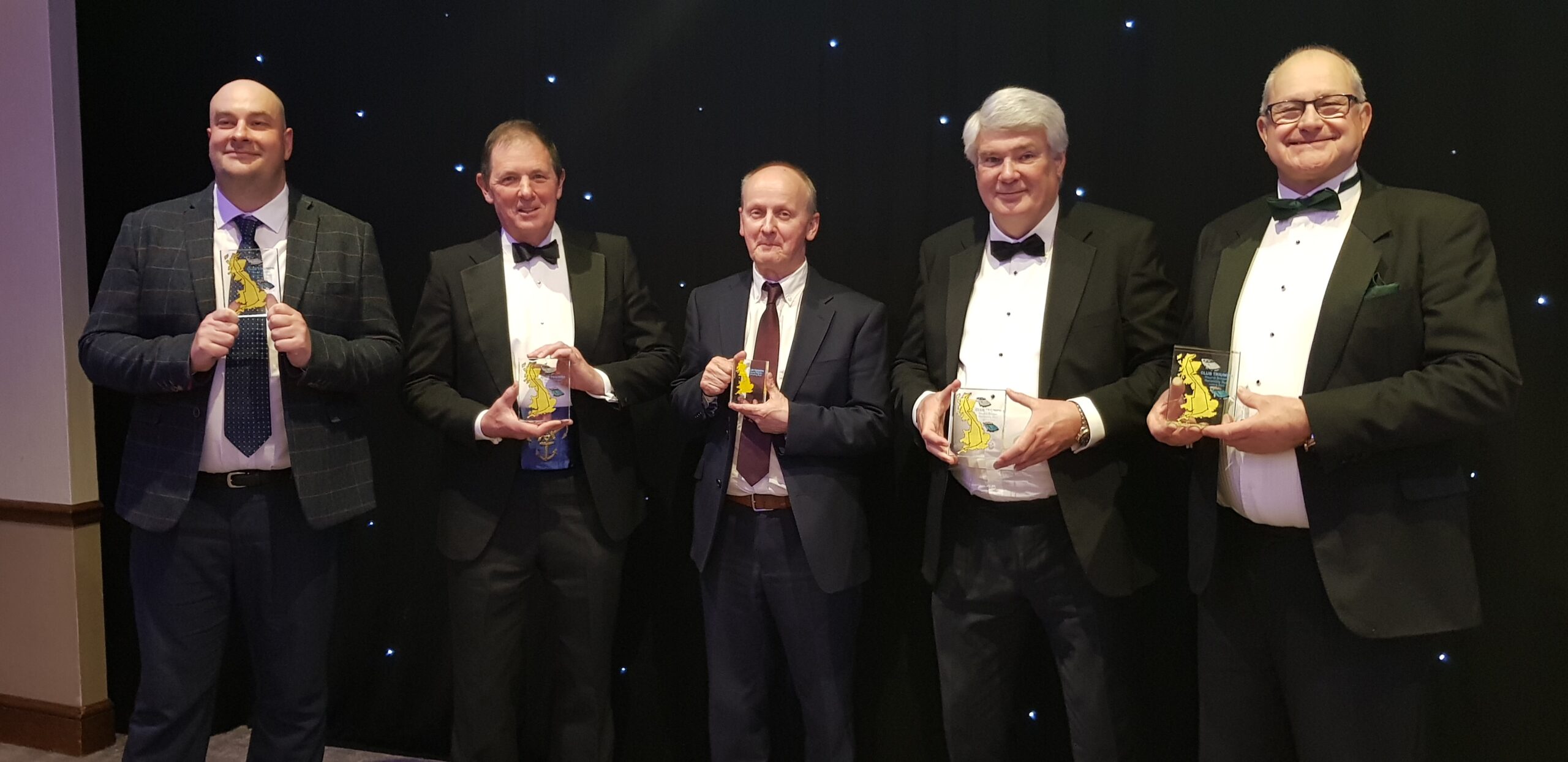
Club Triumph Annual Dinner March 9th 2024 to celebrate the 2023 RBRR. We had commemorative awards created in the same style as the original awards from 1980. Tim in the middle is holding the original award from 1980.
APRIL 2024
One thing we didn’t change when we got the car (and should have) was the shocks as they felt fine, however doing the round Britain really pushed them.

What we found was the original front struts were found to be leaking oil, one very badly so definitely needed replacing. I imagine once I started using the car hard on the RBRR the dry rubber seals simply cracked and they started leaking.
As the rear originals were the blue adjustable SPAX.

and the front modified Armstrong’s which as a company was taken over by Monroe, I decided on SPAX as they were still around and still made adjustable versions to fit the TR8. Problem now is there are only a tiny handful of companies who make shocks for these cars now, so choice is very limited unless you start swapping out the front struts for the works car struts which would of course then make it unoriginal from what was done originally, even though that wasn’t factory original, if that makes sense.
See https://www.spaxperformance.com/classic-products/gas-adjustable-dampers/
The rear shocks were found to be jammed in the fully hard position and that probably explains Richard Hurdwell’s reaction to the suspension being harder when I gave him a quick spin round Gaydon in 2022 when I first got the car.
I think if I remember rightly, when we got back, he thought it might have been the 15” wheels I moved the car to, causing the hard ride.
Someone had tried to adjust them at some point in time but only succeeded in breaking the adjusters on both sides. My plan originally had been to count the adjustment clicks and transfer the settings to the new adjustable shocks, but that idea was now out of the window given no adjusting clicks to count. Tried a few settings, fully soft was very sloppy and bouncy, so the springs appeared to be doing a lot of the work, and 75% hard was knock your teeth out on just a cat’s eye. So, after quite a few trials and errors I’m currently running at 16/18 on a scale of 28 (100% locked hard) possible adjustable clicks.
Settings on the car currently that seem to be a decent compromise
57% = Front 16
64% = Rear 18
Trial and ERRORS
Front fine Rear still a little hard with road holding not quite so well but softer ride.
57% = Front 16
69% = Rear 19
Front fine, Rear hard but holds road really well with tyres squealing on roundabout turning hard in
57% = Front 16
71% = Rear 20
Front a tiny bit hard but rear softer than front
60% = Front 17
60% = Rear 17
Front and rear too hard knock your teeth out on a speed hump
75% = Front 21
75% = Rear 21
Front and Rear too SOFT by a long way.
17% = Front 5
17% = Rear 5
MAY 2024
The stereo we converted to a Pioneer period fascia running a hidden Bluetooth amp but once again the RBRR separated the men from the boys with so many numerous odd usb charging issues on the run that in the end we just left my phone doing satnav permanently. I had gone that route originally because of the limited space behind the centre consol. How ever, time moves on and Pioneer have a few models now that are only half the depth. After a little filing on the consol edges, the cage and Pioneer MVH-330DAB made a very good fit. 1980 Period speakers are still fitted.

Pioneer MVH-330DAB

Pioneer MVH-330DAB is shorter depth and fits the dash well
Bumped into Derek Mathewson at Thornton-le-dale show Sunday May 26th where I was pleased to put him straight and give him a few pointers on genuine factory RHD TR8’s. He will be running away as fast as his legs can carry him if he sees me again, but at least he knows what a genuine factory RHD TR8 is now!

Derek Mathewson from Bangers and Cash
Unfortunately, on getting home and parking up the peddle suddenly went to the floor and I was unable to select any gears.

Green fluid?
Oddly enough the fluid had changed colour to green so assuming the seals had gone the master and slave were swapped out. Didn’t fix the problem and the slave pin has an odd motion of turning when you moved it. So, nothing for it but to take the clutch apart.

Uprated clutch fork
We had thought the pin might have gone through the fork so a new reinforced fork (plate welded over the pin area and so it can’t go through) and uprated clutch were purchased.

V8 Uprated Clutch Fast Road
Turned out one of the fork slippers was missing. Possibly been missing for a while given the way the gearbox was a bit odd at times when selecting gear. It seems without a slipper on both sides the pin eventually jumped out of the slot on the release bearing hence the problem. Only a small piece, yellow circle but it cost a lot of time trouble and work to fix. Still this clutch should be good for the life of the car now finger crossed!

New slippers for the fork pins
JUNE 2024
The seat trim has long been a let-down for an otherwise immaculate interior given the foam behind the velour dries to a powder and drops out leaving saggy seats. I’ve asked many trimmers over the years but either they wanted the seats for months, or they don’t want to deal with 44 years old velour. June 2024 I finally found a trimmer who promised to turn the seats round in an unbelievable two days, and did! Gave the original carpets a good scrub while the seats were out and they came up like new as the car hasn’t seen much sun in its life.

Original carpets came up like new

BEFORE – foam dried and dropped out behind velour

AFTER – foam replaced behind velour

Original velour trim cleaned with new foam behind the velour to replace the old foam that had dried out over 45 years.
The door panels and other trim coloured pink by the sun I had previously changed/vinyl painted in 2023 so now the whole interior looks like new!

Colour matched from NOS trim CM132.86
NFD CAMEL
Batch 22-3310

Masked off and painted

BEFORE – with Sun damage causing vinal to go pink along the top edges where the sun gets to it.

AFTER – No more pink vinyl!
JULY 2024
Suspension settings on the car currently that seem to be a decent compromise and have been fine tuned a bit from previously.
57% = Front 16
57% = Rear 16
Coming back from the Inter Club show at Malvern I felt some vibration in the steering at 60/70 so had the front wheel bearings replaced (still has the original ones fitted so probably wise to change anyway) and steering, exhaust, gearbox and engine mounts all checked out to see if the cause can be found. Tracking was also being checked for alignment. Gearbox mounts squishy so needed changing and may as well change engine mounts as well given while they looked ok they are 44 years old.

Gearbox mounts squishy
I have used Lanoguard for many years on all my TR’s and this car is no exception, more so as I wanted to preserve the car as it was when I got it and Richard Hurdwell left it, so the clear coating is useful to see the modifications he did easily.

Underbody July 2024
Looking for the spring hose P clips (AAU7374) for sometime to finish the engine off as some of the originals broke when I took them off in 2022. Amazing how it often just takes one small item to really finish something off, but that small something, is NLA and almost impossible to find! The autojumble at Newby Hall was where I finally found some.

LEFT as it was in 2022 – RIGHT as it is now JULY 2024
SEPTEMBER 2024
Suspension settings on the car currently that seem to be a decent compromise and have been fine tuned a bit from previously. Lot of trial and error but we are just about there now.
54% = Front 15
57% = Rear 16
MARCH 2025
Mileage for NWK988W in March 2025 was 23,958 from new!

JUNE 2025
When the car was initially put up for sale after the death of the first owner his wife sent it to a local garage on the Isle of Man to be made road worthy given it a stood for around 40 years and so it could be sold. They unfortunately only did enough so the car ran so I have a lot of work later still to sort out. But one observation on their final bill that always stood out to me was the car needed new rear springs due to unequal ride hight. As I knew from Richard Hurdwell the springs had been made individually at the time, and he didn’t know what the rating was I’d left it until now.

I contacted a company in Sheffield who said they could measure the current ones and make some new ones to exactly the same spec as the originals. The data they came up with was as follows.

One spring had after 45 years sagged slightly and there was some degrading from what was estimated to be the original spec of around 205 lbs with a height of close to 9 inches representing a lowering of 1.5 inches against the original standard springs.
I ran round with some uprated 195 lb springs in place of the originals while the originals were away and I noticed the suspension was back to rocking again, so back to messing with the SPAX settings. Surprisingly going lower actually made the car start to feel more neutral as it did when I first got it. In other words, no obvious over or understeer. Slight wobble on some bumps but once the new springs were fitted it was pretty much perfect!
Settings on the car June 2025 that seem to be pretty much perfect!
42% = Front 12
42% = Rear 12


NWK988W is now probably as close to when it left BL MOTORSPORT as it has ever been since it left. Sadly, previous owners didn’t know what they had, only ever noticing the car had different uprated brakes. Thanks to Garry Owen the manager responsible for the RHD TR8’s emailing me the BL MOTORSPORT modifications memo – some 30 years ago, I did. It’s taken 3 years to get the car back from the various detuning mistakes of previous owners to where it was meant to be, but finally I think we are there!
JULY 2025
So final suspension setup that works pretty much perfectly is:
Front Springs 185 lb original springs – SPAX adjustable dampers set at 11 clicks – use 12 for track – Lowered height 2.5 inch over standard USA spec TR8 – Tyre pressure 25.5 psi
Rear Springs 205 lb remanufactured from originals as one sagging a bit – SPAX adjustable dampers set at 11 clicks – use 12 for track – Lowered height 2.5 inch over standard USA spec TR8 -Tyre pressure 28.5 psi
AUGUST 2025
Mileage for NWK988W in August 2025 was 24,507 from new!

Slight leak from the sump edges fixed with the fitting of a sump brace. Also change to the new VR1 20/50 racing oil and K&N oil filter.


Brace fixed sump leak and VR1 racing is now my favourite oil for the car as it runs with much less engine chatter and cooler.
TR8 as it is September 2025:


Photo by Paul Shawcross taken at Castle Howard car show earlier in the year.
NWK988W 19th February 2026
Owning a unique, powerful, one-off Triumph TR8 is something truly special, and in many ways, deeply humbling. There’s a genuine sense of honour, almost a God-given privilege, in being its custodian. Even when it’s parked alongside poster cars worth hundreds of thousands, it still gives you a quiet, unshakeable smile that no other car can ever diminish.
What’s most intriguing, though, is that the experience of driving it is yours alone. It’s something only you can ever fully understand. Trying to put it into words for others never quite does it justice, and you’re often left with the sense, that they might think you’re overstating it, even when you’re not.
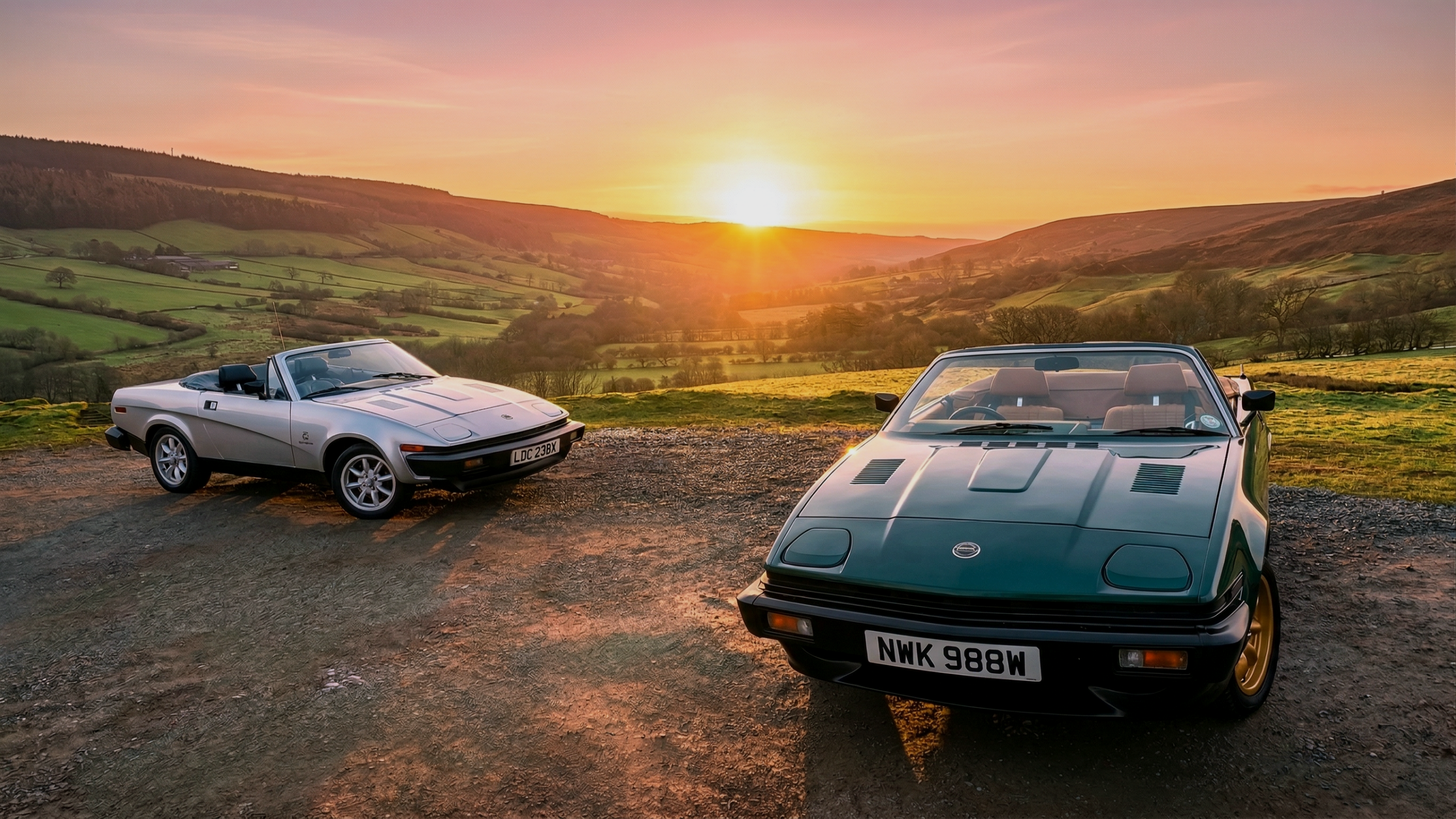
So, when Classic & Sports Car asked if they could drive and compare both my two TR8s, one a left-hand-drive Efi USA-spec model, the other the right-hand-drive UK-spec modified at BL Motorsport, I jumped at the chance.
Classic and Sports Car TR8 Article May Issue 2026
“You have to exercise NWK 988W to reveal its true depths. Initial impressions are that it is less easy to live with at moderate cruise, with its more focused springing and damping exciting the car’s structure and more overrunning uneven surfaces, which in turn creates greater reaction through the still-excellent power steering. That glorious soundtrack still fills your ears though, but it offers something decidedly hardcore when you start to extend this TR8’s performance envelope, and that means pushing beyond 5,000 rpm, where the standard car produces its maximum power. At this point, Humphreys and Hurdwell’s revisions to engine and chassis make more sense and the V8 finds a second wind in its upper reaches as the exhaust note hardens into a titanic roar, transforming the TR8 from cruiser to projectile”
I created a web page to record the day from my and my co driver Martins POV here HERE
MARCH 2026
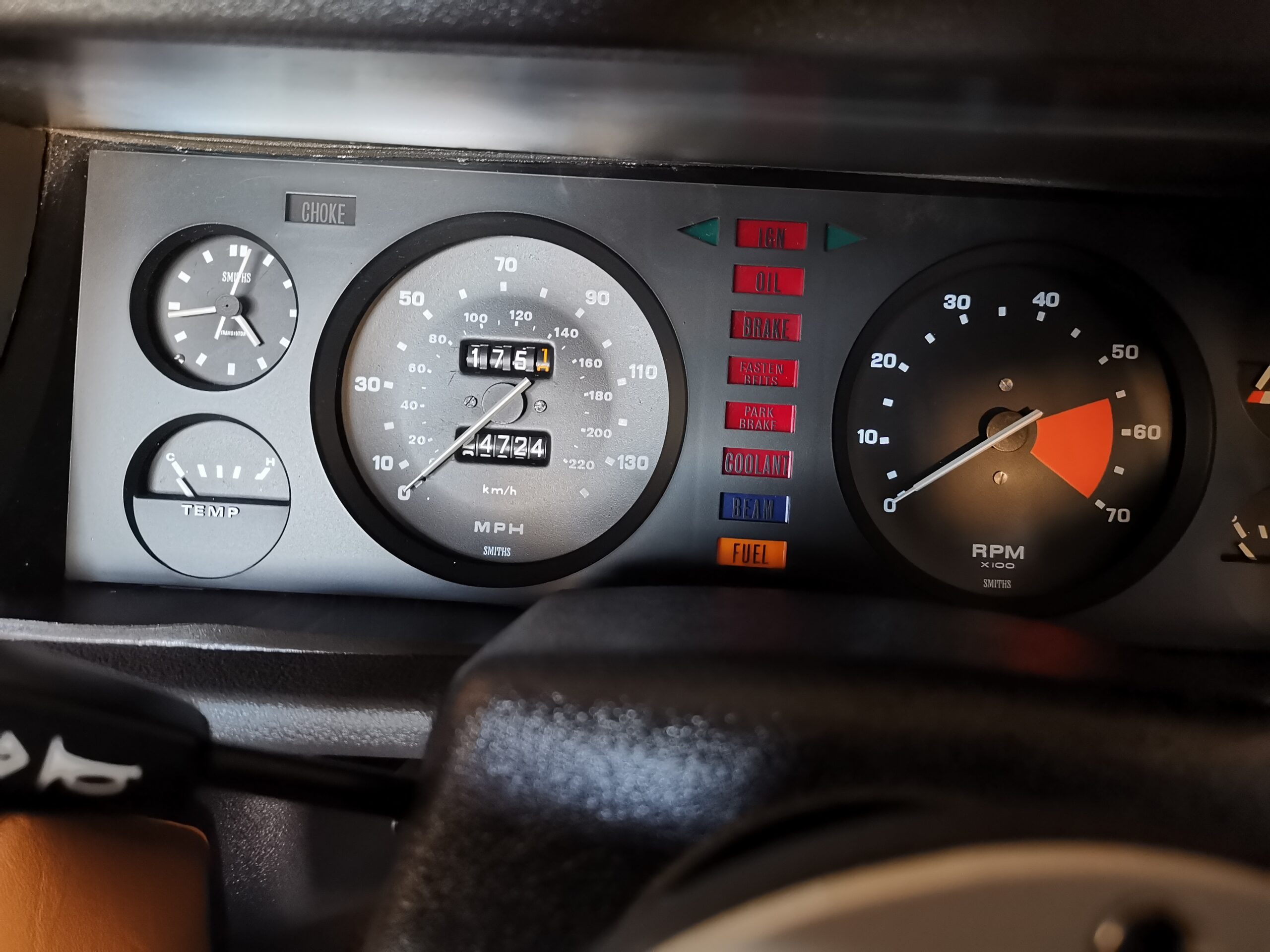
Mileage for NWK988W in March 2026 was 24,724 from new!
APRIL 2026
One carb running rich after the Classic and Sports Car shoot so I decided to swap both carbs out for some NOS ones. Quick trip to Dave Boggs to tweak the tuning and still putting out 270bhp at the wheels, but with slightly better emissions now.
Rolling road scale of 200kW = 270bhp